
A Kingdom of Priests and Holy Nation
Part 1 of the Mosaic Administration of the Covenant of Grace
We begin with the unity of the covenant. It is true, as Nicholas Reid writes, that this covenant “has been understood in numerous ways within the Reformed tradition.”1 However, the majority report at least begins with an awareness that the law was not added as a totally different arrangement or alternative way of inheriting the promise.
Calvin wrote, “The covenant made with all the fathers is so far from differing from ours in reality and substance, that it is altogether one and the same: still the administration differs.”2 Bullinger writes of the oneness of that people to us in Christ in this way: “Let no man therefore make this objection, and say, that the old people of Israel were a carnal people and not regenerate.”3 It should be clear that Bullinger is not making a claim about the total number of Israelites, but rather he is laying down a general rule. Those among them who were saved were not saved by carnal means.
The Westminster Confession treats the entire Old as “in the time of the law” (VII.5) solely in order to make a general contrast between the era of promise versus the era of fulfillment. That is one of the strengths of Roberts’ division of what he calls the Covenant of Faith into “Promise” and “Performance.”
We will begin with a ten-point argument for the unity of the Abrahamic and Mosaic, and then devote the next two sections to what the classical theologians would refer to as the substance and accidents of a thing. In this case, the “thing” is the covenant of grace. Strictly speaking, a substance was any particular thing. As a term used to analyze the thing, it would then be distinguished from its accidents—the former being the essence of the thing, the latter being what we would today call non-essential. Thus soul and body belong to the substance of man, while wise and young belong to man’s accidents.
Sovereign grace and everlasting life, for example, belong to the substance of the one covenant that is revealed to Abraham and further develops through Moses, whereas the accidents will regard those elements that differ, which can either be added or even fade away from the covenant. Let us begin by strengthening our conviction that this is fundamentally one covenant of grace.
Ten Reasons for the Unity of the Abrahamic and Mosaic
1. The Abrahamic Ground of the Exodus. In the beginning of Exodus, God’s response to Israel’s groaning was to recall the covenant to Abraham: “their cry for rescue from slavery came up to God. And God heard their groaning, and God remembered his covenant with Abraham, with Isaac, and with Jacob” (Ex. 2:23-24). Everything God would do through Moses was a fulfillment of the Abrahamic covenant. Israel was delivered in the exodus because God was faithful to the promise He made to their fathers.
I also established my covenant with them to give them the land of Canaan, the land in which they lived as sojourners. Moreover, I have heard the groaning of the people of Israel whom the Egyptians hold as slaves, and I have remembered my covenant (Ex. 6:4-5).
2. The revelation of the divine name. In Exodus 3:6, 15, God identifies Himself with the patriarchs: Abraham, Isaac, and Jacob — cf. 6:2, 8. Here we also see an expansion, so that more about God’s name is revealed in the Mosaic: that is, “LORD” (6:2-3). This is central to God demonstrating His power in hardening Pharaoh’s heart, so that He can reveal what He is like (cf. Rom. 9).
3. Moses almost killed for disobeying the Abrahamic Covenant. In Exodus 4:24-26 Moses was almost cut off for not having circumcised His own son. But to what arrangement does the duty of circumcision belong? The answer is that it is the sign of the covenant of grace from Genesis 17.
4. Precursors to the law’s specifics before Sinai. A sizable portion of the Pentateuch happens at Mount Sinai. The summation of the will of God in the Decalogue is the defining characteristic of the Mosaic administration, but the law existed before Sinai. In Exodus 16:23 they were blameworthy for gathering manna on the Sabbath. Apparently the prohibition already exists. The same can be seen in the unacceptable sacrifice of Cain or the rules for sacrifice prefigured in Noah’s clean animals. Thus there was something right and wrong in religion already present. Here is a covenant principle: law derives from covenant stipulations. This is why the Puritans spoke of the grace of law. The children of Israel were given law as a gracious rule for life. The question becomes: How then did the pre-Mosaic saints know to do this? The answer is partly given by Paul in Romans 2:14-15 concerning the natural law, but a special revelation element would also have been passed down.
5. Monergistic redemption. In Exodus 19:3-6 we have the proper ordering of God’s sovereign grace. First, there is gracious redemption, and secondly, the walking with God to secure enjoyment of it. The commandments are not given in Egypt. He does not say, “If you keep them, I will save you.” They cannot be the means of redemption. Ephesians 2:8-10 recalls this same pattern. BY grace … THROUGH faith … FOR / TO good works … that we should walk in them. Works do not become our salvation, but they do belong to our salvation.
6. Abrahamic Form and Matter Re-Stated. Again in Exodus 19:5-6, what Robertson called the “Immanuel Principle,” namely that God would be with us as our God, is present, as is the conditional language of walking with Him. This is the same as in Genesis 17. Paul restates the principle in the form of receiving the inheritance (cf. Eph. 1:11, 18). Jesus is the true Firstborn, but He shares the inheritance with us; and we are God’s inheritance. So we are His treasured possession. They would be a kingdom of priests. Priests give the blessing to the people (cf. Num. 6:24-26) — so Abraham was commanded to bless the world (cf. Gen. 12:1-3).
7. The Book, Words, and Blood of the Covenant. In Exodus 24, we see the book and the blood. The Ten Commandments are called the “words of the covenant” (Ex. 34:28). In 34:10, it says “I am making a covenant,” but this does not mean it is just now starting. The blood does not only show the seriousness and threat, but it is also the provision to be restored. Exodus 24:8 is fulfilled in Christ’s death (cf. Matt. 26:28). Hebrews tells us that Christ’s blood really forgives those sins under the first covenant (cf. 9:15). So those whose sins are forgiven in the Old Covenant are also included in the Abrahamic covenant. Yet they are included under the “old,” and hence the old is formerly considered within the Abrahamic, even while the dead works of its members are treated, materially, as that which is passing away.
8. Moses’ Mediation was FOR the Abrahamic. In Exodus 32:13, when God’s anger would wipe them out, Moses appealed to the promise to Abraham, Isaac, and Israel, and thus God maintained the people under Moses as a continuation of that promise. Was Moses more loving than God toward the children of Israel? Exodus 3 has already given us a glimpse of God sending to help them and Moses trying to escape. Ultimately he is appealing to things in God. This tells us that the more unified the covenant is, the more glory there is for God, because it highlights more and more divine attributes that were perfectly exhibited in the one design.
9. David made king over whole nation at Hebron. 2 Samuel 5:1. This is the same Hebron at the oaks of Mamre (cf. Gen. 13:18). To Abraham, God said here you will rule over all the land. Recall that one of the promises to Abraham was that kings would come from him. Then David realized that God had “exalted his kingdom for the sake of his people Israel” (5:12). David’s rule is a picture of God’s rule in Israel: “Then Solomon sat on the throne of the LORD” (1 Chr. 29:23). So it is no coincidence that at Pentecost the promise of Joel 2 was, more nearly, the fulfillment of the royal promise of the anointing Christ, now exalted on the throne (Acts 2:33-36), of which the outpouring on the disciples that day was the overflow of royal commissioning. A further implied promise came through the Abrahamic formula that their children are still included (Acts 2:39). Hence the fulfillment of David’s throne, the giving of the Spirit, and the better promises that included the children were all sent in one heaven-to-earth motion. The point for our consideration is that the national character (formulated at Sinai) of the covenant of grace was in fact part of that same covenant, even if David’s literal-historical throne was typological.
10. God’s assurances to the saints’ doubts are similar in form. The similarities between God’s assurances to Moses are similar to the words of promise to Abraham. As Genesis 15 contained a historical prologue—“And he said to him, ‘I am the LORD who brought you out from Ur of the Chaldeans to give you this land to possess’” (v. 7)—so too, more famously, did the law on Sinai. Then there was the covenant ceremony itself, given for further assurance. It is in answer to how he will know that God performs the cutting of the covenant (v. 18). The children of Israel will be led through the wilderness by a pillar of fire and cloud, and Moses encountered the burning bush: cloud and fire. It is possibly related to the fire on the altar and smoke going up out of the tabernacle.
The Substance of the Covenant of Grace at Sinai
For all of that, there is a most basic reason why the substance of the Mosaic covenant is one with the substance of the covenant of grace. That basic reason is that forgiveness of sins is given to those under it, which is impossible apart from the gospel already preached to Abraham and fulfilled in Christ. This will be crucial when we consider the purpose of the law given at Sinai. We will have more to say about this in our next session, but for now one proposition must be ruled out. That is the notion that the law of Moses was given as an alternative to the covenant of promise. This is suggested by classic and extreme forms of Dispensationalism. C. I. Scofield, for example, depicted Israel as too rashly binding themselves to law when they could have remained under the gracious Abrahamic relationship.4 That the legal arrangement could even be conceived that way is flatly rejected by Paul in Galatians 3, where he says,
To give a human example, brothers: even with a man-made covenant, no one annuls it or adds to it once it has been ratified. Now the promises were made to Abraham and to his offspring. It does not say, “And to offsprings,” referring to many, but referring to one, “And to your offspring,” who is Christ. This is what I mean: the law, which came 430 years afterward, does not annul a covenant previously ratified by God, so as to make the promise void. For if the inheritance comes by the law, it no longer comes by promise; but God gave it to Abraham by a promise. Why then the law? It was added because of transgressions, until the offspring should come to whom the promise had been made (Gal. 3:15-19).
We will examine the rest of Paul’s flow of thought in Galatians 3 next time in the context of how grace and law relate to each other. For now, simply notice one important way that they do not. God never offers law as an alternative to grace—that is, an alternative way of salvation. As even the original law to Adam was not outside of a larger gracious context, even more so, once man is under the bondage of sin, law cannot be a realistic alternative.
We could view the substance of the covenant of grace in terms of its matter and form. To say that the substance is Christ is to say that its matter is ultimately Christ. Of the Son it is said, “I will give you as a covenant for the people” (Isa. 42:6); and Paul looks back to those people under Moses, saying,
For I do not want you to be unaware, brothers, that our fathers were all under the cloud, and all passed through the sea, and all were baptized into Moses in the cloud and in the sea, and all ate the same spiritual food, and all drank the same spiritual drink. For they drank from the spiritual Rock that followed them, and the Rock was Christ (1 Cor. 10:1-4).
If Christ is the substance of the covenant, then the covenant itself is the form. In other words, when we arrive at Sinai, law does not become the ultimate form, nor does law as ultimate form prove a different covenant. Rather, the Christ of the covenant is the substance and the law is the chief instrument by which the people are brought to Christ. As Robertson said, “While law plays an extremely significant role … in the Mosaic era, covenant always supersedes law.”5 So the law structures the stage of development that the people are brought to. The initial statement by God in Exodus 2:24 and the foundational statement to the Decalogue in Exodus 20:2 makes this point clear. It is not simply that redemption came before commandments, but that grace encompasses law. God’s performance in the place of His people is the whole ground that the people stand on and will act on in response. Without the relationship, there can be no rules.
Beyond that priority of grace, there is also the way that the covenant progresses. The Mosaic economy takes its shape as a fulfillment of the promises to Abraham. In other words, it is not simply that each successive administration of the covenant introduces a new mode of promises to be fulfilled in the end, but that each administration is itself a fulfillment.
Recall that one of the promises to Abraham was that his offspring “grow into a multitude in the midst of the earth” (Gen. 48:16). He would not only have an offspring in the sense of a large family. From the family would come a nation. There are a few passages coming well before Israel’s camp at Mount Sinai that remind us of the greatness of the number of the people. For example,
But the people of Israel were fruitful and increased greatly; they multiplied and grew exceedingly strong, so that the land was filled with them (Ex. 1:7).
As a last point of the unity of the covenant of grace, let’s take an element that is unique to this Mosaic administration. Before we discuss how it functions uniquely—and as an accidents of the covenant rather than as the very substance—consider how the ceremonial law participates in something of the Substance, that is, Christ and the fundamentals of the people united to Him.
Bullinger explains the sense in which the ceremonial law is for us. The easiest way to think about this is to, first, distinguish between the imperative and the indicative. We are no longer under the imperatives of this ceremonial law, but it belongs to Christian Scripture to teach in some way. He says,
But although these ceremonies and some external actions were abrogated and clean taken away by Christ, that we should not be bound unto them; yet notwithstanding, the scripture, which was published touching them, was not taken away, or else made void, by Christ. For there must ever be in the church of Christ a certain testimonial, whereby we may learn what manner of worshippings and figures of Christ they of the old time had. These worshippings and figures of Christ must we at this day interpret to the church specially; and out of them we must, no less than out of the writings of the new Testament, preach Christ, forgiveness of sins, and repentance.6
The Accidents of the Covenant of Grace at Sinai
Seeing what is essentially one between the Mosaic and the previous Abrahamic administrations of this covenant of grace, we must now ask what was distinctive about the era begun at Sinai. Three phrases will be operative here: legal summary, priestly ceremony, and national application.
First, to the legal summary, Robertson says, “The Mosaic covenant manifests its distinctiveness as an externalized summation of the will of God.”7 Without denying that the patriarchs were under a law of sorts, what Robertson was driving at was a kind of systematic fullness.
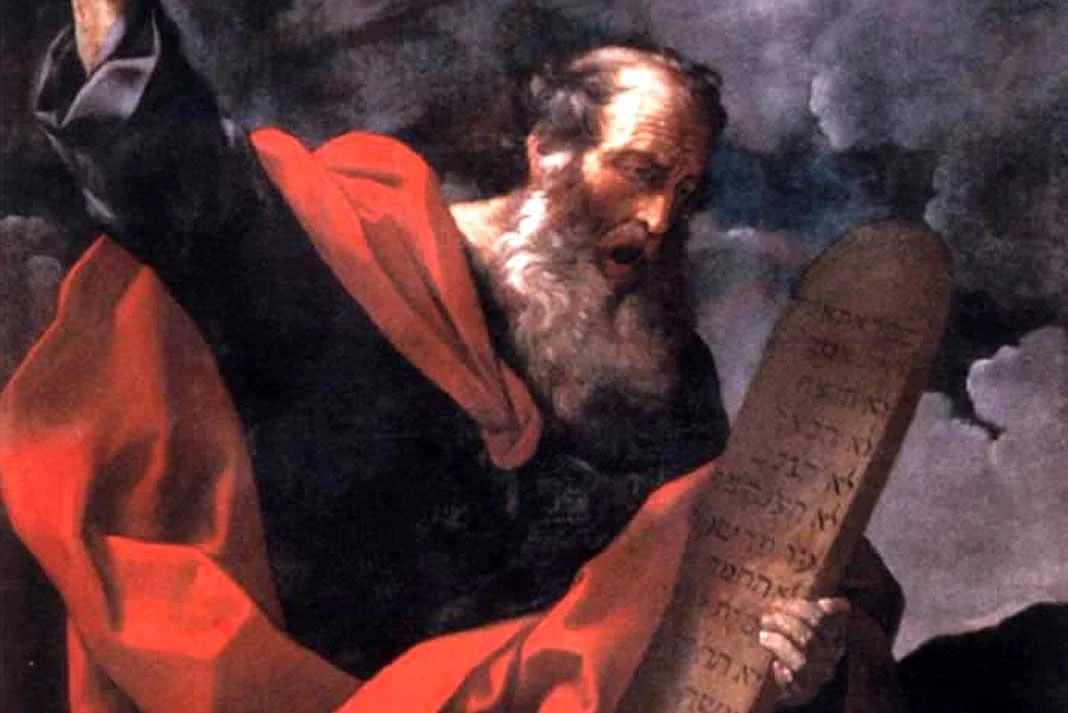
The Ten Commandments, for example, are treated as a summation of the covenant: “And he wrote on the tablets the words of the covenant, the Ten Commandments” (Ex. 34:28). The same is indicated by two places in Deuteronomy,
And he declared to you his covenant, which he commanded you to perform, that is, the Ten Commandments, and he wrote them on two tablets of stone (Deut. 4:13).
When I went up the mountain to receive the tablets of stone, the tablets of the covenant that the LORD made with you, I remained on the mountain forty days and forty nights … And at the end of forty days and forty nights the LORD gave me the two tablets of stone, the tablets of the covenant (Deut. 9:9, 11).
Since this law is called “good” (1 Tim. 1:8; Rom. 7:12), then a great good was increased to God’s people. It is also called “your wisdom” (Deut. 4:6), that is, as a possession of the nation; so much so that the nations ought to have flocked to Israel to share in it and take it back to their homelands (cf. Isa. 2:2-3). For this law to typify this administration is a gracious expansion.
Second, to the priestly ceremony, here is why the law for the priesthood and religious life of Israel is referred to as ceremonial law. It is simply that by a historical procession, these activities (and corresponding special officers, days, etc.) symbolized or dramatized the work that Christ would perform as the ultimate Priest. Hence, “when there is a change in the priesthood, there is necessarily a change in the law as well” (Heb. 7:12). But it was at Sinai that they were told, “you shall be to me a kingdom of priests” (Ex. 19:6). This is fundamentally why they are also considered a “church” (Acts 7:38) by Stephen. It is quite true that the Greek word used there, ekklesia, was also used of a secular assembly (Acts 19:39) and even a mob (Acts 19:32). By itself, the word need only mean “assembly” or “congregation.” Yet the word is hardly meant “by itself,” but had the specific reference to a people called out of the common lot of humanity to be a sacred assembly to the Lord.
Roberts draws out six reasons that God imposed His ceremonial law uniquely upon this people:
(1) That the Jews (then God’s peculiar people in the whole world) might be hereby preserved and withheld from the idolatrous and superstitious worship of the Gentiles: God’s instituted ceremonial worship so abundantly taking them up, and filling their hands.
(2) That they might hereby be particular directed how to serve and worship God aright; and might be prevented from contriving and devising a worship of God after their own inventions. [cf. Rom. 9:4; Deut. 12]
(3) That the church in her minority might be nurtured up under these tutors and governors until maturity in Christ. [cf. Gal. 4:1-5]
(4) That he might in these typical ceremonies familiarly (though under a veil) represent as in a glass the person and office of Christ that was to come in our flesh … [These are a shadow of the things to come, but the substance belongs to Christ — Col. 2:17; cf. Heb. 10:1]
(5) That God might instruct both Jews and us, that God will be worshiped not only with the soul and spirit, inwardly and invisibly, but also with the body outwardly and visibly … [for you were bought with a price. So glorify God in your body — 1 Cor. 6:20]
(6) That hereby, as by a partition-wall, God might distinguish clearly his own peculiar people, the Jews, from all other people of the world destitute of this way of divine worship. Hence it’s called the middle wall of partition between Jews and Gentiles. [cf. Eph. 2:14]8
As God’s priestly people, they were a typological people. So this administration begins to accumulate more types basic to the gospel story. In Roberts’ words, “as Egypt was a type of our natural miserable condition under the bondage of sin, Satan, etc., while we were destitute of redemption by Christ, and as Canaan was a type of the eternal rest of God’s people in heaven, so the wilderness might be a figure of this present world, through which we must pass to heaven, and of the unsettled condition, wants, afflictions, temptations, dangers, and many miseries incident to God’s people therein.”9
Third, to the national application, Roberts uses the words “in private families” of the Abrahamic and “in the notion of a commonwealth” for the Mosaic.10 In considering how Israel became a nation—a people in a place—we must first consider that God judged both the people who had enslaved them (Egyptians) and the peoples inhabiting the land to which they were doing (Canaanites). With all that is typological, and therefore unrepeatable, we are too quick to dismiss the extents of divine judgment of nations in subsequent history. We will even allow that God may judge our own present nation. He even judged previous nations in whom the church sojourned. But ask the same people if God can judge those same nations as a judgment against the church, or especially whether God can judge a nation so as to make way for the church. The former question will cause some confusion and the latter is verboten. Such questions, we are told today, confuse the church with the nation: specifically they run the risk of suggesting that “the nation” is being judged precisely for not living up to Christian principles, or that “a new nation” may emerge that will be closer to Christian principles. And all of this begins to subtly move the adjective “Christian” too close to the noun “nation,” which, we are to take for granted, is a confusion of nature and grace, old creation with new creation, and so forth. With Israel we can clearly affirm the words of the Psalmist,
“Blessed is the nation whose God is the LORD, the people whom he has chosen as his heritage!” (Ps. 33:12)
We will come back later to the question of uses of the law and examples for us. For now, let us return to our basic terms: Why should we call this a “national administration” of the covenant of grace? In the very next breath that Israel was told “you shall be to me a kingdom of priests,” it is immediately added, “and a holy nation” (Ex. 19:6). A holy nation is at least a nation. It may be argued that their holiness requires that their national characteristics take on the same sort of typological function as their priestly characteristics. However, all this proves of their nationhood is that they were to be more than other nations, but they were not to be less.
_______________________________________
1. J. Nicholas Reid, “The Mosaic Covenant,” in Covenant Theology, 149.
2. Calvin, Institutes, II.10.2.
3. Bullinger, Decades, I:313
4. cf. C. I. Scofield, Rightly Dividing the Word of Truth (New York: 1923), 22.
5. Robertson, The Christ of the Covenants, 170.
6. Bullinger, Decades, I:59-60.
7. Robertson, The Christ of the Covenants, 172.
8. Roberts, God’s Covenants, III:44-45.
9. Roberts, God’s Covenants, III:23.
10. Roberts, God’s Covenants, III:14.