
Party-Spirit: Its True and False Remedies
Sermon on Sunday, June 3, 2018
I appeal to you, brothers, by the name of our Lord Jesus Christ, that all of you agree, and that there be no divisions among you, but that you be united in the same mind and the same judgment. For it has been reported to me by Chloe's people that there is quarreling among you, my brothers. What I mean is that each one of you says, “I follow Paul,” or “I follow Apollos,” or “I follow Cephas,” or “I follow Christ.” Is Christ divided? Was Paul crucified for you? Or were you baptized in the name of Paul? I thank God that I baptized none of you except Crispus and Gaius, so that no one may say that you were baptized in my name. (I did baptize also the household of Stephanas. Beyond that, I do not know whether I baptized anyone else.) For Christ did not send me to baptize but to preach the gospel, and not with words of eloquent wisdom, lest the cross of Christ be emptied of its power.
1 Corinthians 1:10-17
We have here one of the most misunderstood passages in all of Scripture. It is a favorite to take out of context, probably second only to “Judge not, lest ye be judged,” to which I like to respond the way Paul Washer suggested: “Twist not Scripture, lest ye be like Satan.” Although we must be one notch gentler in this case because we are speaking about professing Christians. No doubt, many of them are quite sincere in misapplying this passage. Part of the problem is getting the whole biblical context. The same Paul who insists here “no divisions among you” (verse 10) says later in the same letter, “there must be divisions among you” (11:19). So how to rightly divide? Theologians will use the term “party-spirit”1 to stand in for the more technical words “partisanship” or “factiousness.”2
Factionalism (or party-spirit) is the sinful kind of division: putting loyalties to the tribe or the clique or the pet-project above the eternal cause of the gospel. We know that this was deeply disturbing to Paul. Twice in this short space he calls them all “brethren” (vv. 10, 11) to remind them of what they are to each other. I want to approach sinful division as a kind of disease and true unity as a medicine. Paul was an expert pathologist of the infant body of Christ. He knew the difference between false symptoms and true, and the difference between the external symptoms and the root disease.
The Surface and Symptoms of Sinful Division
The Essence and Healing of Sinful Division
Doctrine. Since Christ is not divided, we should be one body under one gospel.
The Surface and Symptoms of Sinful Divisions
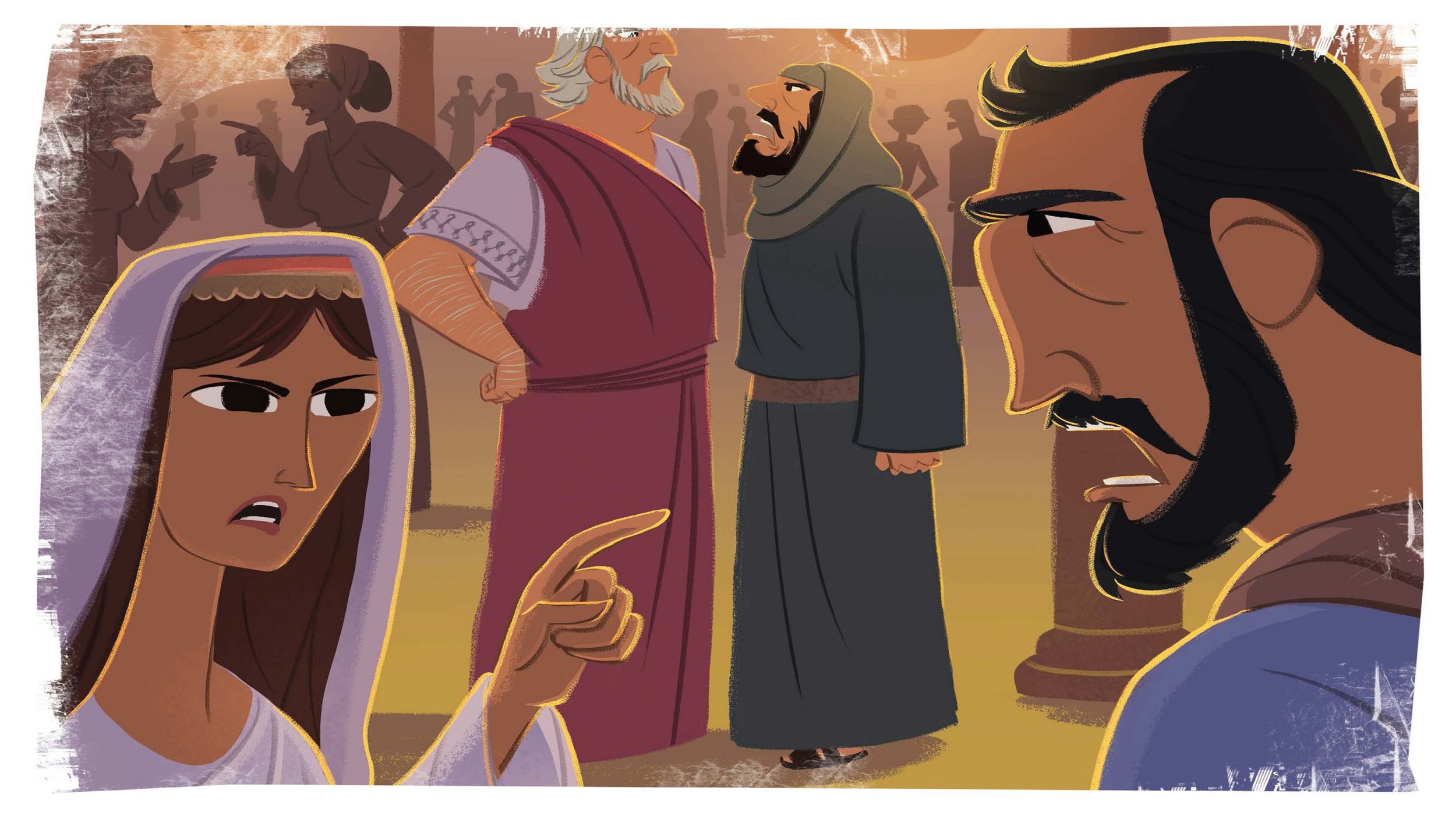
Let us first see what we can gather on the surface: from observation of what is clearly spoken of in this text. Three things: (i.) A report of a division in the church has come to Paul (v. 11); (ii.) The symptoms of this division seem to be a kind of cult of personality. There are parties following leaders: ‘Paul, Apollos, Cephas’, and even ‘Christ’ (v. 12); (iii.) What places people into each party seems to be that they were ‘baptized’ (v. 13) by these: though Paul does not want any part of that and seems to be able to deny that he baptized anyone except for this ‘household of Stephanus’ (v. 16). Now that may seem like a very silly thing to form parties over, but it is not uncommon. Note that the focus of Paul’s correction is not on the leaders of factions, as in his farewell address to the Ephesians elders: “men speaking twisted things, to draw away the disciples after them” (Acts 20:30). Here the application is straight to the body as a whole. It is all of our responsibility to listen carefully to the diagnosis and to practice the medicine.
Now why do I call these the surface and symptoms? As a first clue, let’s look at the teams and banners and so forth. Very often we are told that what creates divisions is names and labels and so forth. If we would just call ourselves “Christians only,” problem solved! But notice that when Paul looks out at these parties with their banners, he sees not only the name of three mere mortals (Paul, Apollos, and Cephas), but he also sees a banner with the name of ‘Christ’ (v. 12), and he puts them in the same boat. Simply declaring “I follow Jesus, not any mere man,” does not make us non-divisive. The spirit of division must run deeper than that. So this is the first shallow remedy: to peel all the labels off the medicine bottles. “Ah, you see, labels! The doctrines of men! You may follow Calvin or Wesley, but I follow Christ!” But what is behind this cheap virtue-signaling is nothing but a lot of unlabeled medicine that still needs faithful doctors to prescribe at the right dosage. It turns out that labels have their place. Christ gave teachers to his church (Eph. 4:10-11), and Paul commends imitation of faithful teachers (1 Thess. 1:6, Heb. 13:7). Peeling all the labels off won’t heal us of division.
If we insist on staying at the surface, we will develop medicines that can go only skin-deep. Another thing we can do is to isolate the opening verse and say: “You see, it is very simple. Just obey Paul here: ‘all of you agree’ (v. 10). There you have it! If you will just stop disagreeing over this or that point of doctrine or practice, all will be well.” But there is a good reason to think that in the words “all of you agree,” Paul is not giving us the remedy, but a description of the healthy state. In other words, “Get back to that healthiest place of Christian agreement and unity,” but not “Achieve that unity by simply agreeing.” Now why would I make such a hairsplitting distinction? And my answer is that simplistic remedies lead to all kinds of absurdities. Let me show you that by asking a few simple diagnostic questions: Which of the partisan views should all the parties settle on in order to stop the division? And would it make any difference if these Corinthians agreed with Paul or disagreed? Certainly they do not currently agree with his position now! And if they disagree with Paul, does not Paul disagree with them? Are you starting to get a sense of the problem with the surface healing of divisions? It turns out that the only way to unify is around an idea that is bigger than the unity.
On the surface, especially for most people who do not like conflict, verse 10 gets quickly translated into the quick fix of: “Quick—all of you agree!” I call this common, easy remedy “unilateral disarmament.” It says: Let us all agree to the lowest common denominator, and if you do not, then you are divisive! But the remedy of unilateral disarmament is contradictory and hypocritical. And we already saw that the label-peelers do not get us any closer to true unity. These surface remedies would heal the wound of division only lightly (cf. Jer. 6:14, 8:11).
The Essence and Healing of Sinful Divisions
Here is out first corrective. Paul is actually not telling them to water down their doctrine to some lowest common denominator to achieve unity. In our postmodern context, the English rendering “all of you agree” is probably not the best translation. We have in our minds: “Oh, good, let’s all agree to disagree, or else pretend that none of it matters.” The strictest Greek would be ‘that you all speak the same thing’ (v. 10),3 which addresses what they are communicating about their basic identity. To put it in simple terms, the sin in this division is tribal and not an honest doctrinal disagreement. And if you know anything about the three mere mortals on the list, it is not difficult to imagine the rationale for the different loyalties.4 The more missional types were saying “I follow Paul,” the morally serious types were saying “I follow Peter,” and the ones chasing eloquent speech and a good teaching experience, “I follow Apollos” (cf. Acts 18:24). This could also happen because of the teaching emphasis, as one commentator says,
When a Christian, or a group of Christians, becomes totally absorbed with one aspect of the truth to the neglect, exclusion or even denial of the whole truth as it is in Jesus, then the danger point has been reached.5
Here comes the second corrective. Paul is actually calling them up from the divisive pigsty of tribalistic thinking to the unifying horizon of gospel-doctrinal thinking. He does this in two ways. First, in the way that he chides them: ‘Is Christ divided? Was Paul crucified for you? Or were you baptized in the name of Paul?’ (v. 13) What he is holding in front of their minds is the work of Christ: undivided and undelegated to a mere mortal like Paul. Christ’s work is one and our piddly allegiances aren’t part of that! Let me go over that logic slowly because we are bound to miss the connection. Because there is one faith and one hope — namely one gospel of Christ — so there is one body (cf. Eph. 4:4-5). In that same letter to the Ephesians, Paul holds forth Christ’s work on the cross as the thing that reconciled the warring parties of Jew and Gentile.
But now in Christ Jesus you who once were far off have been brought near by the blood of Christ. For he himself is our peace, who has made us both one and has broken down in his flesh the dividing wall of hostility (2:13-14).
Factions in the body actually deny the gospel by reversing redemptive history! Do you see how unity and division is about the gospel; and alternative remedies are at least dosages of false gospels. Because of what Christ did, there is a group identity that matters, but there is only one group identity that matters: the one church. But we should not miss why: the doctrine solves the division. The one gospel is what explains the one body.
There is a second way Paul highlights this. Paul doesn’t just chide them as ones who have forgotten the gospel that they have in common. He also contrasts how earth-shattering the gospel business is versus their faction-building business in verse 17. Note that he is not minimizing baptism. He is using baptism as a focal point of the comparison because that’s what they were using to build their little cliques and tribes: ‘For Christ did not send me to baptize but to preach the gospel’ (v. 17).
OBJECTION. But when you qualify this unity by what you call “one gospel,” you make it impossible to do both! Your “gospel” is not something everyone can get behind! We must choose between one gospel or else one body.
REPLY. False - on two counts. First, who exactly is “everybody”? I do not deny that the enemy has sown weeds into the Master’s field (Mat. 13:25) and these will never rally around the gospel. But all true Christians hear the voice of one shepherd (Jn. 10:4, 16). Second, we are talking about the main and plain center of the gospel: what Paul calls “of first importance” (1 Cor. 15:3), which is the cross and resurrection. After all, these three teachers (Peter, Paul, and Apollos) would not have been teaching a fundamentally different gospel message. Where they differed, it would have been on secondaries.
One more deep medicine from verse 17. Paul was so aware of the devil’s devices that he knew, not only can you be divisive under the banner of ‘Christ’ (v. 10), but you can also take everything he just said about the gospel and use the quality of your speech to build one more faction. So he makes one more contrast: ‘not with words of eloquent wisdom, lest the cross of Christ be emptied of its power’ (v. 17b). Eloquence here was tailored to the Corinthians; but every culture has its own kind of “eloquent speech.” In our culture it is what we call “winsomeness.” We are often advised that this is how to get out of the way of the cross.
This is basically what Paul means by “emptying” the power of the gospel message. He doesn’t mean only something spiritual by it (though there is a spiritual contest between the cross and worldly-speech, which we will get to in the next few verses). But the first and simplest thing we need to see is common sense. It is just that the focus on eloquence or persona or style or any other secondary thing flat-out sucks the attention span away from the contours of the gospel and onto something else. In a never-ending parade of secondaries, no true Christians are being created and no one is being called together as we saw last week in the definition of the church. Gospel speech does that.
Here is the key. Focusing on personas divides. It sinfully divides. It is the ultimate “two strikes.” Not only is our focus taken off of the gospel message (which would be one and unifying) but our focus is now on a finite individual who is less than Jesus, and we are making comparisons between that mere mortal and other mere mortals, and, whether we know it or not, a good portion of our faith is starting to latch itself to their star. The words of Paul have to be our constant drumbeat.
For what we proclaim is not ourselves, but Jesus Christ as Lord, with ourselves as your servants for Jesus’ sake (2 Cor. 4:5).
Practical Use of the Doctrine
Church plants are a great opportunity to apply this message because it is one more thing that can be applied as preventative medicine — i. e. before the factions emerge. And preventing different kinds of factions will require different exercises of unity.
Use 1. Correction. How do we prevent doctrinal factions? Some would say it’s by rallying around the teaching of your pastor. And certainly it’s true that your pastor had better be teaching the Bible and that the members ought to submit to God’s word as they are hearing it. All true. But simply saying, “Let’s all accept what Pastor X is saying” is nothing but small town popery! Let me suggest the healthiest kind of diversity for this doctrinal unity. Get in touch with the discipline of diversifying your “mere mortal intake.” Do you find yourself only ever able to listen to, or read, one mere mortal? (This can be harmless for a short season) But the longer this condition of “mere mortal myopia” lasts, the more harmful it is and division is really only one of several symptoms. Be in theological conversation with the whole range of people in the church. Be in all parts of the Scripture. And as C. S. Lewis said one time, read two old books for every one book you read from our generation.
Use 2. Exhortation. How do we prevent relational factions? Well, partly the same way. Ensure that all of the relationship in the church is fundamentally rooted in what we all have in common: the gospel. Now I hate to be cliche, but get out of your comfort zone before and after the service! How does Paul begin and end “the Romans 14 Way”? Welcome. Welcome. Welcome. That right there tells the gospel because he says, “Therefore welcome one another as Christ has welcomed you” (15:7). Now the fundamental way that Jesus worked out our welcome and made us all one is by being divided himself: torn apart “beyond human semblance” (Is. 52:14).
Writing a letter to the Corinthians in the year 95 AD, Clement of Rome found these same factions still keeping this church divided. We don’t want that to be said of us. Jesus said that the fundamental mark of being his disciple is our love for one another (Jn. 13:35). We need to not fall for false unities, yes, but we also need to resist this ugly thing called Party Spirit. Anyone whom Christ has died for is our brother and sister: Period.
______________________________________________
1. Carson & Moo, Introduction to the New Testament, 415
2. Morris, The First Epistle of Paul to the Corinthians, 39
3. αὐτὸ λέγητε
4. Morris says, “The party choice would have been made on the basis of their methods of preaching” (40).
5. Prior, The Message of 1 Corinthians, 29