
Praying Like it’s the End, Loving Away Sins
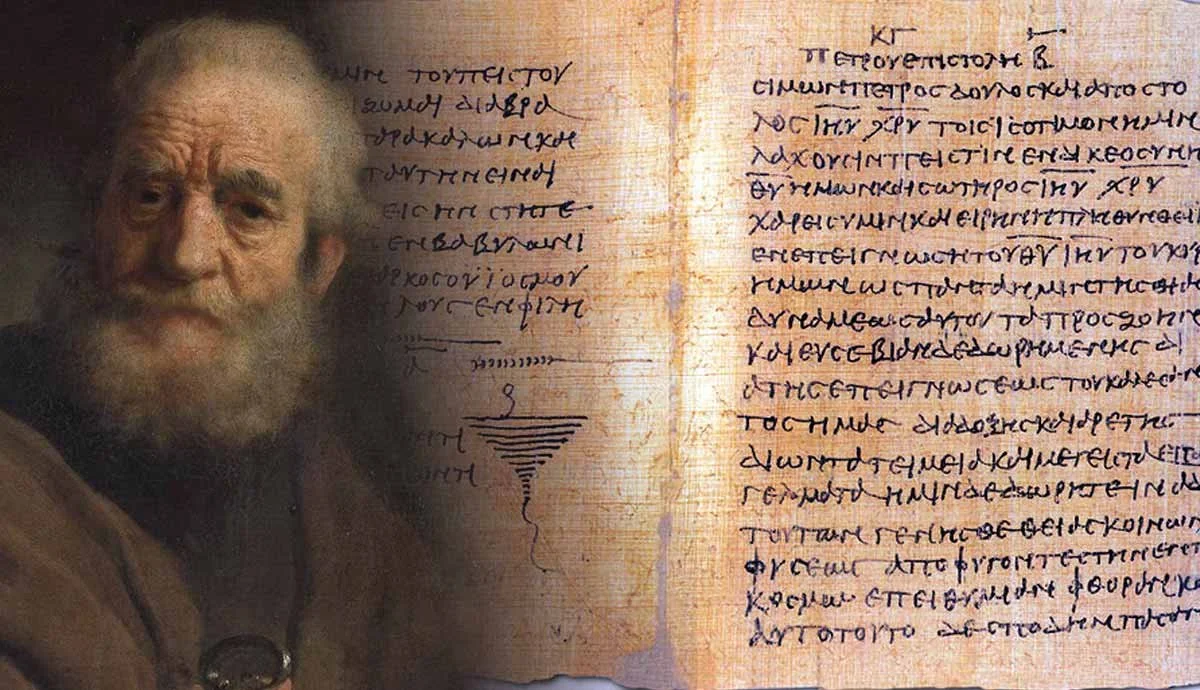
“The end of all things is at hand; therefore be self-controlled and sober-minded for the sake of your prayers. Above all, keep loving one another earnestly, since love covers a multitude of sins.”
1 Peter 4:7-8
One of the more misunderstood words in the Christian’s lexicon is the word supernatural. On the one hand we treat it as a spiritual version of “next level,” and I suppose there is a sense in which that is accurate. After all, the New Testament speaks about mature Christians as those who “walk not according to the flesh but according to the Spirit” (Rom. 8:4), or who “look not to the things that are seen but to the things that are unseen” (2 Cor. 4:18). So our outlook should be supernatural and our source of strength should be supernatural. But the error is subtle. We see abuses not only of the word, but of our whole idea of the Christian life when different traditions call that which is merely sensational or exuberant “supernatural.” Someone is thought to be more spiritual if they are given to being more emotional, more impulsive, more expectant of the extraordinary.
Many Christians move on from this, burned out and ready for one more pendulum swing. And one upshot of all of this is the neglect of the supernatural—a reaction against any thought of a “next level,” a distaste or even fear of excellence—even to the point of developing an aversion to spiritual maturity and making progress. But surely all Christians should agree that there should be progress in that which is most essential, that which is most basic. What about prayer and love?
Doctrine. Supernatural Christian prayer aims at the end of all things, and supernatural Christian love aims to cover each others’ sins.
(i.) Supernatural Christian prayer aims at the end of all things.
(ii.) Supernatural Christian love aims to cover each others’ sins.
Supernatural Christian prayer aims at the end of all things.
We have to begin with Peter’s expression: ‘The end of all things is at hand’ (v. 7a). One good way to get distracted here is to get bogged down in the debate between preterism and futurism. Let me give you the “Cliff Notes” version, or for you younger people, let me give you the meme version: The Preterist says, “END—you can’t qualify that. Whatever ends here ends literally; and that can only mean the old age of Israel.” The Futurist says, “ALL THINGS—you can’t reduce that to some things, even if the most constant biblical-historical things.”
The expression ‘at hand’ is an English rendering of the verb ἐγγίζω, which is otherwise “come near” or “draw near,” in the perfect tense, which may be one clue how to read the time here. It is the thing itself—this end (τέλος)—that has already come near. This word for “end” is not merely chronological. It is a synonym for aim or design or motive or goal. We use it that way in English all the time. But we also like our prophecy charts and our speculation, so we are quick to ignore that we use the English word this way all the time. Now, don’t get me wrong. I do think that Peter is communicating to us a rushing stream of those sands through the hourglass. But not to speculate.
Rather, it is to focus on a whole life that will make us unashamed when our King returns: ‘therefore be self-controlled and sober-minded for the sake of your prayers’ (v. 7b). When we think of the act of getting sober, we may think of a burst of cold water in the face, or the lights piercing through the window at dawn, and that is the intended effect of Peter’s words. Calvin does think it is mainly with the thought of the Last Day. He comments,
It is, then, no wonder that the cares of this world overwhelm us, and make us drowsy, if the view of present things dazzles our eyes: for we promise, almost all of us, an eternity to ourselves in this world; at least, the end never comes to our mind. But were the trumpet of Christ to sound in our ears, it would powerfully rouse us to lie torpid.1
In other words, it would sober us like nothing else! This END is where everything is driving, no matter where you are on the historical timeline. And that includes good and evil—these are always coming to an end, to a high noon, to an ultimate showdown.
The real trick here is the preposition εἰς, which has all sorts of function depending on case and context. The KJV says “unto prayer.” The NKJV says, “in your prayers.” The NASB says, “for the purpose of prayer.” The NIV says “so that you may pray.”
What is the upshot of verse 7? What is different here from regular Christian prayer? All Christians must pray. R. C. Sproul once spoke of how a prayerless Christian is a contradiction in terms: “One might pray and not be a Christian, but one cannot be a Christian and not pray.”2 That’s not legalism talking; that’s just common sense. Someone who has been born again naturally turns their whole soul toward God, pleads with God, is aware of God’s presence, and learns to speak with God as Father. In this sense, a non-supernatural-Christian is also a contradiction in terms. There are no carnal Christians in the strictest sense.
However, I think we also understand that there is a surface and there is a depth in prayer, just like in anything else. The superficial Christian has no sense of the communal, let alone the cosmic. Supernatural Christian prayer takes aim at the end of all things. It aims at the goal of the souls we love—not only for their healing and happiness, but if all else fades away, their salvation. It takes aim at the end of the forces of darkness around us: “For the weapons of our warfare are not of the flesh but have divine power to destroy strongholds” (2 Cor. 10:4).
Supernatural Christian love aims to cover each others’ sins.
‘Above all, keep loving one another earnestly’ (v. 8a). This is the second time in this letter that Peter had emphasized love: “a sincere brotherly love, love one another earnestly from a pure heart” (1:22). Here it is ABOVE ALL.
It is, as Francis Schaeffer called it, “the mark of the Christian.”3 And why did he call it that? It is because Jesus had so prioritized love and Peter retained his Master’s teaching:
By this all people will know that you are my disciples, if you have love for one another (Jn. 13:35).
I don’t claim here that Peter is giving us a full picture of supernatural love—perhaps not even the most essential thing. I know this. Love is driven toward this. Love wants to see the beloved whole again, so ‘love covers a multitude of sins’ (v. 8b), as the Proverb says, “love covers all offenses” (10:12), which Peter may be paraphrasing here. John in his letter may jog our memories as to why love would do this:
In this is love, not that we have loved God but that he loved us and sent his Son to be the propitiation for our sins. Beloved, if God so loved us, we also ought to love one another (1 Jn. 4:10-11).
We cannot actually “love away” others’ sins in the same way that Jesus did. The work of Christ is conceived as a covering, from all the way back to those animal skins provided for Adam and Eve by God in Genesis 3:21.
You forgave the iniquity of your people; you covered all their sin (Ps. 85:2)
for he has clothed me with the garments of salvation; he has covered me with the robe of righteousness (Isa. 61:10).
Only Jesus can provide a covering for our sins in the divine courtroom. However, our love gets to be a drama of that good news, a sign of the ultimate covering—a communal covering—and, if I can put it in terms of last week’s running out of that ditch on to the battlefield, think of the expression, “Cover for me!” As one darts out of the ditch—now a ditch of depravity that enslaves us to our old passions, but now a ditch of shame, from which that covering gives us courage to
When Paul said that, “Love bears all things, believes all things, hopes all things, endures all things” (1 Cor. 13:7), he wasn’t saying that love is willing to be naive for the sake of others. We know that because he had said in the previous breath: “[love] does not rejoice at wrongdoing, but rejoices with the truth” (v. 6). Love goes to these lengths to cover sin, not as Adam and Eve covered themselves with fig leaves to enable their own deception, but a shied of a fellow sinner who has your back. As one Puritan reflected on those words of Paul to the Corinthians,
[Love] desires to condemn no man, but would gladly, as far as reason and conscience will permit, absolve every man … it looks more to prevention of future sin than to revenge of a by-past fault.4
There is something about love that hurts not only when the beloved hurts, but when they are ashamed or in anguish over what they have done.
Practical Use of the Doctrine
Use 1. Exhortation. We actually have to discipline ourselves to pray corporately and cosmically—in other words, supernaturally, with the things above mere nature in our view. That is, we have to intentionally structure our prayer time that way. We have to practice language that way, which means we have to start to see the world that way. One thing Jesus teaches us to pray is this: “Your kingdom come, your will be done, on earth as it is in heaven” (Mat. 6:10). This is not a prayer for the kingdom merely at the “end,” as in its final consummation. Yes, we do pray for that as well: “Come, Lord Jesus!” (Rev. 22:20). However, note the concluding words to that line of prayer, “On earth as it is in heaven.” It is a maximal touch-down on earth. This is the sense of that mysterious scene in John’s vision.
And another angel came and stood at the altar with a golden censer, and he was given much incense to offer with the prayers of all the saints on the golden altar before the throne, and the smoke of the incense, with the prayers of the saints, rose before God from the hand of the angel. Then the angel took the censer and filled it with fire from the altar and threw it on the earth, and there were peals of thunder, rumblings, flashes of lightning, and an earthquake (Rev. 8:3-5).
Do you pray as if God’s response came in the form of heavenly supersonic missiles fired by angelic archers against Babylon’s fortresses around you? Do you pray for wicked kingdoms to be overthrown, for demonic strongholds over people’s minds to be plundered, for the works of darkness to be exposed, for the God who says to Paul, “I have many people in this city” (Acts ) to bring such as He has in this city into our church to build and to serve and stand arm-in-arm in this great crusade?
Use 2. Instruction. How then does love “cover sins” without enabling, or without skipping that step of real repentance? We can do so in five very concrete ways:
First, the very act of rebuke or warning against sin covers sin: “whoever brings back a sinner from his wandering will save his soul from death and will cover a multitude of sins” (James 5:20).
Second, there is the manner of rebuke: “If your brother sins against you, go and tell him his fault, between you and him alone. If he listens to you, you have gained your brother” (Mat. 18:15).
Third, where there has been repentance, don’t bring it back up: “[love] keeps no record of wrongs” (1 Cor. 13:5).
Fourth, do not scratch the itch of morbid curiosity: “he who is trustworthy in spirit keeps a thing covered” (Prov. 11:13; cf. 17:9).
Fifth, be proactive in burying their shame by pointing to that ultimate covering in Christ: “Blessed is the one whose transgression is forgiven, whose sin is covered” (Ps. 32:1).
Use 3. Admonition. If you are an unbeliever—if you are not sure where you stand with Jesus—then let me extend Peter’s words of urgency to your own heart. The end of all things as hand. One way or another, the end is near for each of us. Become sober about eternal things. Pray like it’s the end, because it is. It is fast approaching.
Take hold of His hands of mercy that were pierced for you; because there is nothing more urgent. Trust in His promise to anyone who would have it; because there is nothing more sure. In the words of the prophet, “Seek the LORD while he may be found; call upon him while he is near” (Isa. 55:6).
_______________________________________________________________________
1. Calvin, Commentaries, XXII.2.127-28.
2. R. C. Sproul, Does Prayer Change Things? (Orlando: Reformation Trust Publishing, 2009), 2.
3. Francis Schaeffer, The Mark of the Christian (Downers Grove, IL: InterVarsity Press, 1978).
4. Hugh Binning, Christian Love (Edinburgh: Banner of Truth, 2009), 23.