
The Mystery of the Spirit of Jesus
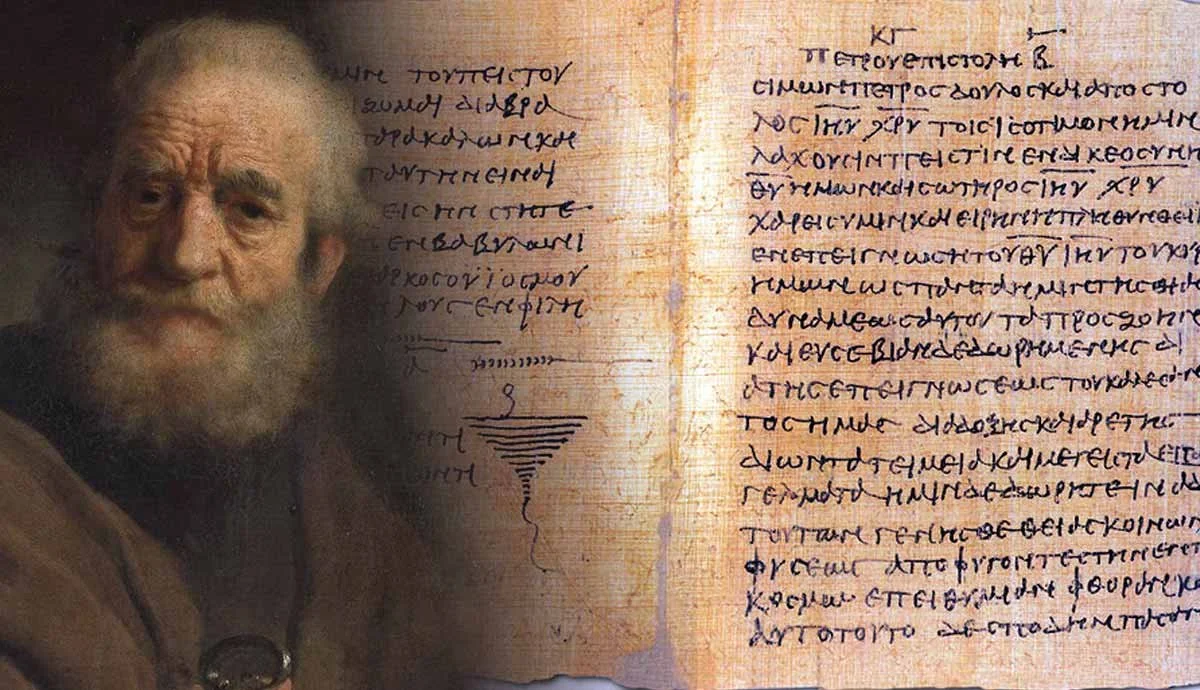
For Christ also suffered once for sins, the righteous for the unrighteous, that he might bring us to God, being put to death in the flesh but made alive in the spirit, in which he went and proclaimed to the spirits in prison, because they formerly did not obey, when God’s patience waited in the days of Noah, while the ark was being prepared, in which a few, that is, eight persons, were brought safely through water.
1 Peter 3:18-20
Our Reformed doctrine of the clarity of the Scripture does not mean that all parts of Scripture are equally clear. That expectation that one ought to be able to understand everything with the same clarity, or to “get it” all immediately, can even lead some to a crisis of faith. There are passages which are puzzles. Peter said in his second letter that “There are some things in [Paul’s letters] that are hard to understand” (2 Pet. 3:16). The good news about the clarity of Scripture is that of those things absolutely necessary to eternal life and godliness in this life, the Holy Spirit has communicated all that we need to know in a way that we can understand.
Doctrine. Jesus was made alive in spirit over His enemies and for the sake of we who are reconciled.
(i.) The Identity of the Spirit of Jesus
(ii.) The Activity of the Spirit of Jesus
(iii.) The Reason of the Spirit of Jesus
The Identity of the Spirit of Jesus
We have to first decide on that last expression of the previous verse: ‘being put to death in the flesh but made alive in the spirit’ (v. 18b). The KJV renders this “by the Spirit,” as in the Holy Spirit as the agency causing the resurrection of Jesus. There are four very basic reasons to read this as the human spirit of Jesus.
First, the Greek is indecisive without further context.
Second, the contrast between flesh and spirit is vast in the New Testament.
Third, to be “made alive” cannot be true of His divinity.
Fourth, the opposite “put to death in the flesh” specifies His humanity.
Of course there is the remaining difficulty that if Peter bothered to say “made alive” about this, then it seems, at first, to belong properly to the resurrection and not to the spiritual state of Jesus in between the cross and empty tomb. On the other hand, we simply do not have enough information to decide how even the resurrected Christ, who passes through walls in Luke 24, could have passed through time and the spiritual realm to do what I am about to describe Him doing. So the difficulty is not great. There is also the possibility that this means “in the spirit,” as in the spiritual realm, as Grudem reads it in his commentary.1 That would also have the support of the activity described by the passage.
The Activity of the Spirit of Jesus
There are three main views, and other species of these, some of which must be rejected out of hand. For example, we must certainly rule out the blasphemous Word of Faith teaching that Jesus went to hell in order to finish the work of the cross by being tortured by evil spirits. Having said that, here are those three views that each fit within Christian orthodoxy.
The Limbo of the Fathers (limbus patrum) View. This is the view held by many of the ancient church fathers, and even Calvin held it in his Commentary—which one may find strange because he also reworked how we ought to take the words of the Creed, that Christ “descended into hell,”2 whereas many of the Reformed simply took it to mean the space of the three days of death. But that was a different subject than what Peter means here in any event. For Calvin, the only reason ‘prison’ (v. 19) is mentioned by Peter is the same way in which the law is said by Paul to have held the full gospel in a kind of imprisonment in the Old Testament.3
Now, the word “Limbo” comes from the Latin for edge, border, or fringe, so that these were not in “hell” but in something like its outer-boundary. This is connected to the expression “Abraham’s bosom,” derived from Jesus’s illustration in Luke 16. For them, this was the reason Abraham could have been a messenger to the rich man in torment even though the poor man was brought to Abraham’s side. This also borrows from those captives that Jesus liberates in Ephesians 4:8-9, when he “descended into the lower regions, the earth.” So, this is Jesus preaching the gospel to souls in this “limbo.” Some will even appeal to how God keeps “the unrighteous under punishment until the day of judgment” (2 Pet. 2:9), but all this verse necessitates is that there is a state of judgment before the final one—not that these could in any way be eligible for a second chance.
Against this view, it may be recalled that Jesus had used the fact that God was “not God of the dead, but of the living” (Mk. 12:27), to refute the Saduccees about the resurrection—indicating to many that the Old Testament saints were alive in Him even now. But the main difficulties with this begin with the fact that the object of this preaching are those who Peter says ‘did not obey’ (v. 19), which indicates not a total absence of the gospel in their day, but the presence of total opposition to God. Often this view is criticized because it would contradict the biblical teaching that, “it is appointed for man to die once, and after that comes judgment” (Heb. 9:27). Even in that Luke 16 passage, what else is the man in torment told?
And besides all this, between us and you a great chasm has been fixed, in order that those who would pass from here to you may not be able, and none may cross from there to us (Lk. 16:26).
However, it should be remembered that this view is actually not holding out for a “second chance” for the wicked per se, but more like a holding place of sorts for those to whom the gospel hope had come in its promissory form.
The Noah’s Day View. Wayne Grudem gave the most careful attention to this view, in which Jesus “in the spirit” harkens back to when the same “spirit of Jesus” proclaimed through Noah. The concept has precedence in this very letter. Recall that it was “the Spirit of Christ in [the prophets]” (1:11) of the Old Testament, and Noah is elsewhere called a “preacher of righteousness” (2 Pet. 2:5). The spirits “in prison” only has to refer to where they are now, not that the proclamation had to have happened “A.D.” Grudem’s argument that this must be those human spirits from the days of Noah also leans on the idea that, “nowhere in the Bible or in Jewish literature outside of the Bible are angels ever said to have disobeyed ‘during the building of the ark.’”4 Here, it may be said, that Grudem is engaging in a bit of biblicism, as the argument that angelic spirits disobeyed seems only to require general reference to the days of Noah, without it having to specify the same time-scale in which he built the ark, much less depend on the exact word choice “disobeyed.”
The Victory over Evil Spirits View. Note that Peter says that Jesus in spirit ‘proclaimed’ (v. 19)—that is only the verb form for “preach” or “proclaim” (κηρύσσω)—yet it says nothing of good news and does mention their wicked state. We may assume up front that the mention of ‘God’s patience [that] waited in the days of Noah, while the ark was being prepared’ (v. 20) necessitates a second chance, since such a waiting while Noah warned them was a display of divine generosity then. But that is an assumption read into the text and not anything in the text itself. Furthermore, the audience are ‘the spirits in prison’ (v. 19), and they are never attached to humans in Noah’s day, only that these spirits disobeyed in that era before the Flood. That matches well with what Peter says in his second letter about those fallen angels.
For if God did not spare angels when they sinned, but cast them into hell and committed them to chains of gloomy darkness to be kept until the judgment; if he did not spare the ancient world (2 Pet. 2:4)
Not to mention Jude saying roughly the same:
And the angels who did not stay within their own position of authority, but left their proper dwelling, he has kept in eternal chains under gloomy darkness until the judgment of the great day (Jude 6).
One thing is for sure about the time of this activity. Even if it is before the resurrection in a total sense, so that there is a softer sense of “made,” we must at least confess that Jesus was never cut off from God in condemnation. To be ‘made alive in the spirit’ (v. 18b) is quite the opposite of a spiritual death. We must recall His final expression from the cross: “Father, into your hands I commit my spirit!” (Luke 23:46) These are the sort of things that must be retained about this passage. If we get lost in the wonder of the mystery, we must at least rule out errors.
The Reason of the Spirit of Jesus
It may be thought that the reason (or design) for this activity of Jesus will depend on which view is correct. However, even if we must choose only one, or some hybrid of two against one, the reason behind each would still be true about what Jesus ordinarily does by the power of the Holy Spirit and through the church ever since. I am not sure, myself, whether or not each view may be true about something that Jesus did. The burden of proof seldom considered is to demonstrate that these three views are logically incompatible with each other. I am not persuaded of that. If it is the case that Peter is speaking of Jesus communicating “in the spirit” through Noah’s preaching, well, then one clear takeaway would be that the same spirit of Christ who “preached peace to you who were far off and peace to those who were near” (Eph. 2:17) still reaches the far off today.
Here is another takeaway. The present aspect of the exaltation of Jesus—that of the beginning of having all judgment handed over to Him—is not taught enough. And, as a side-note, I would only add that not understanding this is the cause of some confusion over certain passages, most notorious that passage in Peter’s second letter that some use against the doctrine of particular redemption. There Peter says,
But false prophets also arose among the people, just as there will be false teachers among you, who will secretly bring in destructive heresies, even denying the Master who bought them, bringing upon themselves swift destruction (2 Pet. 2:1).
The reason that Peter uses the Greek word δεσπότης there for “Master,” rather than the regular word “Lord” (κύριος), is because Jesus is to the false teachers in the church a Master who will break them with that same rod of iron from Psalm 2:9. The same blood that sanctifies hypocrites in the visible church in Hebrews 10, unregenerate churchgoers who fall away and are under double-judgment—that same blood earned the right of Jesus to judge. So let’s understand this idea that Peter brings up here, of Jesus, alive in the spirit over His enemies. What does this mean?
For the Father judges no one, but has given all judgment to the Son, that all may honor the Son, just as they honor the Father. Whoever does not honor the Son does not honor the Father who sent him … And he has given him authority to execute judgment, because he is the Son of Man (Jn. 5:22-23, 27).
What Peter is saying in our text is that Jesus’ first order of business, being alive in the spirit, was to proclaim His victory and therefore the rightful condemnation of these wicked spiritual rulers and possibly ancient men of renown: but at least to the demons.5
Practical Use of the Doctrine
This passage speaks of Jesus being made alive in the spirit, and the Bible never simply gives us trivial information. These words are always “spirit and life” (Jn. 6:63). This same truth that Peter talks about, which is bad news for those in chains awaiting final judgment—that same truth is good news for those whose lives are hidden in Christ. This has implications for us.
Use 1. Instruction. That Jesus was made alive in the spirit is made a source of making us alive in the spirit. So Paul says, “Thus it is written, ‘The first man Adam became a living being’; the last Adam became a life-giving spirit’” (1 Cor. 15:45). Elsewhere, in Colossians 3, Paul begins to give us huge amounts of application of this same truth, but he first simply asserts it as an unquestionable truth: “If then you have been raised with Christ” (Col. 3:1). That is the starting point. It is a part of the gospel that you have been raised with Christ. So the first application is to become familiar with this gospel truth. Not only, as the hymn says, “Jesus Lives, and So Shall I,” but Jesus was raised, and so have I.”
Use 2. Consolation. Returning to that Colossians 3 text: “If then you have been raised with Christ,” he goes on to say, “you have died, and your life is hidden with Christ in God. When Christ who is your life appears, then you also will appear with him in glory” (vv. 1, 3-4). So there is great news for your present and your future in Christ being made alive in the spirit. So live in light of this truth! This is because of our union with Christ. Let me give you another verse for this.
For if we have been united with him in a death like his, we shall certainly be united with him in a resurrection like his. We know that our old self was crucified with him in order that the body of sin might be brought to nothing, so that we would no longer be enslaved to sin. For one who has died has been set free from sin. Now if we have died with Christ, we believe that we will also live with him (Rom. 6:5-8).
This union with Christ is not simply an abstract union—whether we call it a “federal” or “covenantal” or “legal” union that God sees us in an abstract relation to Christ. No! Because God has chosen us from eternity, so He has intended to bind us to His Son in the regenerating work of His Spirit, so that this union is really and truly caught up with Him, in all these passages, in the heavenly places (cf. Eph. 2:6).
This same Jesus who preached to whomever it is that Peter means that He preached—this same Jesus finds no significant obstacle in time or space or other kind of realm. No matter how far off we are, He who descended to the lowest regions can reach the furthest prodigal children, and liberate those captives as He liberated those of old.
____________________________________________
1. Grudem, 1 Peter, 157.
2. Calvin, Institutes, II.16.8-10
3. Calvin, Commentaries, XXII.2.114
4. Grudem, 1 Peter, 159.
5. 1-2 Peters’ not so subtle typology of the days of Noah with the days of the end of his own age have their roots in words spoken by Jesus. Preterists naturally seize upon this to show how Peter views the end of the Jewish age in the same terms of cataclysmic judgment. In my own realist vision of prophecy—in which the preterist, futurist, idealist, and historicist positions are brought back into a unity of ectypes under their archetypes—the “sons of God,” if one so chooses to view those fallen angels hinted at in Genesis, and evil spirits presiding over Babylonianized earthly Jerusalem, as it rejected their Messiah, stand in a prototype-antitype relationship, as could the men of renown from before the Flood (as well as before Babel) and the Jerusalem leadership that handed Jesus over to the Gentiles.