
Why Are We Not Excluded From the Kingdom?
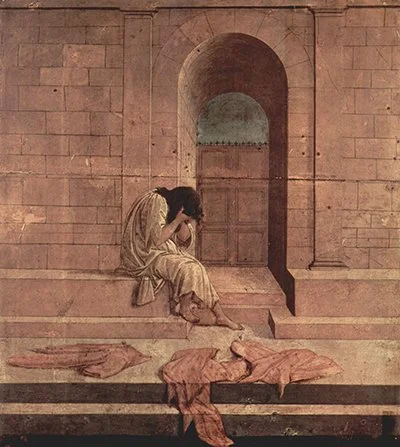
Sermon preached on October 7, 2018
Or do you not know that the unrighteous will not inherit the kingdom of God? Do not be deceived: neither the sexually immoral, nor idolaters, nor adulterers, nor men who practice homosexuality, nor thieves, nor the greedy, nor drunkards, nor revilers, nor swindlers will inherit the kingdom of God. And such were some of you. But you were washed, you were sanctified, you were justified in the name of the Lord Jesus Christ and by the Spirit of our God.
1 Corinthians 6:9-11
I am sure you have heard the expression “Citizens on Patrol.” Believe it or not, it was not just a silly Police Academy movie in the 1980s. There is an actual volunteer position. Whoever wrote Paul the original letter seemed to have among them something like a “citizen on patrol” in the kingdom of Christ. It seems like a noble enough position. However, the business of rebuke comes with a temptation. With so much wrong going on, we can easily start busying ourselves with others, as if God’s tattletales. Not to mangle an already worn-out cliche, but such a one has so many fingers pointed outward toward so many others, that there are no fingers left to point back to oneself.
There is a time for righteous indignation, and then there is a time to have our own souls gathered up again around the cross. Call it a Romans 2 moment: “you who judge those who do such things and yet do them yourself” (v. 3). There is a vast terrain for moral blame, and I am quite sensitive to sniff out those cultural appeasers and libertines who would censure all censure in the name of “gospel-centered” self-immolation. However, there is a place to allow the Word to pierce our own hearts as if nothing in the universe existed but our own souls, exposed before the holiness of God: as if there is nothing to hide behind, nothing, including our comparison with the moral progress or regress of others.
Paul has already leveled the playing field several times in this letter. Remember 1:26. “Not many of you were wise … not many were powerful, not many were of noble birth.” Remember 4:7. “For who sees anything different in you?” And so it is, in the middle of these very specific rebukes, that the Scriptures put us all in a very different posture. The Corinthian response after these words should become “Why am I not also excluded from the kingdom?”
Those Sinners Cannot Enter God’s Kingdom; or, Liberalism Rebuked.
You Sinners Could Not Enter God’s Kingdom; or, Legalism Rebuked.
The Only Reason We Are Not Excluded
Doctrine. Nothing separates us from excluded sinners—except for the gracious acts of the King.
Those Sinners Cannot Enter God’s Kingdom; or Liberalism Rebuked
‘Or do you not know that the unrighteous will not inherit the kingdom of God? Do not be deceived: neither the sexually immoral, nor idolaters, nor adulterers, nor men who practice homosexuality, nor thieves, nor the greedy, nor drunkards, nor revilers, nor swindlers will inherit the kingdom of God’ (vv. 9-10). Notice on this list sins that we do not think are a big deal anymore than the Corinthians did. That in itself is fascinating. This city of ancient perversion were positively puritanical in comparison to our contemporaries. Notice the threefold condemning of sexual sin; and it covers people who are married and people who are single. Moreover, it covers the homosexual and the heterosexual. We do not find out whether these things are right or wrong by consulting the culture around us. That greed, drunkenness, and swindling are wrong is no surprise. But that they are deserving of hell is jolting to us. Notice, however, the wholly surprising members of the list: idolatry and reviling. For anyone would does not know what those are, it is really only most of the things that pass for worship on Sundays and political conversation in the rest of the week. God ordains worship (e.g., Ex. 20:4-6, Deut. 12:5, 8, 30) and God owns our speech (e.g., Ex. 20:16). There is liberty in the one and a cause to be indignant in the other, yet these are done before the face of God.
Now, pay careful attention to the words: ‘Do not be deceived’ (v. 9). If we may bring back our metaphor of royal posters plastered on all the public walls of the kingdom here below, now they read: DO NOT BE DECEIVED. The value of listing sins of the culture is to show that they are common to us all. The value of expositing those sins is to show that they are in fact sin and worthy of damnation. We are so deceived, that the moment God’s word tells us that we are “all in the same boat” of sin, we comfort ourselves that what God just said was meant to dull our indignation against those same sins! In other words—and pay careful attention to this nuance—we shift the blame from sin to blame!
That is, we entertain the idea that the problem in our hatred of sin (since we all sin the same way) is precisely our indignation. In any moral blame, we are guilty of moralism. But this is utterly false. Indeed, we have not been indignant enough! Do we honestly think that we will learn to hate sin in ourselves by unlearning to hate sin at all? This is the way that the “gospel-centered” inheritors of what began as the New Calvinism have started to peddle: that outward moral indignation is moralism. It is tantamount to the sin of the Pharisees. However, that would have been a charming notion to the licentious Corinthians, which is why Paul lists out these sins. It is precisely because we, like they, long to be deceived about them.
Hence the existence of liberalism. Liberal religion smooths the edges out on the righteousness of God. Machen wrote about this, saying that Sunday after Sunday, “The preacher gets up into the pulpit, opens the Bible, and addresses the congregation somewhat as follows,
“‘You people are very good,’ he says; ‘you respond to every appeal that looks toward the welfare of the community. Now we have in the Bible—especially in the life of Jesus—something so good that we believe it is good enough even for you good people.’ Such is modern preaching. It is heard every Sunday in thousands of pulpits. But it is entirely futile. Even our Lord did not call the righteous to repentance, and probably we shall be no more successful than He.”1
So yes, society’s sins are easy to condemn in others; but we must not be deceived into a liberal religion that is soft on those sins. The Apostles did not share the antinomian’s concern with the outward moral pointer: “The time that is past suffices for doing what the Gentiles want to do” (1 Pet. 4:3). When I hear people say about some social sin that “That’s not a gospel issue,” I know that their pretend gospel-centered conservatism is really just the next liberalism waiting to happen. Why? Well, the first reason is that social sins are sins too, and that means that they need atonement. How exactly are we supposed to call people “out there” to repentance and faith if we cannot point out there at all? So that is Paul’s first step.
You Sinners Could Not Enter God’s Kingdom; or Legalism Rebuked
‘And such were some of you’ (v. 11a). It is like that moment after David sinned with Bathsheba, and had her husband, Uriah, murdered; and the prophet Nathan came to him to tell him what appeared to be just a story about a man who had all those sheep, but he stole from the man who had only one sheep and had him killed. And when David said that such a man should die, Nathan looked at the king in the eye and said, “You are that man” (2 Sam. 12:7). That is what Paul is doing here. You see that list of perversions? You see such moral wretches in action every day—AND SUCH WERE SOME OF YOU.
Now, all of a sudden, I am not thinking about “THOSE PEOPLE” who are subjects of church discipline anymore. All of a sudden, my own head is bowed down, in shame, like a convict. Like a traitor to the King. Because Paul said, “You were like these things.” And when Paul said that, really, Paul is just reminding me of what I know to be true. As Paul said about himself, “I am the foremost [of sinners]” (1 Tim. 1:15). Now, as we look into those posters all over the kingdom, what starts to appear is a wanted poster, and the face on the picture is our own.
Calvin comments, “For the greater the misery is acknowledged to be, from which we have escaped through the Lord’s kindness, so much more does the magnitude of his grace shine forth.”2 This was certainly true of the woman who anointed the feet of Jesus with her tears. When the self-righteous Pharisee was busy thinking about how sinful she was and how Jesus must be making some mistake,
Therefore I tell you, her sins, which are many, are forgiven—for she loved much. But he who is forgiven little, loves little (Lk. 7:47).
There comes a point (and it should really be our constant heart attitude) where there is nothing in between my day-to-day life and a God of holiness—nothing, that is, except the cross of Christ. That cross should loom larger and larger, because the Spirit helps me see my own sin as deeper than I had thought.
The Only Reason We Are Not Excluded
‘But you were washed, you were sanctified, you were justified in the name of the Lord Jesus Christ and by the Spirit of our God’ (v. 11b). We need to be reminded of this repeatedly in our Christian life. Why these three? Simply review the context to see it. Paul has talked about three aspects of sin between Chapters 5 and 6. (i.) Sin is defilement. (ii.) Sin is corruption. (iii.) Sin is treason.
Are we not defiled by our own sin? Do you not feel dirty because of what you have done? And have you not noticed that you cannot clean what has been made filthy? So Paul starts with the fact that you were washed. So “the blood of Jesus his Son cleanses us from all sin” (1 Jn. 1:7). It is in the past tense: “Already you are clean because of the word that I have spoken to you” (Jn. 15:2).
But sin also has an outward, corrupting nature. It disintegrates our own hearts, but also spreads outward to others. It infects. The maturing Christian begins to notice the inability of our flesh to contain the influence of our own sin. It comes out of the mouth. It proceeds forth in one’s actions. The moment we sin, we know, and we are ashamed and we wish we could take it back. But we cannot. Here is where Paul brings in more gracious words: “You were sanctified,” meaning that God set you apart. He removed you from the stock of sin. By the cross of Christ He surgically removed you from the infected, hell-bound lump of human clay: “For by a single offering he has perfected for all time those who are being sanctified” (Heb. 10:14). He has made you His own and called you holy. That is the sense of sanctification that the Apostle means here, rather than the ongoing process also called sanctification.
But there is one more problem. Even if our sins are washed away and He has redeemed us, you and I still need to possess His positive righteousness: His standing, or His record. This King will only have perfect citizens: “Who shall dwell on your holy hill?” (Ps. 15:1) We have already messed up, and it did not take too long into our Christian walk. He knows our record. Yet God the Father loves His Son’s record so much, that He is most glorified in the record of the Son being the focal point in his courts. So Paul adds a third thing He has done for you: ‘you were justified in the name of the Lord Jesus Christ.’
Many commentators notice that Paul makes this subtly trinitarian, capping off of the section with the words: ‘and by the Spirit of our God’ (v. 11). It is the Holy Spirit who applies what Jesus did to our hearts. And what’s the main instrument that the Spirit uses to apply the work of the Son? The answer is the Word of God.
Practical Use of the Doctrine
Use 1. Correction. Notice that the sin of homosexuality is listed with these others as sins that characterized the unregenerate life and therefore cannot characterize the Christian life. When people in the church argue that there can be an identity of “gay” as a Christian, then they are out of step with Paul here and making a very dangerous exception. Would we say that there can be a “Money Laundering Christian” or a “Wiccan Christian” or something else of the sort? If someone replies that Christians may sin even in these ways, the point has been entirely missed. Paul’s list of sins points to a life characterized by such, and the whole point of “the gay Christian” is that it does not if fact treat the sin as a sin to be repented of but as an identity. Paul’s logic is plain and contrary to this: You were this, but you are now, in Christ, justified, sanctified, and so on.
Use 2. Consolation. Our overwhelming impression, in our heart of hearts, ought to be ever be: WHY ME? So often we say about the bad things that happen “Why me?” But really we should be saying about the one thing that life is all about, and the one thing we most need, and the one thing that is the sum of all happiness, How can it be that the King should have invited me, and died for me, and sealed for me a spot at His table and in His very Family. Nothing separates us from excluded sinners: except for the gracious acts of the King.
____________________________________________________
1. J. Gresham Machen, Christianity and Liberalism (Grand Rapids: Eerdmans, 1923), 68.
2. Calvin, Commentaries, XX:212