
A Double-Defense
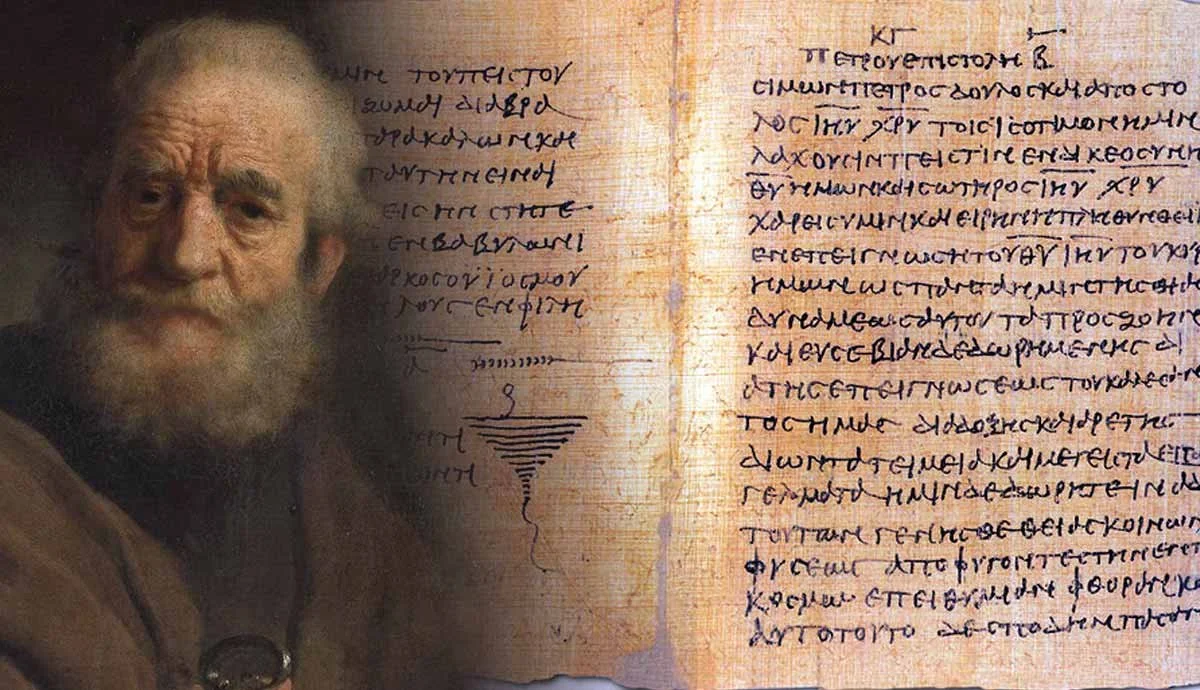
Now who is there to harm you if you are zealous for what is good? But even if you should suffer for righteousness’ sake, you will be blessed. Have no fear of them, nor be troubled, but in your hearts honor Christ the Lord as holy, always being prepared to make a defense to anyone who asks you for a reason for the hope that is in you; yet do it with gentleness and respect, having a good conscience, so that, when you are slandered, those who revile your good behavior in Christ may be put to shame. For it is better to suffer for doing good, if that should be God’s will, than for doing evil.
1 Peter 3:13-17
“You can’t argue people into the kingdom!”
Have you ever heard that? This ignores that you cannot anything people into the kingdom—hardly unique to the exercise of apologetics. That is, you cannot do this if what you mean is to replace the role of the Holy Spirit who alone makes us born again. On the other hand, God uses means to bring us to faith. There is the internal testimony of the Spirit, and then there are the external signs or demonstrations of the truth. Here Peter highlights two such means that belong to that latter demonstrative kind, and he puts them in a certain relationship to each other so that we cannot pit one against the other.
Doctrine. There are two demonstrations of the truth of our faith—rational persuasion and enduring persecution.
In saying this, just note that these are not the only demonstrations. We could say, for example, more broadly that enduring suffering (any kind of suffering) with patience and hope in God proves the worth of Christ to those who see us suffer. But Peter’s emphasis here is specific to those who would harm you, or those who revile you, and so forth. So what are those two demonstrations in relation to each other?
(i.) Enduring Persecution Provokes the Question.
(ii.) Rational Persuasion Serves with the Answer.
Enduring Persecution Provokes the Question.
This is the larger frame of the passage. In other words, if rational defense is at the heart of the passage, the picture that comes to the forefront, then it is persecution that frames the picture and even provides the background that unbelievers have with you. And I said that this is that specific suffering, persecution, and not only suffering per se. Look at the words used: ‘harm you’ (v. 13), ‘suffer for righteousness sake’ (v. 14a), ‘fear of them’ (v. 14b), ‘slandered’ (v. 16a), ‘revile your good behavior’ (v. 16b), and ‘suffer for doing good’ (v. 17). Clearly, Peter is being specific to suffering at the hands, or at the mouths, of Christ’s enemies. But what is it about this persecution that is a demonstration? Four things make it so.
First, such enduring demonstrates that persecution is not ultimate harm. He asks rhetorically ‘who is there to harm you … ?’ (v. 13). The correct answer is no one and nothing. Paul asks similar rhetorical questions of harm: “Who shall bring any charge against God’s elect? … Who is to condemn? … Who shall separate us from the love of Christ?” (Rom. 8:33, 34, 35) If the answer to these questions is No one, or at least, No one who ultimately matters, then this powerfully demonstrates the right kind of fearlessness, which explains Peter’s subsequent words, ‘Have no fear of them, nor be troubled’ (v. 14b). Those words are how we demonstrate this. That there is none who can do ultimate harm is the fact, but the unbeliever can only see that if there is a corresponding act. And the act is fearless, untroubled endurance.
Second, such enduring demonstrates that persecution is puny compared to blessing: ‘But even if you should suffer for righteousness’ sake, you will be blessed’ (v. 14a). In that same chapter of Romans 8, Paul says, “For I consider that the sufferings of this present time are not worth comparing with the glory that is to be revealed to us” (Rom. 8:19). You and I can consider that all we want—and we should—but what demonstrates it to the watching world? The answer is acting like a blessed person through that trial. What does that mean? What does it look like? One clue comes in the prior statement, that we are being persecuted precisely because we are ‘zealous for what is good’ (v. 13b). In other words, the first blessing that we are already holding unto—refusing to let go of for the sake of false peace—is that good will triumph, that the right thing will be done. That zeal looks like something.
Third, such enduring demonstrates by proving out, over time, that the slanderers and revilers were in the wrong: ‘when you are slandered, those who revile your good behavior in Christ may be put to shame’ (v. 16). Peter has already mentioned this, but it’s worth mentioning in passing the repeat of this theme. The words of Jesus show a unity to all of these three points, where He said,
‘Blessed are those who are persecuted for righteousness’ sake, for theirs is the kingdom of heaven. Blessed are you when others revile you and persecute you and utter all kinds of evil against you falsely on my account. Rejoice and be glad, for your reward is great in heaven, for so they persecuted the prophets who were before you (Mat. 5:10-12).
Fourth and finally, the way that this enduring persecution connects with the famous apologetics text: Such enduring demonstrates a hope that transcends anything that the persecutors can take from you. What is the apologetic for? On what occasion does it arise? He says it is ‘to anyone who asks you for a reason for the hope that is in you’ (v. 15). Of course I am not saying that apologetics is only legitimized when the question of your hope comes up. That would be to torture Peter’s words out of their context. On the other hand, it is worth pausing and asking ourselves whether the lack of apologetics opportunities may be correlated to our lack of manifest hope.
Rational Persuasion Serves with the Answer.
Here Peter uses a Greek word twice in two different forms: ‘always being prepared to make a defense (ἀπολογίαν) to anyone who asks you for a reason (λόγον)’ (v. 15). So if logos is the root word, and we know that John famously uses it in his Gospel Prologue for the word “word,” and that Paul uses it as the root for an adjective “reasonable,” “rational,” and “spiritual” in Romans 12:1, then this larger word here that the ESV renders “defense” is a rational persuasion.1
From this Greek word we derive the word “apologetics” to mean a rational defense of the Christian faith. The smaller, second word, logon, it is used in several different ways in the New Testament. Here it has the sense of a rational ground for belief or action, as in Matthew 5:32, 12:36, Acts 10:29, 20:24, and Romans 14:12. So this rational persuasion is not mere rhetoric. It is not sophistry. It isn’t even good things like personal testimony. It has to be rooted in real truth outside of ourselves, and that means that you cannot do it if you are not persuaded of that truth yourself.
The very fact that Peter commends this activity tells us that God makes that which is totally unnecessary to Himself a necessity for us. Like the evangelist’s good news in Romans 10, Peter treats the apologist’s defense here as a means by which God builds truth into the minds of those He redeems, since, as Jesus said, those whom God sets free are set free by truth (Jn. 8:32).
The early twentieth century giant of Reformed Presbyterianism, J. Gresham Machen described the role of apologetics as this kind of secondary necessity:
God usually exerts power in connection with certain prior conditions of the human mind, and it should be ours to create, so far as we can, with the help of God, those favorable conditions for the reception of the gospel. False ideas are the greatest obstacles to the reception of the gospel. We may preach with all the fervor of a reformer and yet succeed only in winning a straggler here and there, if we permit the whole collective thought of the nation or of the world to be controlled by ideas which, by the resistless force of logic, prevent Christianity from being regarded as anything more than a harmless delusion.2
Giving a reason, in Peter’s use of these words is a comprehensive idea. It means three basic things, and the more of these three you can improve at, the better: namely: (1) proof; (2) defense; (3) offense. In other words, (1) offering reasons to believe that the Christian worldview is true or reasonable; (2) countering reasons to believe that Christian worldview is false or unreasonable; and (3) offering reasons to believe that non-Christian worldviews are false and unreasonable.
Now let me give you seven other biblical reasons that show that we should come to the unbeliever with such reasons, aside from the fact that Peter here commands it:
First, the Bible provides examples of doing it, such as the famous case of Paul at Mars Hill, even utilizing their Greek sources (Acts 17:22-29)
Second, part of evangelism is speaking in the terms of a particular culture, and that includes their basic presuppositions of the way the world is. This is an application of Paul’s “all things to all people to win all” principle (1 Cor. 9:19-23).
Third, God Himself communicates the knowledge of His truth in all creation (Ps. 19:1-3; Acts 14:16-17), and if this knowledge brings many only to a greater guilt (Rom. 1:20), then this is no strike against that truth, and we are proper imitators of God in communicating the same.
Fourth, God Himself appeals to external evidence as a ground for belief in His Person and His Word (Ex. 4:1–9; Deut. 18:21–22).
Fifth, Jesus specifically appeals to external evidence as a ground for belief in His Person and His Word (Jn. 14:11; 20:25-29).
Sixth, overthrowing God-dishonoring reason with God-honoring reason is a portion of spiritual warfare that God uses to liberate captives from spiritual strongholds (2 Cor. 10:4-5).
Seventh, overthrowing skeptical objections is a means of protecting the sheep from the wolves by silencing them (Titus 1:11).
There is finally the manner of speech through which this defense comes. I realize that there is such a thing today as the “tone police,” but please do not throw the baby out with the bathwater. The true antithesis to false humility is not no humility, but rather true humility. Peter had already called for a humble mind in the previous passage. Now let that generous heart affect your speech: ‘with gentleness and respect’ (v. 15). Why not! What is gained today by what the young call the “edge-lord” with his memes if they do nothing but insult? There should be a provoking to curiosity, and so I think that a certain cleverness and, yes, mocking of that which is evil, like the prophet Elijah did to the Baal worshipers of Mount Carmel. There is a place for that. However, there comes a point when mere provocation gives way to the deeper work of personal persuasion. And do you want to know something they don’t teach in social media school? It comes to us from the all-persuasive Holy Spirit: “sweetness of speech increases persuasiveness” (Prov. 16:21).
Paul adds to this: “Let your reasonableness be known to everyone” (Phi. 4:5). A reasonable defense takes a reasonable defender, and a reasonable defender is comfortable in his own skin. The gentleness and respect is itself part of the persuasion. If the skeptic sees you sweat, then, rightly or wrongly, this evidences intellectual insecurity and doubt, and therefore, in his mind, a good reason to doubt. If the skeptic sees consistent patience, inquisitiveness, representing back his own views accurately, and just basic decency, then his own misplaced confidence becomes displaced.
This has always been true, but it is especially true in the modern West. There is what one Christian philosopher has called the de jure objection, as opposed to the de facto objection. The latter rejects a belief because of something out in the realm of fact, whereas the latter rejects a belief because of the way it was formed. Most modern people learned their “reasons” for rejecting Christianity from those “masters of suspicion” of the nineteenth century: Marx, Feuerbach, Darwin, Nietzsche, and Freud. Now Christianity was to be conceived with suspicion. “You only believe that because you …”—whether a psychological projection, or an opiate to the masses by those in power, or a survival trait, or a “slave morality” suppressing the will to live.
But what all of these have in common are what beginning students of logic know as the genetic fallacy. In other words, x belief is wrong because of its source. Now what does Peter’s qualification here—with gentleness and respect—have to do with this? The modern skeptic’s whole faith is in how you have come to your belief and how you’ll hold on to it: your shallowness, your insecurity, your thin-skin, so that nothing will so shake his faith than a Christian who is not merely informed, but one who asks him questions about his own background, and just listens, and waits his turn, and then quietly and methodically does the same with the reasons that the skeptic has for his own hope that this is all false.
Practical Use of the Doctrine
Use 1. Exhortation. Every Christian is called to make a defense for the reasons for faith. As we see in the words of the text itself, this is not simply knowing what we believe (which certainly comes in handy even in talking to the unbeliever). It is not even merely knowing whywe believe in the sense of knowing what God used to bring us personally to faith. When Peter speaks of a defense of the reason for this hope, that refers to objective reasons of the truth of Christianity. This is a call to know why God must be, how we can know that there is truth, that we have a soul that will never die and a body that will, and what this implies, how we can trust God’s word, and that Jesus is exactly who He said He is, that His rising from the dead is the verifiable historical fact that it is, and so forth. We did an apologetics class for this reason. We have many resources to point you to.
Use 2. Correction. When we infer from Peter’s words either kind of demonstration, do not commit the fallacy that therefore x amount of people will be convinced in x amount of time. This is a non-sequitur because this is not the claim. A demonstration is what it is. It isn’t regeneration. God will use it one way or the other. God may use it in regeneration, or He may not. In either case, a demonstration makes this more clear, so that God will be glorified either way. Peter is saying, to this you are also called.
______________________________________________
1. Some form of the word appears seven other times in the New Testament: Acts 22:1; 25:16; 1 Corinthians 9:3; 2 Corinthians 7:11; Philippians 1:7, 16; and 2 Timothy 4:16.
2. J. Gresham Machen, “Christianity and Culture” in Christianity, Education, and the State, ed. John W. Robbins (Jefferson, MD: Trinity Foundation, 1987), 51.