
Pseudo-Inheritance: Cursed by God
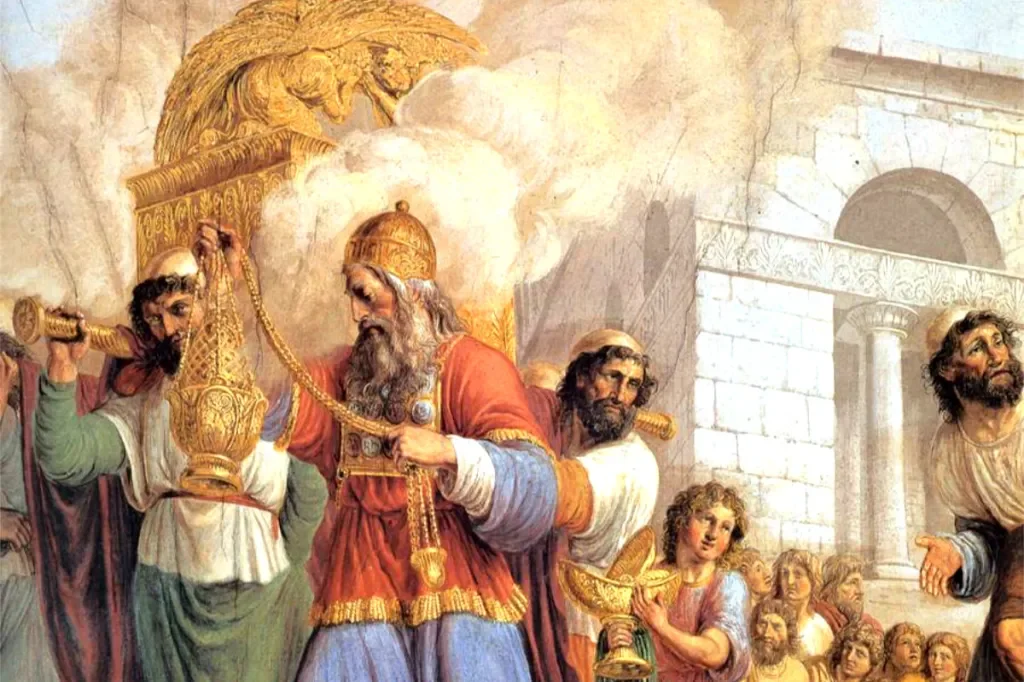
“And now, O priests, this command is for you. If you will not listen, if you will not take it to heart to give honor to my name, says the LORD of hosts, then I will send the curse upon you and I will curse your blessings. Indeed, I have already cursed them, because you do not lay it to heart. Behold, I will rebuke your offspring, and spread dung on your faces, the dung of your offerings, and you shall be taken away with it. So shall you know that I have sent this command to you, that my covenant with Levi may stand, says the LORD of hosts. My covenant with him was one of life and peace, and I gave them to him. It was a covenant of fear, and he feared me. He stood in awe of my name. True instruction was in his mouth, and no wrong was found on his lips. He walked with me in peace and uprightness, and he turned many from iniquity. For the lips of a priest should guard knowledge, and people should seek instruction from his mouth, for he is the messenger of the LORD of hosts. But you have turned aside from the way. You have caused many to stumble by your instruction. You have corrupted the covenant of Levi, says the LORD of hosts, and so I make you despised and abased before all the people, inasmuch as you do not keep my ways but show partiality in your instruction.”
Malachi 2:1-9
The inheritance of Esau is on a collision course with the inheritance of Jacob. It is not simply that Esau’s inheritance was a consolation—a temporal tease—but that Esau’s inheritance is also a temptation, as was Lot’s choice of Sodom, or the hypocrite’s reward of applause for their external religion. As mankind is said by Paul to have exchanged God’s truth for a lie, so the same soul exchanges God’s true inheritance for a false inheritance that does not profit. The prophets spoke into a mixed body in the Old Testament, just as the apostles spoke into a mixed body in the New Testament. Thus, to say that “God’s people,” the people of Christ’s own inheritance, need to be constantly vigilant against falling in love with the inheritance of this age ought not be strange to our ears. So we must hear again today.
Doctrine. Cursed is that pseudo-inheritance set against God’s order of fathers faithful and truth taught.
God curses a pseudo-inheritance that hates Him.
God has blessed us with fathers to be imitated.
God has blessed us with truth to be passed down.
God curses a pseudo-inheritance that hates Him.
In the first two verses we are confronted with a theme that is recurrent in Scripture. Simply begin with the curse earned by Adam for all his posterity. Consider also the words attached to the Second Commandment.
for I the LORD your God am a jealous God, visiting the iniquity of the fathers on the children to the third and fourth generation of those who hate me (Ex. 20:5)
But there is an added dimension here to the priests—not that it is a new reality, but it is a verse that especially draws out what might be a surprising object of the curse: ‘I will send the curse upon you and I will curse your blessings. Indeed, I have already cursed them, because you do not lay it to heart’ (v. 2b). There are two extreme errors about God’s possible attitude toward the good things of this life that He has given to us. At one extreme is the idea that because God is good, He can only bless us and never curse; and at the other extreme is that because God is sovereign, we can only call the good things that the reprobate handle “curses.” There are more problems with both extremes than I could possibly cover, so I will limit myself to one: Malachi here does not live on either extreme. He says to them that God will CURSE YOUR BLESSINGS. As the foundational blessing and cursing was announced to Israel, the curses mirrored the blessings. At stake seemed the same things, but each of the things could be viewed through the utterly secular eyes of Esau, or the renewed eyes of Jacob.
Cursed shall you be in the city, and cursed shall you be in the field. Cursed shall be your basket and your kneading bowl. Cursed shall be the fruit of your womb and the fruit of your ground, the increase of your herds and the young of your flock. Cursed shall you be when you come in, and cursed shall you be when you go out (Deut. 28:16-19).
Two other objects of this curse are mentioned, both are the inheritance that these priests would have considered to be their inheritance—the rest of their priestly line and the actual offerings they place on the altar: ‘Behold, I will rebuke your offspring, and spread dung on your faces, the dung of your offerings, and you shall be taken away with it’ (v. 3). Your OFFSPRING and your OFFERINGS. All that makes the Christian’s life worth living—the fruit of his loins and the work of his hands—these are either offered to God in Christ, or they have already seduced us into the utterly secular. This seduction is its first curse.
For a blessing to be cursed does not mean that God has judged His own work. Far from it! It means that, for the reprobate, those things which are good in God’s design and good in God’s promise, begin taking their position to rise up at the judgment to testify against that man or that woman who used those good things without a care to God, or who abused those things, or those people, as if God did not see, or who squandered those things as if they were obstacles to the earthly inheritance he or she truly yearned for.
Thus when Esau exchanged the birthright for the stew, he did not turn the birthright bad. Nor did the blessing of growing up in the home of Isaac and Rebekah somehow become anything less than a blessing in itself. Rather, all that was good in itself remains good. The same beam of light to a believer, because he is turned toward the sun, is a haunting shadow to the unbeliever because he is turned away; but the blessed beam remains itself, adding guilt upon guilt.
Now let us look at the two main charges, which involved their failure to see two blessed things as true blessing, as a worthwhile inheritance.
God has blessed us with fathers to be imitated.
Since his immediate audience are the priests, the prophet points back to the father of the priesthood:
So shall you know that I have sent this command to you, that my covenant with Levi may stand, says the LORD of hosts. My covenant with him was one of life and peace, and I gave them to him. It was a covenant of fear, and he feared me. He stood in awe of my name (vv. 4-5).
Covenant theologians often try to discern what this covenant was that was specific to the Levites; but there is little need, as it was part of the Mosaic.
The nature of the biblical covenants is that God’s promises are passed down. He passes them down through fathers and families. Paul goes as far as to call the families of the earth something like a “fatherhood” (πατριὰ) after “the Father” (Πατέρα), as if these fatherhoods were small neighborhoods, structured by the patriarchy. We will not take well to the Bible if we are allergic to God’s way of passing down His blessings through fathers. One author on covenant theology called this the “genealogical principle.”1
This is both a trust and a path. In other words, what God gives to us, in giving us faithful fathers, is both an obligation and a wisdom. That would make us scoundrels and fools when we turn from it: “Do not move the ancient landmark that your fathers have set” (Prov. 22:28).
The British philosopher and noted conservative Roger Scruton put it very well:
We do not merely study the past: we inherit it, and inheritance brings with it not only the rights of ownership, but the duties of trusteeship. Things fought for and died for should not be idly squandered. For they are the property of others, who are not yet born.2
We do not live on an isolated island on the timeline. It is not only foolish but hateful —hateful toward those who have come before us, and hateful toward those who will come after, to treat what God has dropped into our lap like a bunch of punks trashing a hotel room they are staying in for the weekend. We are not just passing through; we are stewards of a seed. Paul says to Timothy, “guard the good deposit entrusted to you” (2 Tim. 1:14). All the more so for the teachers among God’s people, of whom Calvin calls here: “first in wickedness; for it was their office to correct what the people did amiss.”3
God has blessed us with truth to be passed down.
The key words here come from verses 6 and 7.
True instruction was in his mouth, and no wrong was found on his lips. He walked with me in peace and uprightness, and he turned many from iniquity. For the lips of a priest should guard knowledge, and people should seek instruction from his mouth, for he is the messenger of the LORD of hosts.
The priests had gradually taken over the whole teaching office for the prophets.4 Yet even this they despised. In these two verses, we see four truths about truth: (i.) it is for teaching; (ii.) it is for right living; (iii.) it is a trust; (iv.) it is an expectation. These are drawn from the four parts of the text in order:
First, truth is for teaching. ‘True instruction was in his mouth, and no wrong was found on his lips’ (v. 6a). The prophet holds truth and error out. The truth-teller makes distinctions. If the truth is food, then he withholds none of the best for God’s children; if error is a poison, then he will not tolerate a single drop.
Second, truth is for right living. ‘He walked with me in peace and uprightness, and he turned many from iniquity’ (v. 6b). If you choose life over truth, you will get neither. If you choose love over truth, you will get neither. If you choose efficiency and relatability over truth, you will be efficient and relatable to spiritual corpses. Jesus said, “The words that I have spoken to you are spirit and life” (Jn. 6:63).
Third, truth is a trust. ‘For the lips of a priest should guard knowledge’ (v. 7a). Truth is on a timer. Truth in God is eternal; but truth to those who fail to see it as a trust has an expiration date. It needs to be guarded because as it goes, so goes the church that is formed by truth: “Truthful lips endure forever, but a lying tongue is but for a moment” (Prov. 12:19).
Fourth, truth is an expectation. ‘and people should seek instruction from his mouth, for he is the messenger of the LORD of hosts’ (v. 7b). Here is a people described that are seeking for the right reason: to hear from God. This expectation is warranted because of God’s promise: “And I will give you shepherds after my own heart, who will feed you with knowledge and understanding” (Jer. 3:15).
The church has a duty here. We lament the lack of faithful preachers—and you may be interested to know that the whole Presbyterian world is right now lamenting the lack of any preachers coming up—but we rob young men of the very tools and implications and freedom to speak truth. To cite Lewis,
In a sort of ghastly simplicity we remove the organ and demand the function. We make men without chests and expect of them virtue and enterprise. We laugh at honour and are shocked to find traitors in our midst. We castrate and bid the geldings be fruitful.5
The church laity has a duty here in this seeking instruction from the man’s mouth. If not, then, as we live in a democratic and commercial age, “it shall be like people, like priest” (Hos. 4:9). We would be left with nothing but managerial strategists, mirroring to the crowds what they want to hear. In fact, we have already had this for quite some time.
Practical Use of the Doctrine
Use 1. Instruction. This great end of guarding knowledge informs our doctrine of the church. It gives support to the truth that the substance of succession, from one spiritual father to another, is always the teaching. That is why the Reformed understand apostolic succession the way that we do. Contrary to Rome, the church is considered “apostolic” not a materialist search for dog tags, but a search worthy of the immaterial human soul. We look to the truth as it was taught by the Apostles. We look to “the pattern of sound words” (2 Tim. 1:13), which, not coincidently are the words Paul used right before those aforementioned duties laid upon us all to guard the good deposit. What is the good deposit? It is the pattern of sound words. What is apostolic succession? It is the same pattern of sound words. To suggest that we cannot know this and need a man in a fancy hat in the balcony in Rome, who cannot stop being a communist or jihad-importer for the life of himself, is really a poor commendation of a supposedly more sophisticated form of Christianity.
Use 2. Correction. It is not only one’s own immediate predecessors which are to be honored in that Fifth Commandment, but also those line of godly men who have most shaped your world for good. Often the people of Israel were warned against the ways of their more immediate fathers: “Do not be like your fathers” (Zech. 1:4). We are in such a day when much of what the religious fathers among the Reformed churches have handed down in doctrine and life is not the good deposit that was established by the early Reformed tradition. It is a difficult case of obedience to the Fifth Commandment. As one must often choose which magistrate to obey, so one must often choose which of our fathers to honor and pass on their heritage. We are not without specific instructions here:
Do not rebuke an older man but encourage him as you would a father, younger men as brothers (1 Tim. 5:1)
Even so, when the immediate fathers have turned aside—turning a denomination founded to stand against liberalism into an even worse form of modern liberal idols—then a new generation has a duty to respectfully part ways, in favor of the greater line of fathers. When the immediate fathers teach modern doctrines and cast under the bus every one of the great line of fathers, it is a sign that the immediate fathers worship culture. Those heads which the mob demands, are an embarrassment to such sheepish shepherds. We may respectfully decline their leading.
Use 3. Admonition. The last sin of the priests mentioned here is also teaching related: You ‘show partiality in your instruction’ (v. 9b). This can be broad in the sense of a teacher “playing” to one audience over another—whether to impress, to kiss up to, or out of fear—or it can be a teaching that commends partiality. Such would justify mistreating some people in ways that one would never mistreat another. Some of the most public teachers within the New Calvinist sphere of influence joined the popular frenzy of progressivism between the years 2010 and 2020, specifically embracing the notions of intersectionality and white guilt. There have been no apologies, nor really even much of a walking back of these positions. Now, part of the problem in application here is that most do not know what partiality is and what it is not. God’s own commandments are the standard, especially those most foundational in the moral law.
Remember the context of these words. The people are under judgment—and the leaders a stricter judgment—for this partiality, which the teachers teach, but which hearers have some responsibility to reject. Otherwise, it will be like people, like priest.
Use 4. Consolation. You may be thinking, “I have gone in for the cursed inheritance, and I have come to see it too late. I have made everything polluted. Probably, more pollution has come from me than any of these priests. At any rate, is it not the case that all our offerings are polluted when compared with God’s holiness?” While that is certainly true—“all our righteous deeds are like a polluted garment” (Isa. 64:6)—you must look to Christ. That is no cop-out. It is God’s own way out. There was once another priest with polluted garments.
Then he showed me Joshua the high priest standing before the angel of the LORD, and Satan standing at his right hand to accuse him. And the LORD said to Satan, “The LORD rebuke you, O Satan! The LORD who has chosen Jerusalem rebuke you! Is not this a brand plucked from the fire?” Now Joshua was standing before the angel, clothed with filthy garments. And the angel said to those who were standing before him, “Remove the filthy garments from him.” And to him he said, “Behold, I have taken your iniquity away from you, and I will clothe you with pure vestments.” And I said, “Let them put a clean turban on his head.” So they put a clean turban on his head and clothed him with garments. And the angel of the LORD was standing by (Zech. 3:1-5).
If you have ever heard God’s truth, been called by Him to follow after Jesus, and have turned from the way of your father’s instruction, then like this Joshua who has nothing but pollution to offer back, yet the angel—the Messenger to come—is standing by. He has rebuked the devil. He had taken your filthy garments on Himself and has a purity forevermore to cover you, garments of righteousness that can never fade.
__________________________________________________________________________
1. O. Palmer Robertson, The Christ of the Covenants (Phillipsburg, NJ: Presbyterian and Reformed Publishing, 1980), 34.
2. Roger Scruton, How to Be a Conservative (Bloomsbury, 2014), 115.
3. Calvin, Commentaries, XV.2.513.
4. cf. Eugene H. Merrill, An Exegetical Commentary: Haggai, Zechariah, Malachi (Chicago: Moody Press, 1994), 404-05.
5. C. S. Lewis, The Abolition of Man (New York: Simon & Schuster, 1996), 37.