
Building On Christ, Tested By Fire
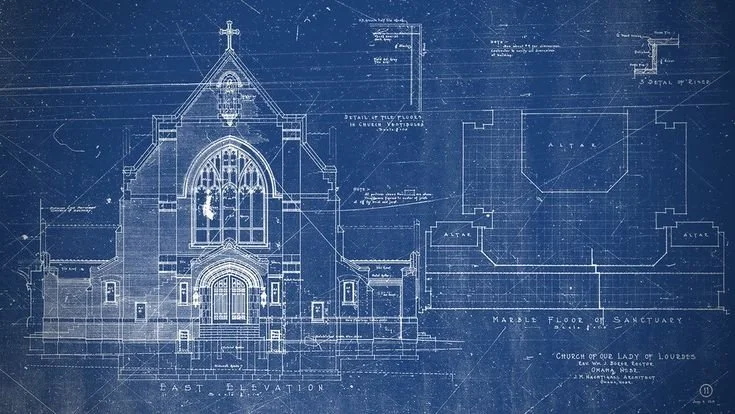
Sermon on Sunday, August 12, 2018
“According to the grace of God given to me, like a skilled master builder I laid a foundation, and someone else is building upon it. Let each one take care how he builds upon it. For no one can lay a foundation other than that which is laid, which is Jesus Christ. Now if anyone builds on the foundation with gold, silver, precious stones, wood, hay, straw—each one’s work will become manifest, for the Day will disclose it, because it will be revealed by fire, and the fire will test what sort of work each one has done. If the work that anyone has built on the foundation survives, he will receive a reward. If anyone’s work is burned up, he will suffer loss, though he himself will be saved, but only as through fire.”
1 Corinthians 3:10-15
There is an epidemic that has been sweeping our land for the past decade or more. The great plague that I am speaking of is HGTV, or by its other name, the Cult of DIY. That stands for “Do it Yourself,” or as Home Depot says it in its slogan, “You can do it. We can help.” But let me be the first to tell you the truth, “You cannot do it.” For most of you—no, you most certainly cannot. There are these professionals called contractors and construction workers, who, it turns out, actually do know what they are doing. Yes, there are exceptions and much can be gleaned on YouTube tutorials when it comes to minor alterations and fixes. But when it comes to deeper structural building and maintaining, the point is that there is an objectively right way to build anything.
In this passage today, Paul refers to himself as a ‘master builder’ (v. 10). And he starts to give the Corinthians the right way to think about church building. Church building is going to be very, very different from home building or any other physical design project. But one thing is very much the same. There is a right way. Some of the worst things that can happen with a poorly conceived home project is that the house does not survive a storm, or perhaps never sells. With the building project that Paul is talking about, the consequences affect all of time and echo into eternity.
Christ’s Church Has a Proper Architecture
Christ’s Church Has a Passing Exterior
Christ’s Church Has a Persevering Interior
Doctrine. Since ministry materials will be tested by God’s fire, we should take care how we build.
Christ’s Church Has a Proper Architecture
Just like Paul is an apostle under the Head Apostle, Jesus Christ (cf. Heb. 3:1); and an undershepherd under the Chief Shepherd, Jesus Christ (1 Pet. 5:4)—so Paul is an architect under the Ultimate Architect, Jesus Christ. “Master builder” is ἀρχιτέκτων from which we derive the English word “architect.”
Jesus says, “I will build my church” (Mat. 16:18). And yet He places Paul in a kind of head builder position in his stead: ‘According to the grace of God given to me, like a skilled master builder I laid a foundation’ (v. 10a). We have already seen the concept of the “co-laborer” in the previous verses. Contrary, then, to that occasionalist strand in some hyper-Calvinists, the Bible speaks of secondary “harvesters” and “builders” under or within the supreme causal stream of God. Paul is going to say that Jesus Himself is this foundation, and yet here is Paul laying it. That’s what explains Ephesians 2:20 where “apostles and prophets” are called the foundation; but you will notice that Christ is called “the cornerstone.”
So it is here that when Paul speaks of building on it from a “master-building” or “architectural” position, it speaks of the preaching and teaching office doing something with Jesus that does not simply set itself. So Jesus says that, “Everyone … who hears these words of mine and does them will be like a wiseman who built his house on the rock” (Mat. 7:24). Conversion is not simply affirming “Jesus” and then leaving aside belief in who He says He is, what He has done, and what He has commanded us to do. We cannot claim Jesus as the foundation if we do not submit to Him as our Savior and our Lord. So He has given us builders in time (cf. Eph. 4:11ff).
Paul does not remain alone. He adds that ‘someone else is building upon it’ (v. 10b). Now since this turns into an imperative in the next breath, we can see that Paul is not just talking about someone like Apollos or Peter anymore. It includes them, but then he says, ‘Let each one take care how he builds upon it’ (v. 10c). Observe the “each one”—not merely apostles, but let each minister of the gospel take this same architectural care.
Once again we see a pattern for the whole church age. Each planter of any local church should be cultivating “another” and “another,” whether that pastor serves for life at a church or not. If he is not passing this exact blueprint on, then he is building on the foundation of himself and not Christ. The preaching pastor does not exist to build “the house,” as in the whole, but he does exist to build more builders. Therefore it is this constructing word that the minister is to “entrust to faithful men, who will be able to teach others also” (2 Tim. 2:2). In addition to holding up the blueprints, in general, to the whole church (that’s preaching) he must immediately set about emblazoning the contours and exact dimensions of that design in the minds of a team of core builders (that’s a particular teaching we call leadership training).
‘For no one can lay a foundation other than that which is laid, which is Jesus Christ’ (v. 11). This is the ultimate thing that separates the true church from the false: Jesus Christ. When Calvin was explaining a balance between Romanist pretensions to a vicar of Christ, on the one hand, and Anabaptist and other sectarian minimizations of hierarchy, he utilized the language of bodily instruments, but also craftsmanship, in his summary:
For though it is right that he alone should rule and reign in the Church, that he should preside and be conspicuous in it, and that its government should be exercised and administered solely by his word; yet as he does not dwell among us in visible presence, so as to declare his will to us by his own lips, he in this (as we have said) uses the ministry of men, by making them, as it were, his substitutes, not by transferring his right and honour to them, but only doing his own work by their lips, just as an artificer uses a tool for any purpose.1
Christ as the foundation means doctrinally (Mat. 16:16) and politically (Col. 1:18). This continues to speak of unity. Remember the Corinthian context. When you bring in their sparkling rivalries into the arena of church building, what you’d have is “superstar” methods or “personality” methods of building on the foundation. Lip service is paid to Christ as a foundation sufficient for a thousand studs and bricks, and yet their Corinthian habit of gathering around one “do-it-all” mere mortal takes over.
Christ’s Church Has a Passing Exterior
Whereas the foundation is always Christ, there is also a structure, and then finally things that are less essential. And yet even in the most external parts of a house, not all materials are equal: ‘Now if anyone builds on the foundation with gold, silver, precious stones, wood, hay, straw, each one's work will become manifest’ (vv. 12-13a). This is a simple metaphor taken from everyday life. And it corresponds to the distinction between the invisible and the visible church.
I say this metaphor is simple, but it comes with one difficulty. Paul uses material resources to describe both the visible and the invisible. Gold, silver and precious stones are obviously meant to be the materials of high value; whereas wood is common, even if sufficient; and then hay and straw are just good for fire or some other natural disaster to wipe it out. Along these lines, Jesus says our lives can lose their salt and be “no longer good for anything except to be thrown out and trampled under people's feet” (Mat. 5:13; cf. 7:6).
While materials prove their worth through time, Paul is actually going to move us from time to eternity by adding the words: ‘for the Day will disclose it’ (v. 13b). The word “Day” is capitalized in our English translations for a good reason. It refers to the “Day of the Lord.” Now this DAY OF THE LORD is a very deep and wide concept throughout the Bible. It includes God breaking through with judgment and salvation; and it includes God breaking through at various points in history and then finally in the ultimate Day at the end. And without getting too deep into this idea, we can already see both the historical and final dimensions of this Day in the simple imagery Paul is using.
Consider more of what we know from everyday life. Poorly constructed houses fail the test throughout time and in a final fail. For example, they can always need repairs, always falling apart, and then, in the end, be unsalvageable. In the same way, a poorly constructed church—in this case, do not think “physical building,” but spiritual people—can always be in need of healing divisions, correcting errors, and quarantining sin, but it can also having nothing to show for it in the end.
Then there is the most sobering part of the imagery: ‘because it will be revealed by fire, and the fire will test what sort of work each one has done’ (v. 13c). There are the fires of life, and then there is the fire of the final judgment. It is in this sense that the letters to the seven churches in Revelation are meant. While individuals cannot lose their salvation, it does not follow that strands of the visible church—that is, the church from a corporate perspective—cannot have the lamp stand of Christ removed from it.
Christ’s Church Has a Persevering Interior
The division in this passage has been wrongly divided throughout modern church history. The first thing we need to see is that all of the people Paul is talking about there are genuine children of God in Christ. Notes he says, ‘If the work that anyone has built on the foundation’ (v. 14a). So whatever else we say about the division, these are all at least people who have built upon the foundation which is Christ. Their standing before God is secure.
Some use this passage to present a false fear and others a false assurance. At one extreme, our salvation is made to rest upon the foundation of our work. We are identified with our works, and if they can burn then of course so can we! At the other extreme, it is granted that Paul is only talking about saved people, and even makes the point to say that those with nothing to show for ‘will be saved’even if only‘through fire’! Both extremes think they are protecting against the other: Better be safe than sorry! There is a mean between these two errors.
‘If the work that anyone has built on the foundation survives, he will receive a reward’ (v. 14). What this means is that many Christians will do the harder work of working on souls and therefore their work will last. Not only will their own soul pass through the Judgment because of Christ, but the capacities of the souls of others will be enlarged in glory because of our work here. So Peter speaks of “the unfading crown of glory” (1 Pet. 5:4) and Paul says to his spiritual children, “you are our glory and joy” (1 Thess. 2:20), when he was asking what his crown will be on the Day of the Lord (v. 19). Souls!
‘If anyone’s work is burned up, he will suffer loss, though he himself will be saved, but only as through fire’ (v. 15). Now here is that most controversial verse. We have established that all these are saved; but what is this work that is being burned up, and how can one suffer loss who is going on to glory? The thing—the “it”—has already been plainly established as the church as a corporate entity in this age. It is that product that can be more or less approved, more or less condemned, on that Day. But how can that be if “the building” is made up of souls that never die, and yet the souls ultimately worked on can never be lost? The answer lies precisely in degrees in what may be gained.
Jonathan Edwards once explained,
Those who are highest in glory are those who are highest in holiness, and therefore are those who are most beloved by all the saints; for they most love those who are most holy, and so they will all rejoice in their being the most happy. It will not be a grief to any of the saints to see those who are higher than themselves in holiness and likeness to God also being more loved than themselves; for all shall have as much love as they desire, and as great manifestations of love as their can bear — and so all shall be fully satisfied, and where there is perfect satisfaction, there can be no reason for envy.2
All that is lost will be forgotten as loss, as “he will wipe away every tear” (Rev. 7:17, cf. 21:4); and yet there is nothing that prevents God from building of each soul varying capacities for glory. But having given that comfort, suffering this loss means missing out on soul-winning. It can mean being defeated by besetting sins and therefore taken off of the battlefield against Satan’s kingdom. To put it simply, it can mean a wasted life. Another passage that teaches differing degrees of glory won for eternity by work done in time is the Parable of the Soils. Notice how Jesus draws a further division in the good soils: “Other seeds fell on good soil and produced grain, some a hundredfold, some sixty, some thirty” (Mat. 13:8).
Practical Use of the Doctrine
Use 1. Correction. In all of this, what is the basic “marrow” or substance of the building-blocks? It is the people! Peter says, “you yourselves like living stones are being built up as a spiritual house, to be a holy priesthood, to offer spiritual sacrifices acceptable to God through Jesus Christ” (1 Pet. 2:5). Notice how the language guards us from two extremes about this divine building project: it is a church-centered building (not a private experience of the Christian building) but while it is local, in the sense of a congregation, it is not fundamentally material or programmatic.
Here we avoid two more extremes: On the one hand, it is all about the local church—a concrete, real-life belonging to a community; but, on th other hand, this “concreteness” is not at all about the physical building or even what we call “programs” or “ministries.” It is fundamentally the construction of souls by the Word and Spirit, through a central ministry of communicating that Word in reliance upon the Spirit.
Use 2. Admonition. Can this passage be applied to the Christian home or other Christian institutions (such as a business, school, or even government)? Yes, but there are two extremes to avoid here as well. They map out well with the usual residues of Gnosticism and naturalism. To avoid the latter, let us remember that the further we get away from that which lasts forever, the more we are missing the mark on Paul’s whole meaning of that which lasts. Souls last forever. Earthly resources and countries do not. To avoid the former, however, there are principles of nature here that apply to common spheres. It is evident that it matters how one builds on foundations and what material one uses when it comes to a family, or to a school, and so forth.
This becomes more than a corrective. It is a reproof to our inter-generational sloth. The so-called “American dream” is most to be condemned for its retirement phase. The problem is not wealth-building. The problem is wealth-consumption. It is squandering one’s prosperity on a mere numbing of the elderly, rather than as a foundation for the next generations to rise to greater heights and to extend the kingdom to more territories.
For example, as Paul enlisted builders, so any steward of what God has given him must do the same. Many otherwise great men undid their labors for posterity by not proactively recruiting, and then mentoring, a competent successor. This is true in the civil and ecclesial sphere. We could think of the famous cases of an Alexander the Great or a Cromwell, but we have also seen many cases of Christian institutions. In reality, this is an extension of the principle of fathers passing on their inheritance to sons. In all things where God’s glory is at stake, let us have a mind to build for a lasting glory.
_______________________________________________________
1. John Calvin, Institutes, IV.3.1.
2. Jonathan Edwards, Charity and its Fruits (Orlando: Soli Deo Gloria, 2005), 297.