
What if We Thought of Church in Light of God?
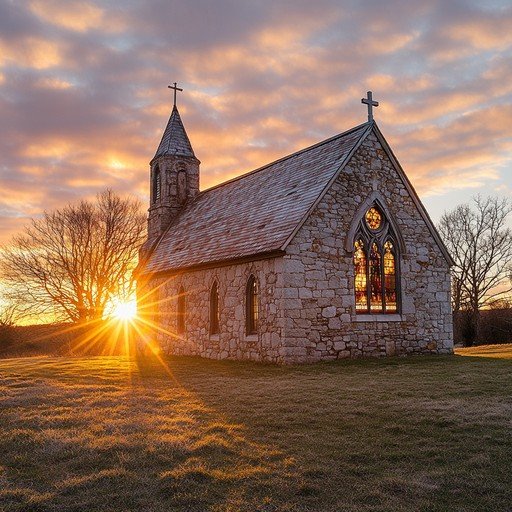
Sermon on August 19, 2018
“Do you not know that you are God’s temple and that God’s Spirit dwells in you? If anyone destroys God’s temple, God will destroy him. For God’s temple is holy, and you are that temple. Let no one deceive himself. If anyone among you thinks that he is wise in this age, let him become a fool that he may become wise. For the wisdom of this world is folly with God. For it is written, ‘He catches the wise in their craftiness,’ and again, ‘The Lord knows the thoughts of the wise, that they are futile.’ So let no one boast in men. For all things are yours, whether Paul or Apollos or Cephas or the world or life or death or the present or the future—all are yours, and you are Christ’s, and Christ is God’s.”
1 Corinthians 3:16-23
What an understatement! Church in light of God? What else would we define church by? But before the words get out of our mouth we know that we stand convicted of countless other criteria. Now we are not only talking about God’s way in terms of method, or even materials. These will be reconceived as a consequence of our thoughts of God. The difference by the time we arrive at the end of the third chapter is that Paul now speaks of God personally filling our souls, individually and collectively. God the Holy Spirit, as He who purifies us in holiness against sin, who teaches us wisdom as opposed to our intellectual vanity, and who opens up to us a new world that at once lays claim also on the present. But how to think of this as a collective work? More than that, how might this oppose our sinful, foolish, false expectations about the church?
If We Thought of Church in Light of God’s Holiness
If We Thought of Church in Light of God’s Wisdom
If We Thought of Church in Light of God’s Inheritance
Doctrine. If we thought of church in light of God, then we would not be destroyed, deceived, or disappointed by church.
Those first two “d” words are explicitly in those verses to points 1 and 2, and the third is implied. But let us go to the text and see it. As we do, we must not forget that fourth “d” word that has been lurking in the background ever since this letter started: divided.
If We Thought of Church in Light of God’s Holiness
‘Do you not know that you are God's temple and that God's Spirit dwells in you?’ (v. 16). There is no article in the Greek assigned to this temple. Godet and Morris are split on the significance of that: the former that they (in the Corinthian church) are “a" temple, as in one local church of God; Morris sees something else. There are two words that exist for TEMPLE — the first (ἱερόν) covers the whole temple precinct; the other (ναὸς) the more specific word for the “shrine” itself. It is the sanctuary, or we might say generically, the holy place. It is the latter word that Paul chooses here. So Paul is stressing that the local church is fundamentally reserved for God. Not even the world. Indeed, we are to love those in the world, in the sense of caring for their lost condition and pleading with them; but the church exists primarily for God and His people.
At any rate, this is the Holy Spirit and therefore we are a holy temple. And yes, it is “we” because the Greek for YOU (ἐστε) is in the plural, as in “you all are.” Paul had left off at the imagery of the church as God’s building project; and we have heard from elsewhere that, “you yourselves like living stones are being built up as a spiritual house, to be a holy priesthood, to offer spiritual sacrifices acceptable to God through Jesus Christ” (1 Pet. 2:5). As priests who would instruct others, especially in how to approach God, we need a little theological help here. Lifeless sinners cannot offer spiritual sacrifices to God without two things: Peter says in his text THROUGH JESUS CHRIST and Paul says in our text GOD’S SPIRIT DWELLS IN YOU. So the work of the Son and the work of the Spirit are both required to complete this building work of God. We need something to present to God on our behalf that is perfect and outside of our own righteousness (cf. Phi. 3:8-9), and we need to be, ourselves, united to that Person and work.
Calvin said about this,
And the first thing to be attended to is, that so long as we are without Christ and separated from him, nothing which he suffered and did for the salvation of the human race is of the least benefit to us. To communicate the blessings which he received from the Father, he must become ours and dwell with us … it is for the sake of his Son that God bestows the Holy Spirit upon us, and yet has deposited him in all his fullness with the Son.1
The Holy Spirit does more than simply affect us toward Christ at the beginning. He remains. Paul is using the imagery of dwelling in us as a resident would in a house, yet the religious building adds to the unique sense in which the Spirit does this. What then does it mean to be God’s TEMPLE? The temple, like the tabernacle before Israel entered the land, was God’s special dwelling place with his people. The problem was that God’s people were sinful and could not approach without having their sins atoned. Because Christ entered the true Holy of holies in heaven, the temple veil was torn in two, and we can now have God dwell with us without being consumed.
Observe two senses in which the Scriptures have the temple fulfilled. First, the Son of God becomes the fulfillment of the temple, since He is Immanuel, or “God with us” (Is. 7:14, Mat. 1:23), so that John’s Gospel tells us that he “tabernacled among us” (1:14).2 And even the people of God become the new temple, as God had always promised to dwell among his people in the end.
This is true of every individual Christian, as we will see in 6:19 about your own body, but the focus right here is on the church as a body. Thus the building metaphor flowed nicely into the temple metaphor, like in Ephesians, where we also see, “the whole structure, being joined together, grows into a holy temple in the Lord. In him you also are being built together into a dwelling place for God by the Spirit” (Eph. 2:21-22).
God dwells in a special way in the church as an assembly: as the most real, spiritual society. And it is into that spiritual society, the church, that the Spirit says, “It is a fearful thing to fall into the hands of the living God” (Heb. 10:31). The assembly often hears such dire warnings because the assembly is both mixed and designed to be purified. Because sanctification is a process, fearful admonitions must remain part of that process.
If we thought of church in light of God’s holiness, then we ourselves would not be destroyed by church. We would not be so devastated if it doesn’t turn out our way, or even if we are more seriously hurt by the church. We would see it, however painful, as part of the purgation process. In fact, Paul attached a warning that makes us realize where our fear should really be. ‘If anyone destroys God's temple, God will destroy him. For God's temple is holy, and you are that temple’ (v. 17). The truth of the matter is that when we think of how to “do church,” we often have a wrong fear. We fear the impressions of the outsider. We fear the approval of the insider. We fear the numbers. We fear the bottom line. We fear that what happened to us before will happen again, and we fear that those people in front of us now remind us of the people that did that back then. We fear just about everything in the world except for the One who we were built to fear! There is little sense of the spirit of Christ that said,
And do not fear those who kill the body but cannot kill the soul. Rather fear him who can destroy both soul and body in hell (Mat. 10:28).
What is the upshot here? It is a very sobering warning. Although no one can thwart God’s will, and not even “the gates of hell” can prevail against the church, ultimately, yet occasionally, there are heresies and divisions and gross acts of immorality that can so tear down what God’s servants have built up that we can speak of a “destruction” —“do not destroy the one for whom Christ died” (Rom. 14:15)—a destroying of fellowship, a destroying of peoples’ sight of the truth, a destroying of what would have been a revival, and yes, a destroying of souls in the sense of damaging and delaying what would have been a straighter path to spiritual renewal. It is a very serious thing to come into a church, where God is working, and presume to start grabbing and moving things around like it is one’s own private playground. It is actually the property of God that He is more jealous of than anything in this world.
If We Thought of Church in Light of God’s Wisdom
I will say less here, since it carries forward the thought already expressed by Paul at the opening. ‘Let no one deceive himself. If anyone among you thinks that he is wise in this age, let him become a fool that he may become wise’ (v. 18). Again, “fool” here is what the world regards as a fool. Paul is not commending actual bad thinking, but the kind of eternal perspective that looks like “fool’s gold” to the man who believes there’s no tomorrow. So “be like that fool” would mean living in a way that takes its cues from the Bible, knowing full well that it is scorned by wider society, and counting that cost, and then acting on it with confidence.
But how does that play out with church? One way goes back to chapter 1 — competing messages that might be more “workable” for outsiders. But that assumes that the regular preaching and teaching of the Word in the churches is primarily for the outsiders. It is most certainly not!
Moreover, the church in its seemingly infinite capacity to be deceived by the culture, may even wear the cloak of being “gospel-centered” to be wiser than God in His law. We hear often today that our witness is compromised by taking a stance on this or that cultural issue. Rhetoric is employed by pietists and other assorted fence-sitters to shame those who are doing nothing other than applying God’s law to sexual ethics, or to violence, or to the marginalization of Christian speech on campus or elsewhere in the public square. Thus even to vote for a president who is characterized by foul speech and self-absorption is death to our gospel witness, but to vote for one who will plainly declare that they will murder babies, continue endless foreign wars, steal children from Christian homes, and the like—this does not compromise our witness. Such “wisdom” fits under this condemnation by Paul precisely because it would pit our witness against God’s holiness and His justice in our dealing with our fellow man.
‘For the wisdom of this world is folly with God. For it is written, “He catches the wise in their craftiness,” and again, “The Lord knows the thoughts of the wise, that they are futile” (vv. 19-20). The Apostle quotes Job 5:13 and Psalm 94:11 in order to come full circle to the fact that what we regard as wise to do, and what we calculate will play in the world in which we live, will come to nothing.
If We Thought of Church in Light of God’s Inheritance
Here is the punchline: ‘So let no one boast in men’ (v. 21a). When we line up behind mere mortals, when we act like the only way we can get a share of the kingdom, is to hitch our wagon to the star of this guy or that guy (and no one else), not only are we like those pathetic pre-teens, or like a codependent person, who can only have one “bestie” at a time, what Paul is saying is that we are glorying in them. We are transferring glory that belongs to God to that mere mortal. But Paul goes in an interesting direction in his next breath, because another problem in our thinking when we divide up the church behind singular, exclusive leaders is that we have an inheritance anxiety. We honestly think that the only way to secure the spiritual blessings is to possess this mere mortal and only this mere mortal. INHERITANCE ANXIETY.
Paul has an expansive reason that we should not glory in mere men. It is really the same reason why we should not glory in any other resources of this passing world.
‘For all things are yours, whether Paul or Apollos or Cephas or the world or life or death or the present or the future—all are yours, and you are Christ's, and Christ is God’s’ (vv. 21b-23). You and I possess each other and every other Christian exactly and only in the real way that God has made those other Christians. But that means we possess them to the fullest. Take a recent example. One of the great theologians of recent memory passed away last year: R. C. Sproul. If I was to ask why I did not get to stumble across Ligonier Ministries or Saint Andrews Chapel, when I first lived in Florida, earlier than I did, it would be no more problematic of a question than if I asked why I did not finish seminary before starting in ministry over a decade ago rather than now. Perhaps you have a short list of such “what ifs.” The answer to all of those questions is the wise and loving plan of God, which is to me and to you the only inheritance we should ever wish.
One clear application suggests itself here as much as it did in Chapter 1 when these names were brought up. Sometimes the sin of factionalism takes the form of TERRITORIALISM. In other words, the faction is caused by insecure leaders protecting their own self-made inheritance. They suspect that their gifts are a big fish in a small pond and they do not quite trust God that there will be a place for them if other gifted “fish share the same pond.” This territorial sin of factionalism cannot see the “Dream Team” of God’s church. This outlook cannot imagine what it would be like to have all the gifts converge and collect in one place. It cannot take in the glorious prospect of 1 Corinthians 12 actually happening! So Paul brings back those gifted names: Paul or Apollos or Cephas. Now why would he do that when he just said, “Don’t boast in men”? I think it is to show them the irony of their pedestals they have been placing these men on. Both the territorialist leader and their factional followers would deny to ourselves the real Paul and the real Apollos and the real Cephas because we have made an idol of them that is not real. One is a legal-minded tent-maker, one a feisty fisherman, one a philosophical sort.
Paul is not just convicting us of sin. He is reading our psychological mail, and for the purpose of directing our church methodology. We cannot get off the one-man-band stage because our insecurity grasps hold of a puny idea of church as if it were the big show! But it also shows a more general insecurity about what God has for us in all of life. So he adds to this inheritance: ‘the world or life or death or the present or the future’ (v. 22). Sometimes when we reach out to write the script for God it is because we are anxious about our loved ones or our future.
If we lose all things and yet have God, then what we call our losses are temporary and not the real things anyway. To have God is to have all things, because God has all: “The earth is the Lord’s and the fullness thereof, the world and those who dwell therein” (Ps. 24:1). But where do we get off claiming to have all things simply because God does? The answer is the covenant promise He has made to those in Christ. There was “the promise to Abraham and his offspring that he would be heir of the world” (Rom. 4:13).
Practical Use of the Doctrine
Use 1. Instruction and Consolation. Jesus is the fulfillment of the temple and we are the fulfillment of the temple. How do we make sense out of this? The first thing we do is to see his perfection rising above our many imperfections. Even our best efforts would destroy this temple. But Jesus said to his open enemies, the Pharisees,
Destroy this temple, and three days I will raise it up (Jn. 2:19)
This was in the context of Jesus cleansing the temple, turning over the tables where they had made God’s house into a den of thieves. And it says, “His disciples remembered that it was written, ‘Zeal for your house will consume me’ (2:17). We are obligated to burn with a passion for God’s house, in light of what God thinks about His house. Where we lack that zeal for his house, His Son possessed it on our behalf.
Where we have trashed the temple of our bodies that God has built for his Spirit to dwell, the ultimate temple was sent down to be torn apart and broken down in our place. It is on that good news foundation that we can start building again.
______________________________________________
1. Calvin, Institutes, III.1.1, 2.
2. The Greek word ἐσκήνωσεν that is rendered “dwelt” (ESV) is most literally “set up his tent.”