
From Virtual Reality to the Living Mind
Sermon on Sunday, July 29, 2018
“The natural person does not accept the things of the Spirit of God, for they are folly to him, and he is not able to understand them because they are spiritually discerned. The spiritual person judges all things, but is himself to be judged by no one. ‘For who has understood the mind of the Lord so as to instruct him?’ But we have the mind of Christ.”
1 Corinthians 2:14-16
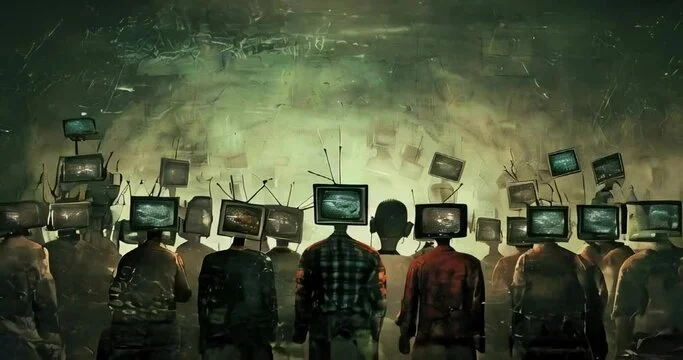
The unregenerate state is like “Virtual Reality.”
Last weekend, while we were in Florida, I got to strap on one of those Virtual Reality games. It reminded me of the days we had first heard about this coming technology. It was the 1990s and more primitive versions of it foreshadowed a time when society would be much further down the pop-culture hole from which an attentive and virtuous mind could never return. “Just imagine,” we thought, “how such forms of entertainment will be used by the elite to sedate the population and make their last advances toward totalitarianism a cake walk!”
Who would read books? Who would have meaningful conversations? Who would form permanent attachments to others seated right next to them, even in their own families, with such a better ‘world’ strapped over their eyes and able to be controlled at each of our whims?
I myself had never experienced using one of these until last week. It began to make me think about how everyone who is outside of Christ, without the Spirit, is like one who has, from birth, been strapping that VR headgear onto his head tighter and tighter every day, and who simply cannot grasp the actual reality outside. One of the main differences between virtual reality and actual reality I have already hinted at: namely, that the virtual is conditioned by the finite mind of the programer, whereas, with the gear removed, the actual is infinite and the mind unleashed to see, theoretically, all things.
I wonder how many of you caught that difference about the controller of the finite “reality.” The whole charm of the device is one’s own control. In fact, the finite programmer stood in between the controlled player who controls very little, and the eternal Programmer from whose infinite algorithm the finite programmer borrows at every point. Only the Infinite Reality Programmer can send commands ex nihilo, but that gets us too deep for now.
Paul is about to loosen the headgear for these Corinthians, who have been slipping back into a virtual reality in spite of being awakened to real world beyond—nature now infused and surrounded by Supernature. It is our habit to shut ourselves in back to Nature with a capital N, as the older modernists would do. But this contrast between the actual (Supernatural) and virtual (Merely Natural) is more than we would expect. It is not simply that those with the Spirit can grasp spiritual truths and those without cannot. That contrast is already suggest from verses 13 to 14. As Paul moves in verses 14 through 16, the contrast is no longer symmetrical. It now becomes nothing versus all things: from total blindness to panorama, from no vision to x-ray vision.
The Natural Mind in Virtual Reality Can’t See Beyond
The Spiritual Mind, Alive to Actual Reality, Judges All Things
Doctrine. The Holy Spirit transforms us from players in a dying fantasy to judges over living reality.
The Natural Mind in Virtual Reality Can’t See Beyond
We cannot say that the natural mind cannot “see a thing,” as the saying goes. He is blind to super nature, but he is not utterly blind to nature. The images programmed in his virtual reality borrow from nature. The trees and clouds and other persons walking around have to play their role convincingly, or he would begin asking questions.
Paul gives us the unregenerate person’s reality and then his own explanation. First from the unregenerate reality: ‘The natural person does not accept the things of the Spirit of God, for they are folly to him’ (v. 14a). FOLLY speaks of that which is absurd, ridiculous, worthy of nothing but scorn and laughter. So what is Paul saying? He is saying what has always been true and what you have all seen in your experience. Unbelievers look at our gospel. They laugh. They sneer. And it isn’t just nervous laughter. We have all learned reality in the context of that virtual reality mask. It becomes “the natural.” As virtual reality gets “better,” increasingly, if a parent or other concerned friend were to tap on that mask and offer you a book or a healthy meal or a meaningful conversation, what will you tend to do? How will you tend to view the book or meal or conversation? You will sneer. “I don’t have time for that garbage!” And there is nothing new about that, as the Athenians who mocked Paul’s message (Acts 17:32). This non-acceptance can get pretty intense.
Now when they heard these things they were enraged, and they ground their teeth at him … and stopped their ears and rushed together at him (Acts 7:54, 57).
We have to hammer home this application because it does not easily settle. Yes, Paul is talking about the mind of one who is not born again. And yet we are all still shaking off our natural minds: “But why do they just not get it?” Because their mind is carnal and it is folly to them! We can actually cultivate despair by not accepting this truth: “I thought this was ‘the power of God’ (Rom. 1:16)!” Now it is true that there are all sorts of wrong ways to communicate God’s truth, and that we ought to care about that, and that we ought to always be improving. All true. And yet that is not the fundamental thing going on. We need this truth to balance out our approach to gospel-sharing and church building.
Listen carefully to this. Paul speaks not only of an unwillingness, but an inability: ‘and he is not able to understand them because they are spiritually discerned’ (v. 14b). This is a big part of what is meant by the doctrine of total depravity. The natural mind is both unable and unwilling. It’s not one without the other. The will is unable: no desire to God. “No one can come to me unless the Father who sent me draws him” (Jn. 6:44). But here Paul’s main emphasis is on the nature of that higher reality outside of the mask. This reality is SPIRITUALLY DISCERNED. It is a totally other plane of vision. Let me use two analogies, one risky and the other one on myself to soften the blow. It would be like our cat trying to better understand what I mean in saying to it, “You’re just a cat.” Two epistles compare the unregenerate to “unreasoning animals” (2 Pet. 2:12; Jd. 10).
In another way, it is like me trying to understand the computer language that my son reads or the Korean language that my daughter is learning. In these cases the problem is not my order of being. Both languages are fit for the human mind; but I do not have the desire to know and so I will also, to a certain extent, lack the ability. Both of these analogies break down, but their common thread is a natural inability to take off the mask in genuine curiosity and wonder at what is beyond. But why?
They promise them freedom, but they themselves are slaves of corruption. For whatever overcomes a person, to that he is enslaved (2 Pet. 2:19).
That VR mask actually becomes chains, or shackles, wrapping themselves, all too comfortably, around the mind that is set on the flesh, which is death (Rom. 8:5, 6). If the natural mind, in virtual reality, cannot see things for what they truly are, in what way does the spiritual mind differ?
The Spiritual Mind, Alive to Actual Reality, Judges All Things
Paul gives us now the regenerate person’s reality and then his own explanation. ‘The spiritual person judges all things’ (v. 15a). We have been raised from players in a fantasy to judges of reality. We are not merely students of theology, but as Aquinas defined theology, so the Apostle here defines all Christian knowledge: God and everything in relation to God. There is a sharp contrast between states. For the Christian the transformation has moved the mind from nothing versus everything in a sense. Paul had already said that the Spirit “searches all things” (v. 10), which extends to the depths of God. But we should not skip over the rest of “all things.” In the next chapter he says that “all things are yours” (3:21).
We must see why this word “judges” is used, when the contrast starts in knowing versus not knowing, seeing versus not seeing, hearing versus not hearing. We are not accustomed to using the word “judge” in this context of simply knowing. The verb “judges” (anakrinen) is very subtle. There are very similar words for discerning. This is more like the mind’s first act of launching out to do the discerning: “to investigate,’ to ‘examine’.”1 It is not simply how one performs with the mask off out in the real world, but the activity itself. This is what the spiritual mind does. He does not long to put the mask back on, like the character Cipher in first movie in The Matrix trilogy, who took the other pill to reverse his mind back to a pod, because the truth was too traumatic, because ignorance is bliss. Or, so he was persuaded. The spiritual mind knows that not only is there no going back, but we want to keep going further up and further in to find more and more treasures.
But then there is this contrast within the contrast. In the same breath as he says that “the spiritual persons judges all things,” he then adds these words that might seem to be a change of subject: ‘but is himself to be judged by no one’ (v. 15b). If the unbeliever is unable to see the big picture, for the same reason he is not fit to set the standards for truth. And, moving from the lesser to the greater, if it is unfitting for the unbeliever to judge the believer’s worldview, much less can they put “God in the dock.” ‘For who has understood the mind of the Lord so as to instruct him?’ (v. 16a) One lesson to take from this is that we don’t set up unbelievers as our counselors for how to do church:
take care that you be not ensnared to follow them, after they have been destroyed before you, and that you do not inquire about their gods, saying, ‘How did these nations serve their gods?—that I also may do the same’ (Deut. 12:30).
We are not judges over living reality in the same Judge’s seat as Christ occupies; but reigning and ruling with him (Rev. 20:4, 6), and being seated with him (Col. 3:1-3), we do now see from his heavenly vantage point: from the heights of the City of God into the city of man, to see through its lies and to properly assess all of its passing treasures, to use the present life from an eternal perspective.
To borrow from more of our modern myths, you have heard it said “With great power comes great responsibility.” Well this new super-vision is not for nothing, or for any seeing whatsoever. It is not that the Spirit inside you is this raw supernatural ability to see “whatever” you like. No, Paul makes the point to end with the words: ‘But we have the mind of Christ’ (v. 16b).We need some clues from other Scriptures. Where else does the NT address our having the mind of Christ?
Do nothing from selfish ambition or conceit, but in humility count others more significant than yourselves. Let each of you look not only to his own interests, but also to the interests of others. Have this mind among yourselves, which is yours in Christ Jesus (Phi. 2:3-5).
So, yes, we appraise all things, but only as ones who have laid down our selfish prerogatives. Such treasures of God’s truth are for sharing and spreading to the maximum number of people. They are not for a private knowledge, an esoteric knowledge, a self-inflating knowledge.
We are helped in this respect by zooming out to the letter as a whole. How does the next chapter begin? Paul is still addressing their pettiness! So having the mind of Christ here is in contrast with having a mind of division, and turning inward, and serving one’s self. And he uses the imagery of the natural person. He calls them sarkinoi in 3:1 — those of the flesh or “flesh-people.” I do not think he was saying that they were unsaved. I think he is chiding them like a good coach playing a useful mind-game, like calling your offensive line a bunch of sissies. And so if you are wondering why this chapter “ends” with this mind of Christ in specific, it may be useful to remember that these chapter and verse markers are not divinely inspired. They are helpful, but we can easily forget to view things in context. Chapters 1-2-3 go together. Paul is still correcting the Corinthian pride of inflating themselves by elevating personalities and human abilities and so forth. Remember 1:10? Be of the same mind, namely thisMind. Be, all of you, one mind and that a spiritual mind.
Practical Use of the Doctrine
Use 1. Instruction. How do we get that mask off? We do not. But God does and we must see how and why that matters. Let us examine this from the occasion where those two disciples on the road to Emmaus were at first uncomprehending what Jesus was saying to them, or that it was in fact Jesus who was their traveling companion.
And he said to them, “O foolish ones, and slow of heart to believe all that the prophets have spoken! Was it not necessary that the Christ should suffer these things and enter into his glory?” And beginning with Moses and all the Prophets, he interpreted to them in all the Scriptures the things concerning himself (Lk. 24:25-27).
We have already seen in the first two chapters how He is the source of your life in Christ (1 Cor. 1:30), and that “these things God has revealed to us through the Spirit” (2:10). When the “mask” had come off, those two disciples on the road to Emmaus turned to each other and said, “Did not our hearts burn within us while he talked to us on the road, while he opened to us the Scriptures?” (Lk. 24:32). This matters because the doctrine taught here is a portion of the Bible’s more general teaching on moral inability. The natural man cannot embrace Christ in an unregenerate state because—among other things—he cannot understand spiritual things. Spiritual things are the things “beyond” the mask of mere nature.
Use 2. Exhortation. There are two extremes that this entire section (2:11-16) steers us away from and toward a golden, spiritual mean. On the one hand, we ought not omit those means that the Spirit enlivens in us; on the other hand, we ought not try to produce that life only caused by the Spirit. The doctrine of man’s total moral inability comes to our aid in evangelism and church methodology. There is, of course, a lazy Calvinism that rests on our laurels and excuses ourselves from improvement on the ground that God “does it all.” This would be to avoid one error by committing ourselves to the other. We speak words of spiritual wisdom. We are given to excel in such words. But let us not confuse the underground section of seating at the graveyard for the overground section—or, to put it in our language today, let us not think that our words and pictures can unstrap the VR headset on those who have never seen the outside. Excel in the words of actual reality: as an instrumental cause rather than the efficient cause. Let the Spirit transfer them from virtual reality through those words.
____________________________________________________
1. David E. Garland, 1 Corinthians (Grand Rapids: Baker Academic, 2003), 101.