
God Exalts Humility
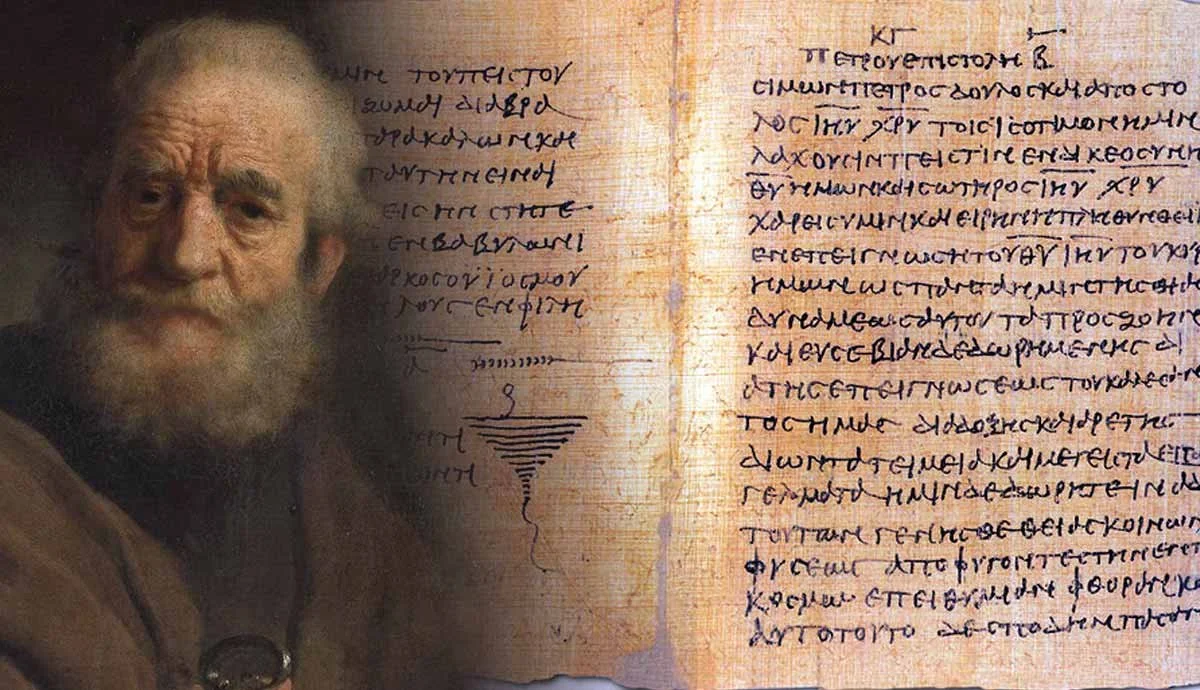
“Humble yourselves, therefore, under the mighty hand of God so that at the proper time he may exalt you, casting all your anxieties on him, because he cares for you.”
1 Peter 5:6-7
Notice the connective at the beginning, ‘therefore’ (v. 6b) recalling the previous words. These words in verses 6 and 7 are a conclusion or even an action-item, given the call to all Christians to dwell humbly with each other and under authority in the church. But now Peter is grounding that order in the church in a broader and deeper Christian principle. It is a principle that is patterned after Jesus. Now to be patterned after Jesus is what every single Christian was destined for. Paul says,
For those whom he foreknew he also predestined to be conformed to the image of his Son (Rom. 8:29).
Jesus lived and died and rose again in this pattern of exalted humility, and Paul said that every Christian is predestined to be confirmed to Him. So to be conformed to the image of Christ is to be conformed to this pattern of exalted humility.
Doctrine. Since God cares for you, in Christ, He will exalt you humbled.
(i.) The Christian’s exalted humility is by God’s command.
(ii.) The Christian’s exalted humility is under God’s might.
(iii.) The Christian’s exalted humility is in God’s time.
(iv.) The Christian’s exalted humility shows God’s care.
The Christian’s exalted humility is by God’s command.
We have an imperative here: ‘Humble yourselves’ (v. 6a). I would never torture you with more Greek than I have to, but this is what we call an aorist passive imperative.1 You already know it’s an imperative. But it is passive. Passive is one of two opposite voices, the other being active. “Johnny hit the ball” is active. “Johnny got hit by the ball” is passive. There is a third voice in the middle, called the middle, so that one can “get clean,” as in a bath, where the person with the body is the one acting on the water and soap, and yet the water and the soap have their effect on the body. It is acting and acted upon. Humble is tricky. Peter puts it in the passive voice; so case closed, right? God is the Actor. God is humbling you. You are the acted upon—you are the being humbled. Sounds like a simple solution.
There’s just one problem. Peter is commanding it of you. One commentator brings in a helpful analogy to this cooperative sense of “allow yourself to be humbled.”
Compare, for example, the way in which a person in need of physical treatment and relief chooses and consents to become a patient of a particular surgeon, and thus submits himself under his ‘operating hand’, in the hope of enjoying the promised benefit in due time.2
The Christian’s exalted humility is under God’s might.
According to Peter’s charge here: this humbling process is ‘under the mighty hand of God’ (v. 6c). I take it that the word HAND is used here to recall those biblical passages where the hand of God signifies fatherly care, whether or provision or discipline: “I will uphold you with my righteous right hand” (Isa. 41:10); “no one is able to snatch them out of the Father’s hand” (Jn. 10:29).
God’s might is the efficient cause. We use the word Almighty to signify God’s omnipotence, that He has all power, or power to do whatever He wills.
The counsel of the LORD stands forever, the plans of his heart to all generations (Ps. 33:11).
So remember that when you arrive at the word “may,” as in that He may exalt you. This is not the way we often use the word “may” in contemporary English, as if it were a wish or a potential outcome. It only means God’s design. But if we remember that God’s designs are all-powerful designs, then it follows that this exalted humility is an invincible, certain pattern for the Christian.
The Christian’s exalted humility is in God’s time.
Peter then says, ‘so that at the proper time he may exalt you’ (v. 6d). Here we see three things about the timing of being exalted humble:
First, this time is for our waiting—notice the “so that” clause. Waiting is worship: “Wait for the LORD; be strong, and let your heart take courage; wait for the LORD!” (Ps. 27:14) Waiting is not an utterly passive thing. It is not quietism. It is not a numbing of our affections or will. However, it is a resting in God’s resources. You may think that this time waits until the end. In the ultimate sense, it does. All Christians will be exalted to the extent of what theologians call glorification. But just as Peter talked about a time for judgment in time in Chapter 4, so here there is a time for exaltation in time. Why? There are many reasons. One is for God to put His servants in a place of authority to accomplish some great thing, and recognition is at stake. So,
The LORD said to Joshua, “Today I will begin to exalt you in the sight of all Israel, that they may know that, as I was with Moses, so I will be with you (Josh. 3:7).
Without this exaltation, there would be no recognition; without that recognition, there would be no willing assent to Joshua’s leadership.
Second, this time is a proper time. It is proper in the sense of being morally right and it is proper in the sense of being wisely designed. There was a proper time for Joseph to wait in prison because there was a time when God ordained the Pharaoh to be troubled by his dream and for the famine to strike the region. There was a proper time for Moses to be exiled by another Pharaoh and the right amount of time to tend to Jethro’s sheep in the middle of nowhere. There was a proper time for David to run from Saul even though he had already been anointed by Samuel, and all signs pointed to Saul’s illegitimacy.
Third, this time is entirely God’s creation. It says THAT … HE. It is His time. Others may be actors on the stage of this time. Others may try to waste your time. Others may make you think that they are in charge of this time. But the words THAT … HE make God the sole Architect of this time of your waiting, this time of your being hemmed in. And therefore this is a good time. This is the best time for you to be alive. Do not covet another time. This is especially difficult in dark times in which the wicked appear to hold time in their hands. But we are told,
Wait for the LORD and keep his way, and he will exalt you to inherit the land; you will look on when the wicked are cut off (Ps. 37:34).
The Christian’s exalted humility shows God’s care.
There is actually one more action-item here in this verse. He says, ‘casting all your anxieties on him’ (v. 7a). This word ἐπιρίψαντες is a participle. In our English translations, a participle often comes with the clue “-ing” at the end of the word. So it is here with casting. It is an aorist participle, which means that this action-state is a summary of a perfected event or occurrence. And that presents a Greek head-scratcher even more puzzling than our opening question about Humble. If “cast” or “casting” is so punctilliar and perfect,3 in other words, if it is simply a statement of a done deal—having cast—well, then there is no action item. I do not think that is the case. But the mystery is resolved the moment you realize that ALL YOUR ANXIETIES is in the plural and each one is its own trouble. So, it does not mean all of them in a single bundle, but each and every one of them, as they come up. Then it makes perfect sense. All Peter is saying here is to completely get rid of each other these—all of these—all the time, every time.
Now the word itself has the sense of throwing a weighty object at or on a thing. It is used in Luke 19:35 when the disciples were “throwing their cloaks on the colt” that they brought to Jesus. Sproul comments that the expression here “comes from the fishing industry, not from casting into the water with rods and reels but with nets, as fishermen did in antiquity and still do today.” But how does that fit this context? He explains,
The net must be thrown. It is weighted down so that it will sink and fish will swim into it and get caught. Here, this metaphor of casting is used with respect to our anxieties and concerns, the things that weigh us down.4
Speaking of sea-imagery, the final anchor for Peter is in the heart of God for His children, in the simple words: ‘because he cares for you’ (v. 7b). I think there are two basic stages along life’s way when it comes to feeling as though people care. There are people who we know and who we hear saying, “Nobody cares about me.” It is one of those things we hear and we try to have sympathy, but, if we are in that other stage, we either cannot relate at all, or we have forgotten what it feels like. This is one of the most important “devotional” verses in all of Scripture. The word care (μέλω) here means what it appears to. God has a concern for each one of us. He who knows all knows you. He who is everywhere present is nearer to you than anyone you have ever known, or any nearness you ever hoped for. God has always been this way with those He brings near to Him: “You keep him in perfect peace whose mind is stayed on you, because he trusts in you” (Isa. 26:3).
Practical Use of the Doctrine
Use 1. Instruction. I said at the beginning that this is a principle that is patterned after Jesus. Jesus was exalted humble. It wasn’t just a “Chapter 1, Chapter 2,” as if the glory were a mere reward for having gone through the suffering. The New Testament consistently treats the suffering of Christ as the immediate lens of glory—the exact means by which He is glorified. Let me show you a few places,
And Jesus answered them, “The hour has come for the Son of Man to be glorified. Truly, truly, I say to you, unless a grain of wheat falls into the earth and dies, it remains alone; but if it dies, it bears much fruit” (Jn. 12:23-24).
And being found in human form, he humbled himself by becoming obedient to the point of death, even death on a cross. Therefore God has highly exalted him and bestowed on him the name that is above every name (Phi. 2:8-9).
This is not about paying our dues. None of us could. This is about testifying to God being greater than whatever we lost in the humbling.
Use 2. Exhortation. How does that passage in Philippians start, but with an imperative to us: “Have this mind among yourselves, which is yours in Christ Jesus” (Phi. 2:5). But how do we have this mind, in Paul’s words, or in Peter’s words, how do we so humble ourselves under God’s mighty hand? Three simple and sure ways:
(i.) Pray that God will show you where you have relied on your own might, or demanded your own time of exaltation.
(ii.) Be faithful in the little things of the humble time, because it is only after this, Jesus teaches us, that He will put us in charge over much.
(iii.) Get to know the lowly. When Jesus humbled Himself, taking on human flesh, this was characterized by His association with the lowly and forgotten.
Use 3. Consolation. The Apostle Paul joins together the confirmation that the Holy Spirit ministers to us that God loves us with this pattern of humility being exalted. He says,
The Spirit himself bears witness with our spirit that we are children of God, and if children, then heirs—heirs of God and fellow heirs with Christ, provided we suffer with him in order that we may also be glorified with him (Rom. 8:16-17)
You hear those connecting words: in order that. This is God’s pattern. Lowly is the way to the lofty: “whoever loses his life for my sake will find it” (Mat. 10:39). Your time in the low points of life are no strike against the reality of your conversion. These are your confirmation. And until the Day of glory, the Spirit has inspired these words through Peter to bring you back to God’s all-knowing, all-powerful, always-present care.
______________________________________________________
1. Ταπεινώθητε is from the verb ταπεινόω, meaning “abase, bring low, humble (self).”
2. Stibbs and Walls, 1 Peter, 170.
3. An aorist can be punctiliar in three ways: as a completed process—e.g., “They walked for forty years.”—as a beginning—e.g., “He became rich”—as an end—e.g., “He arrived.” For this reason, the aorist will usually refer to a past action, event, or process.
4. Sproul, 1-2 Peter, 163.