
God in Himself, Christ for Us
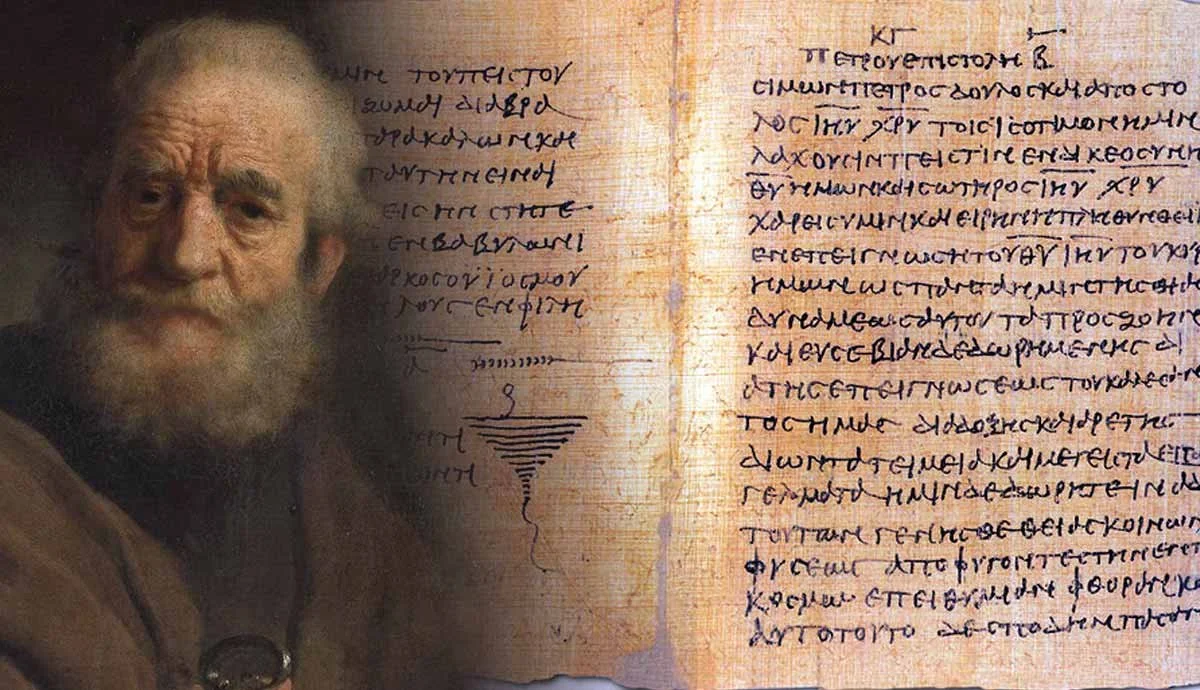
He was foreknown before the foundation of the world but was made manifest in the last times for the sake of you who through him are believers in God, who raised him from the dead and gave him glory, so that your faith and hope are in God.
1 Peter 1:20-21
If there was one defining characteristic of modern theology—yes, even modernized Christian theology—it is humanizing of God on our own terms. Now, in Christ, God does take on true humanity. But think of it as the difference between classical versus modern Christian theology as the difference between a reconciliation of God and man on God’s terms, versus a lowering of God on man’s terms.
Doctrine. That Christ is God apart from us and receives glory above us is the best news for us.
(i.) The Son Known in God Before All Time
(ii.) The Son Put Forth in Time for Our Sake
(iii.) The Son Raised and Glorified for Our Faith and Hope
The Son Known in God Before All Time
That ‘He was foreknown before the foundation of the world’ (v. 20a) is a statement that shares similarities to how God foreknows us, but also some important differences. The word προγινώσκω is a perfect participle here. We get the English word “prognosis” from this, which we usually use about an expert medical expectation. The physician is engaged in a kind of foreknowing. With respect to God, we only speak by faint analogy. Here we cannot mean “fore” in the same way as the physician and his x-rays and lab results. In his classic work on The Existence and Attributes of God, Stephen Charnock wrote,
God knows by his own essence. That is, he sees the nature of things in the ideas of his own mind and the events of things in the decrees of his own will. He knows them not by viewing the things but by viewing himself. His own essence is the mirror and book, wherein he beholds all things that he does ordain, dispose and execute. And so he knows all things in their first and original cause, which is no other than his own essence willing and his own essence executing what he wills.1
The Son must be known in an even more eternal way than the world that He makes is known, since, “All things were made through him, and without him was not any thing made that was made.” (Jn. 1:3). More than that—for the Father to know the Son is first to know the second person of the Trinity who is one in essence with Him, equal in power and glory. The author of Hebrews put it in this way:
He is the radiance of the glory of God and the exact imprint of his nature, and he upholds the universe by the word of his power (Heb. 1:3).
It is also the case that his kind of foreknowing carries more than the sense of the knowing of intellect, but also of the fullness of fellowship, that is, that “The Father loves the Son and has given all things into his hand” (Jn. 3:35), or two chapters later, “For the Father loves the Son and shows him all that he himself is doing” (Jn. 5:20).
Having said that, it is also the Word made flesh—the human Christ—who was foreknown before anything else was created. That means that God had the mission of His Son in mind for reasons that cannot be a mere reaction. This was no “Plan B.” Not only His life but His death. Revelation twice speaks of those “whose name has not been written from the foundation of the world in the book of life of the Lamb who was slain” (13:8; 17:8), which implies the reverse of a group whose names have been written in that book of life from before there was time. More than that, it is called the book of life of the Lamb who was slain. To say foreordained about the whole mission of the Son is to say more than “know beforehand,” but also foreordained. We can see how Jesus being God in Himself—God before time; God in need of nothing that He causes to happen—is the greatest guarantee that the greatest things for us will happen.
The Son Put Forth in Time for Our Sake
Before we can speak about how the incarnation was “for our sake,” we have to understand what he means by being ‘made manifest in the last times’ (v. 20b). I talk about this in detail in the very first session of my Eschatology class, partly because the word used here by Peter is the adjective ἔσχατος for “last in any series.” It is from this that we derive the word “eschatology,” as the study of last things—or is it merely of “last things” in that wooden sense of a numerical sequence? Most theologians have answered No, and for good reason.
Calvin says of Peter’s specific meaning, that it is,
The same as when Paul says, “In the fullness of time,” (Gal. iv. 4;) for it was the mature season and the full time which God in his counsel had appointed.2
So the these “last times” are the era that belongs to the kingdom of the new world overlapping with and invading the old world. It has to do with the quality of these days more so than their quantity.
Once we have that down, we can see what the Creed meant by the incarnation being “for us and for our salvation.” Here it is this eternal Son ‘was made manifest … for the sake of you’ (v. 20c). He did not do this for His own sake, in the sense of God needing anything.3 As we will see from the next verse, we can say that He did all this for His own sake in the sense of aiming at His own glory. But that’s very different. “For the sake of you” here means that you—and me—and all sinners are poor and needy and in the greatest of dangers. Paul says,
For you know the grace of our Lord Jesus Christ, that though he was rich, yet for your sake he became poor (2 Cor. 8:9).
Christ gained nothing in His own intrinsic blessedness by taking us on. It is we who are the beneficiaries.
Peter likes to remind his readers of the ABCs. By this turn of phrase here, he reminds that Christ is the only way of access to God: ‘who through him are believers in God’ (v. 21a).4 It may be that Christ is considered here as the source, as in being called “the founder and perfecter of our faith” (Heb. 12:2). In either case, the Bible will not allow a bare theism to be good news for us, as if rising up just enough from the swamps of atheism impresses God, or as if the morality we achieve from not being atheists does God any great favors.
The Son Raised and Glorified for Our Faith and Hope
Just as belief in Christ makes belief in God redemptive belief, so belief in the resurrection honors Christ as more than an Example and Teacher, but as a Savior. We can see that clearer if we read the two clauses of this sentence in reverse, starting with God’s design or end: ‘so that your faith and hope are in God’ (v. 21b). Evidently, our faith and hope would not truly be in God if it were not in the specific Christ who is rises and ascended in glory. There is a counterfeit Christianity which the modern world has called by names like “liberal” and “progressive,” but which is truly Christless in that the biblical Jesus is stripped of His supernatural prerogatives not only of divinity, but of Savior. If our so-called faith is in a Jesus who merely lived an exemplary life in the same class as other moral lives, then why speak of hope in Him?
It was famously put in a clever way by a theologian, who was not so conservative himself, H. Richard Niebuhr, when he was describing the message of liberal Christianity.
A God without wrath brought men without sin into a Kingdom without judgment through the ministrations of a Christ without a Cross.5
Peter here will not allow such a so-called faith. He anchors real faith in the God-Man who reconciles man to God and cannot be esteemed on any other terms. Peter only allows hope in a ‘God, who raised him from the dead and gave him glory’ (v. 21a).
I saw a kind of three-way debate a few years ago between the atheist Sam Harris, the Christian apologist William Lane Craig, and the psychologist-cultural commentator, Jordan Peterson. At one point, Harris made the remarkable comment that the resurrection of Christ makes no difference to our lives. This is not usually what would take up the time of such a discussion, but I bring it up here for the sake of those who have an affiliation with the church or a Christian background, but have failed to come to grips with the point of the resurrection. What is so remarkable about the idea that the resurrection makes no difference? Well, it is that it does, and nothing could make a greater difference. It is not just intellectually dishonest, but every kind of dishonest, to pretend that death is no big deal to you, or that the world as it currently is doesn’t bother you, or that you do not miss the loved ones no longer with you, or long to be loved as you never have. But what are all of these but symptoms of the curse of death?
For Jesus to be risen and ascended has to do with glory, and that is good for us. If God does not magnify His Son to us, we die. When Jesus prayed for us, this is what He prayed for:
Father, I desire that they also, whom you have given me, may be with me where I am, to see my glory that you have given me because you loved me before the foundation of the world (Jn. 17:24).
One practical reason that Christ being glorified to us is for our present good, is as a reminder that we are perfectly accepted and welcome into God’s presence. How does that work? Paul said,
This was according to the eternal purpose that he has realized in Christ Jesus our Lord, in whom we have boldness and access with confidence through our faith in him (Eph. 3:11-12).
Jesus’s state in exaltation lifts our eyes up to where our lives, as Paul says to the Colossians, really is—hidden with Christ in God (cf. 3:1-3). So, is this exhalation of Christ in glory just a reminder of our inheritance with Him? There’s more! Or in the words of Hebrews: “Since then we have a great high priest who has passed through the heavens, Jesus, the Son of God, let us hold fast our confession … Let us then with confidence draw near to the throne of grace, that we may receive mercy and find grace to help in time of need” (Heb. 4:14, 16). In Christ, we have the most favorable audience with the Father—but “in [that] time of need”— at just that time when we think, “I couldn’t possibly be worthy to come into His presence now!” But that forgets that Christ is worthy, and we are placed in Him; seen as though in Him. The glory of Christ is like the light of a lighthouse that never goes out and can be seen from any storm at sea to those who are His own. Imagine covering up that glory, as if that constituted the humility of Jesus! He is the only being for whom self-exaltation is good for others. If we would be saved, Christ must be seen. So it is a great news for sinners that God gave Christ glory for us to see.
Practical Use of the Doctrine
Use 1. Instruction. Whenever some renovation of the Christian God has been made by modern thinking, and the rationale is to make Him more relational or more “relevant,” we will often hear the analogy in response that if you are drowning in a raging river that is approaching a waterfall, which do you want spotting you on the shore: Someone who will jump in with you, to merely be in the same boat with you; or someone who has the strength to have his feet immovably on the shore and his arms powerful enough to reach out and pull you ashore? Well, it is a perfectly good analogy. I will not pontificate on the true difference between empathy and sympathy. Of course, the Scriptures speak of the sympathy of God in Christ. The less controversial point ought to be that we need more than divine sympathy. We need a salvation, where He is seen as strong to save.
Use 2. Admonition. I have warned for close to a decade now that conservatives, just as much as liberals, will find new ways to reduce Jesus into someone less than a Savior to them. They may even try to make Him a king as the crowds so often would have in his own day.
But young men on the right who profess the name of Christ, hear this: When it comes to the eternal realm, the Christian is not a “king-maker,” but a King-worshiper; and we do not honor Christ as King if our faith and hope is not in God in the way Peter describes here in his letter. It remains true in every age, that, “Blessed are the poor in spirit, for theirs is the kingdom of heaven” (Mat. 5:3). To be poor in spirit is to recognize our need for grace—that everything about Jesus is not us contributing an ounce for His sake, but God becoming low for our sake.
The liberal reduces Christ to a friend by stripping Him of His sovereignty; the conservative can reduce Christ to a king by granting His power back, only in order to restore order in the here and now. Paul tells us, “Do not say in your heart, ‘Who will ascend into heaven?’” (that is, to bring Christ down)” (Rom. 10:6). No matter where you are on that spectrum, please understand, God does not need you and me. We need Him. God is fully sufficient in Himself. All that is in Scripture—all that is in the gospel, all that is in the Word made flesh—is for the sake of you.
_______________________________________________
1. Stephen Charnock, Discourses on the Existence and Attributes of God, Volume 1 (Wheaton, IL: Crossway, 2022), 675.
2. Calvin, Commentaries, XXII.2.52-53.
3. “nor is he served by human hands, as though he needed anything” (Acts 17:25).
4. Calvin presses this reading: “here is shortly expressed what faith is. For, since God is incomprehensible, faith could never reach to him, except it had an immediate regard to Christ.” Commentaries, XXII.2.53.
5. H. Richard Niebuhr, The Kingdom of God in America (1937)