
God’s Glory in a Stricter Judgment
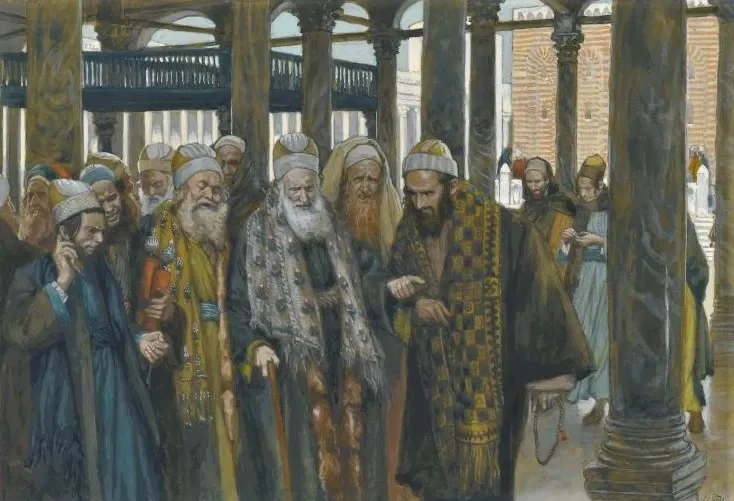
“A son honors his father, and a servant his master. If then I am a father, where is my honor? And if I am a master, where is my fear? says the LORD of hosts to you, O priests, who despise my name. But you say, ‘How have we despised your name?’ By offering polluted food upon my altar. But you say, ‘How have we polluted you?’ By saying that the LORD’s table may be despised. When you offer blind animals in sacrifice, is that not evil? And when you offer those that are lame or sick, is that not evil? Present that to your governor; will he accept you or show you favor? says the LORD of hosts. And now entreat the favor of God, that he may be gracious to us. With such a gift from your hand, will he show favor to any of you? says the LORD of hosts. Oh that there were one among you who would shut the doors, that you might not kindle fire on my altar in vain! I have no pleasure in you, says the LORD of hosts, and I will not accept an offering from your hand. For from the rising of the sun to its setting my name will be great among the nations, and in every place incense will be offered to my name, and a pure offering. For my name will be great among the nations, says the LORD of hosts. But you profane it when you say that the Lord’s table is polluted, and its fruit, that is, its food, may be despised. But you say, ‘What a weariness this is,’ and you snort at it, says the LORD of hosts. You bring what has been taken by violence or is lame or sick, and this you bring as your offering! Shall I accept that from your hand? says the LORD. Cursed be the cheat who has a male in his flock, and vows it, and yet sacrifices to the Lord what is blemished. For I am a great King, says the LORD of hosts, and my name will be feared among the nations.”
Malachi 1:6-14
The analogies, in verse 6, of father and master in relation to son and servant are meant to elicit the senses of love and respect. Underneath this is a lesser to greater logic. If sons ought to love and honor their earthly fathers, and if servants ought to perform their duties in reverence to their earthly masters, how much greater should be the love, the honor, and the fear toward the ultimate Father and Lord who had no need whatsoever to take Israel into such a privileged relationship.
The immediate audience are the ‘priests’ (v. 6c) of Israel. That makes them the main actors on the stage of this text; and the basic object that they bring onto the stage with them are a ‘sacrifice’ (v. 8) or an ‘offering’ (vv. 10, 11, 13). These may seem simple words to those who have been Christians for many years, but I don’t want to assume anything. Beyond that, these take on a different sense in the New Testament. They do not go away. They take on a different sense. As a general rule, for now, let us at least observe that if God’s people are entrusted with the oracles of God (cf. Rom. 3:2), much more are the priests entrusted. This implies a more basic principle which will guide us today.
Doctrine. The greater degree of glory entrusted, the stricter the judgment.
God’s greater glory denied by the hands.
God’s greater glory scoffed at in the heart.
God’s greater glory in those charged to bring near.
God’s greater glory denied by the hands.
The priests of God’s people had a special leadership position. Unlike the kings and judges who led the civic life of the people, the priests led the religious life. They had the care of true worship. At the very center of the life of worship—inside the Tabernacle when they were in the wilderness, and the Temple once they entered the land—at that center, was an altar; and on that altar was a sacrifice or an offering. And the fundamental quality of that sacrifice was that it had to be their best—the best in the positive sense of value, as in their firstborn or first fruit; and the best in the negative sense of having no imperfection. Thus,
to be accepted it must be perfect; there shall be no blemish in it. Animals blind or disabled or mutilated or having a discharge or an itch or scabs you shall not offer to the LORD or give them to the LORD as a food offering on the altar (Lev. 22:21-22).
Here is the key to Malachi’s reply to the priests, when they disingenuously asked: ‘How have we despised your name?’ (v. 6d) Answer: ‘By offering polluted food upon my altar’ (v. 7a) Here we see three sins of priestly hands: they are speaking hands, they are leftover hands, and they are hypocritical hands.
First, such priestly hands speak. When it is added, ‘By saying that the LORD’s table may be despised’ (v. 7c), this may have been a summary of actual speech, or it may be as when our actions speak louder than words.1 In either case, what we do always says something about God. All the more so when the doing involved setting the Lord’s Table, opening the door of God’s house, and bringing something that is already His. So it is with teachers, who “will be judged with greater strictness” (Jas. 3:1), who present with the tongue what is either true or false about the Lord. Those who present with the hands also communicate something either true or false about the Lord; either of His worth, or that He is worthless to such hands. Thus the stricter one takes the Lord’s name, his actions make a stricter statement. This teaches us that the third commandment is violated in those who wear Christ’s name disparaging His things.
Second, such priestly hands choose. The choice they have is simple, and the Leviticus passage we heard from makes it plain. Everyone knows what is their best and what is their leftovers. The leftovers was “the way of Cain” (Jude 11). You might remember the couple named Ananias and Sapphira who “kept back … some of the proceeds [from the sale of their property] and brought only a part of it and laid it at the apostles’ feet” (Acts 5:2). It wasn’t the amount. It was their lie. It was their leftovers, and yet they postured as if it was worthy of God.
Third, such hands mask hypocrisy. The priests’ problem and ours is not that we have no sense of fear. Their problem and ours is not that we do not know how to show honor. The problem is that we have only enough to give to the lesser. Notice that the lesser-to-greater logic when it came to earthly fathers and masters (v. 1) is now given a third figure: the ruler—‘Present that to your governor’ (v. 8b) And why not? The answer they would have to give is that they fear him, whereas they do not fear God.
Priestly hands are more guilty hands because priestly hands are more glorious hands. What they had been given to handle is the very epicenter of life and death in this world. Such hands can tell the truth about the way to God, or they can lie about the way to God, but they can never stop speaking.
God’s greater glory scoffed at in the heart.
The prophet does not leave us to guess what their hearts said at the level of their hands. There was already one instance of “You say’—‘By saying that the Lord’s table may be despised’ (v. 7); and, as Jesus said, “out of the abundance of the heart his mouth speaks” (Luke 6:45). Now we have two more clear glimpses into the heart through the lens of words:
But you profane it when you say that the Lord’s table is polluted, and its fruit, that is, its food, may be despised. But you say, ‘What a weariness this is,’ and you snort at it, says the LORD of hosts (vv. 12-13).
When we say things, something is revealed, and we can never simply say: “I was just joking.” This “snort” is the outward manifestation of a scoffing heart. The scoffer is the third character in Psalm 1:1, in which the Psalmist presents a threefold sinking deeper into depravity. The one who “walks … in the counsel of the wicked” then “stands in the way of sinners” then “sits in the seat of scoffers.” So it is here that these wicked priests first walked against the law of the LORD, then stood against it, until finally, they sat in the seat of scoffers.
Priestly words are more guilty words because priestly words are more glorious words—they are windows into a heart that has been drawn more near to God and is supposed to communicate the heart of God to others. A priest who scoffs and snorts produces other hearts that can only say, “What a weariness God is—Why bother!”
God’s greater glory in those charged to bring near.
God gives us a glimpse of His own displeasure at this:
Oh that there were one among you who would shut the doors, that you might not kindle fire on my altar in vain! I have no pleasure in you, says the LORD of hosts, and I will not accept an offering from your hand (v. 10).
Again, these were the priests. The priests were called by God and trained by a line of priests before them. They had one job: to bring the people into the presence of God. What a privilege! The true heart of the priest is captured in the Psalm,
For a day in your courts is better than a thousand elsewhere. I would rather be a doorkeeper in the house of my God than dwell in the tents of wickedness (Ps. 84:10)
Malachi anchors the strict charges he was given to the loftiest job description that they had. Two verses are crucial here:
For from the rising of the sun to its setting my name will be great among the nations, and in every place incense will be offered to my name, and a pure offering. For my name will be great among the nations, says the LORD of hosts … For I am a great King, says the LORD of hosts, and my name will be feared among the nations (vv. 11, 14b).
This same lesser-to-greater logic—this same general-to-stricter guilt—was voiced by Moses when he had said to Aaron, when the latter would have wept for his sons, Nadab and Abihu, when, “fire came out from before the LORD and consumed them, and they died before the LORD” (Lev. 10:2). Nadab and Abihu were not just sons of Aaron. They were priests, and who should have known better than to offer what the Scriptures call strange fire before the LORD: “This is what the LORD has said: ‘Among those who are near me I will be sanctified, and before all the people I will be glorified’” (Lev. 10:3).
Was it harsh? It all depends on what is at stake. Here what is even called the “fame” of God—note: among the nations—is at stake. It is not that God needs these priests or that ancient nation to make Himself known. It is that He means to obtain glory through His image: if not Adam, then Israel, and if not Israel, then another to come. But this teaches us, finally, the link between glory and guilt, or glory and a stricter judgment. Guilt rises in proportion to the greatness of the One offended. If we have a lenient view of guilt, then we have a low view of God.
Practical Use of the Doctrine
Use 1. Instruction. Priest and sacrifice: What do we make of those now? With the coming of Christ, we have all been made a whole of kingdom of priests (cf. 1 Pet. 2:9; Rev. 1:6), and because “Christ, our Passover lamb, has been sacrificed” (1 Cor. 5:7), there is now made possible a constant flow of sacrifices—not of atonement, but of praise and thanksgiving. Can you see now how we can be guilty of the same thing those priests were guilty of in Malachi’s day? We have our leftovers and our hypocrisy. We have our frowns and sighs that communicate to those weaker and looking for a reason to come to the house of the Lord, and all they can see is what a weariness all of this is. Let us study how Jesus bears the whole burden for us, and how ours is only a setting of the table for celebration.
Use 2. Correction. Do not be so quick to wish to be in a special office unless properly called. To be so called is to be brought into a stricter thing. In preaching on the text of Nadab and Abihu, Jeremiah Burroughs said,
The more the dignity of men is, the more is their danger if they do not look to it … Let men who are in a higher condition look to themselves, for their danger is greater. And you who are in a meaner condition, do not envy those who are in a higher one, for you may be more safe in that mean condition which you are in than they are in theirs.2
In our day and age, that lesson may strike most as condescending. We perversely value self-fulfillment above more ultimate care of the soul. Yet those stories in the Old Testament involving what the skeptic whispers to us as “archaic” and “barbaric,” are, in fact, supreme expressions of God’s fatherly care. I do not venture to speculate on the ultimate destination of those two sons of Levi, but I can say that countless sons have been kept at a distance from the holy things of God who were not ready to proceed with due caution.
Use 3. Admonition. Think over those words again in verse 10: ‘Oh that there were one among you who would shut the doors!’ Shut it down! Does God say that? Is God in the business of closing churches? Indeed He is. But it rarely happens in a ceremony seen by the naked eye. Its closing comes, as Eliot said of the end of the world, not with a bang but a whimper. Do not look to the physical building being demolished, or even the seats being fully emptied in a day. In John’s letters to the seven churches, there is that mysterious imagery of Jesus removing His lamp stand (Rev. 2:5); and what is that? If “the seven lampstands are the seven churches” (Rev. 1:20), and the whole point is that they are the source of light, for them to be removed is for their light to go out. It is not all that difficult to see the meaning. The action item here is to come back next week, because in the next passage, the curse against that old house becomes clearer.
Use 4. Consolation. Whereas all merely human priests have snorted and scoffed, when all we had to offer was animals or routines of religion. However much these may be prescribed by God, in and of themselves, they contribute nothing to Him. He says through Isaiah,
What to me is the multitude of your sacrifices? … I cannot endure iniquity and solemn assembly. Your new moons and your appointed feasts my soul hates; they have become a burden to me; I am weary of bearing them (Isa. 1:11, 13-14)
The burden of that divine weariness, that divine “disgust” that we talked about in the opening passage, grew and grew, so that the strictest judgment against the priests was the one that fell upon the Great High Priest to come.
Jesus as Priest was the exact opposite of these priests. For the great privilege set before them—even for a sacrifice that was provided for them—they scoffed and despised. But Jesus had the actual burden placed upon Him; and He carried it to death in our place, “for the joy that was set before Him” (Heb. 12:2). See that weary load where it really went, and from now on, serve the Lord with gladness!
__________________________________________________
1. Joyce Baldwin is probably correct in saying, “Clearly the priests would never have said that it was permissible to despise the Lord’s table, but Malachi is trying to bring to the surface subconscious attitudes by drawing out the implications of unworthy actions.” — Haggai, Zechariah, and Malachi: An Introduction and Commentary (Downers Grove, IL: InterVarsity Press, 2009), 245.
2. Jeremiah Burroughs, Gospel Worship (Orlando: Soli Deo Gloria Publications, 1990), 15.