
The Passive Obedience of Christ
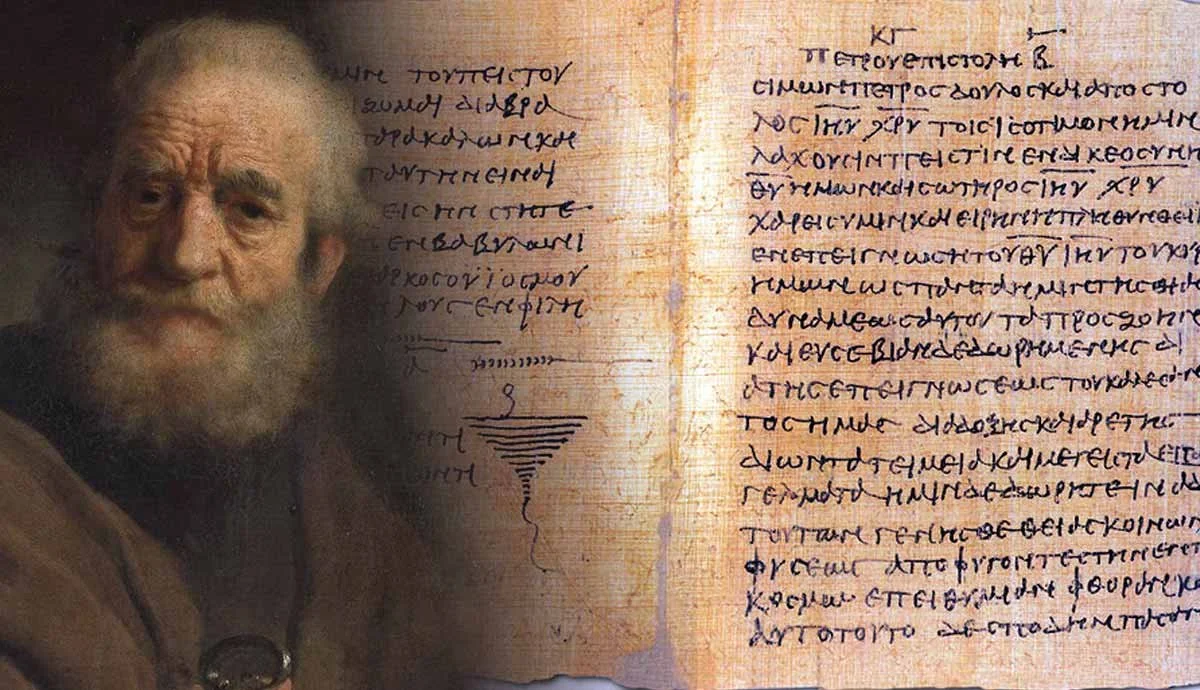
He committed no sin, neither was deceit found in his mouth. When he was reviled, he did not revile in return; when he suffered, he did not threaten, but continued entrusting himself to him who judges justly.
1 Peter 2:22-23
The verb in Latin for our English expression “I suffer,” is the word passio. From it we derive the word passion, as in the passion of Christ. Here is the problem in a nutshell. Sinful human beings must suffer for their treason against God. Even supposing that God loves us and takes the initiative to save us, God cannot suffer. This sets up a classic dilemma that some of the greatest works of theology have sought to address: Why did God take on the flesh of humanity? How did He do so, and what did that accomplish? Over the next few weeks (Lord willing) we will hear a good portion of Peter’s answer to that question.
Doctrine. Christ’s passive obedience consisted in His sinless will to suffer, entrusting Himself to God.
(i.) Sinless
(ii.) Suffering
(iii.) Submission
(iv.) Substitution
Sinless.
‘He committed no sin, neither was deceit found in his mouth’ (v. 22). Peter had already said of Jesus, in the role of His sacrifice, was “like that of a lamb without blemish or spot” (1:19). The spotlessness of the animal sacrifices in the old covenant was important because of how it was a type and shadow of the sinlessness of Christ. It symbolizes moral purity, blamelessness, a record untainted by the least defect in thought, word, or deed. Throughout the Old Testament, this demanded that worshipers only give God their best, as in the Passover where they are told, “Your lamb shall be without blemish” (Ex. 12:5). And we are not only talking about small discolorations; but the wicked priests were later scolded, “When you offer blind animals in sacrifice, is that not evil? And when you offer those that are lame or sick, is that not evil?” (Mal. 1:8) The honor that was due to God—yet denied Him by all sinners—this was to be constantly before the eyes of His people, leading up to the true spotless sacrifice to come.
When the shadows of animals give way to the Substance, it makes sense that blemishes don’t refer to merely physical distortions, but to moral distortions. The God to whom we would be reconciled is “of purer eyes than to see evil and cannot look at wrong” (Hab. 1:13). So if any man would render unto God that which we all owed Him, such a Man must be wholly without any defect, any impurity, in thought, word, or deed. This was necessary for our salvation.
For it was indeed fitting that we should have such a high priest, holy, innocent, unstained, separated from sinners, and exalted above the heavens (Heb. 7:26).
So the Bible consistently teaches that Jesus was sinless in exactly this way. He was “in every respect has been tempted as we are, yet without sin” (Heb. 4:15).
Suffering.
Note the potential generality in the expression ‘when he suffered’ (v. 23b). When did Jesus suffer? This has special reference to the cross, but may be expanded outward to all of the mistreatment that He underwent leading up to it, and even those endured throughout the whole of His life.1 This was not merely like suffering. It was suffering. The experience of being abandoned by His friends, lied about, spit upon, the physical, excruciating pain of those thorns being pressed down into His brow, and that of the nails hammered all the way through his limbs.
The law not only demanded obedience, but it demanded suffering. Consider that in the law, there are both commandments and then also threatening consequences for disobeying those commandments—starting with Adam: “for in the day that you eat of it you shall surely die” (Gen. 2:17); but also to Israel, “Cursed be anyone who does not confirm the words of this law by doing them” (Deut. 27:26). Therefore, to undergo this exact suffering is to satisfy the negative side of the law. This suffering is a legal debt.
Turretin wrote,
As the suffering of Christ is the principal part of the ransom (lytrou) paid for us by him and the special foundation of our confidence and consolation, it should also be the primary object of our faith and the theme of meditation, that with Paul we may count all things for loss but the knowledge of the crucified Jesus. We should attend to it more diligently as Satan the more impotently rages to obscure the truth of those sufferings and to deprive us of their saving fruit.2
Beware of teachings that minimize this doctrine at the very heart of the gospel.
Submission.
Now the wider statement Peter makes opposes Jesus’s suffering to those ways one might naturally respond to suffering, which recalls those words from last time, exhorting us to suffering after Christ’s steps before us. But look at the contrasting language here: ‘When he was reviled, he did not revile in return; when he suffered, he did not threaten’ (v. 23ab). This was to fulfill those words of the prophet Isaiah,
He was oppressed, and he was afflicted, yet he opened not his mouth; like a lamb that is led to the slaughter, and like a sheep that before its shearers is silent, so he opened not his mouth (Isa. 53:7).
This includes or implies a verbal defense of Himself. The connection between the first half of verse 23 and the second half has to do with this defense. He offered no defense for the same reason that He said those words in Peter’s direction at Caesarea Philippi: “Get behind me, Satan! For you are not setting your mind on the things of God, but on the things of man” (Mk. 8:33). In other words, to press Stop on Jesus from being unjustly condemned is to press Continue on us being justly condemned. It is either this only just Man suffers, or else every unjust person will suffer.
This last part is crucial to the concept of submission or obedience: ‘but continued entrusting himself to him who judges justly’ (v. 23c). To entrust himself implies that Jesus trusted God not only to deliver Him in the end, but to judge the case aright in the end. In other words, Jesus was committing an important action in undergoing this suffering. There were charges against Him—as only the worst of criminals were subject to crucifixion. But that entrusting to God’s judgment further implies a rendering to Jesus a reward for having done right. It is not only a clearing charge that declares Him innocent of having done wrong, but a rewarding declaration that He has done something most right. He intentionally glorified something about God, namely, His justice here. Paul says the same concisely: “This was to show God’s righteousness” (Rom. 3:25).
Let me put it in the words of Anselm, who, at the end of the eleventh century, was answering the question Why God Became Man. And one of the pressing objections against this way of the cross was that it seemed wrong, even granting that Jesus subjected Himself willingly to this. Anselm responded that,
On the contrary, it is most fitting that such a Father should agree with such a Son, if he has a desire which is praiseworthy in being conducive to the honour of God and useful in being aimed at the salvation of mankind, something which could not come about in any other way.3
Jesus affirms both sides of this truth by saying: “For this reason the Father loves me, because I lay down my life that I may take it up again … This charge I have received from my Father” (Jn. 10:17, 18). So God is pleased by that justice that is reflected in Jesus suffering and it takes the form of a charge—that is an imperative that Jesus answers to, so that it constitutes a real obedience to God’s law.
Thus, we call this passive obedience: an obeying God specifically to suffer the consequences of sin. What matters here is that we see the whole category of things Jesus suffered as that which God places upon Him to satisfy divine justice—that is, as aspects of the curse, or the legal consequence of our sin. The cross is obviously the culmination of that. However, the modern Reformed theologian, Herman Bavinck, offers this reflection, that,
Scripture views the entire life and work of Christ as a single whole and never makes a dichotomy between an obedience of life (obedientia vitae), which he accomplished for himself, and an obedience of death (obedientia mortis), which he accomplished for us.4
So this SINLESS SUFFERING SUBMITTED unto a God a real obedience. The question will be for what or for whom.
Substitution.
I mentioned how the spotlessness of the old covenant sacrifices were a type of the sinlessness of Christ. Now consider the other main actor in those old sacrifices—namely the priest. Here we bring together that point about sinlessness and substitution. Not only is it the case that only a perfect sacrifice would do. But it is also the case that only the perfection of the one who offers the sacrifice would do. Of Jesus it says, “He has no need, like those high priests, to offer sacrifices daily, first for his own sins and then for those of the people” (Heb. 7:27; cf. 9:7). Both priest and His offering must be perfect. He must suffer for all our sins and He must have no sin Himself. This idea of substitution will come back up even more clearly in this letter of Peter.
But in this place, if all we do is focus on verses 22 and 23, the objection to my use of this fourth word becomes obvious—Where do you get substitution in verses 22 and 23? I don’t. I get it from before and after, not to mention many other places in the Scriptures. But let’s just expand our lens at the end of this second chapter. Beforehand, he had said, ‘Christ also suffered for you’ (v. 21) and then afterwards: ‘He himself bore our sins’ (v. 24). If we read both of those verses, it becomes more difficult to reduce the word “for” (ὑπέρ) in verse 21 to mean simply that the example is held out before you. Rather, Christ’s work is in your place in some way. Verse 24 gives us more information on how that is. We will go more into that next week.
Practical Use of the Doctrine
Use 1. Instruction. Both Luther and Calvin in their commentaries on last week’s text and this one, pay special attention to how we are called to forego vengeance because of the example of Jesus. Here, more specifically,
When he was reviled, he did not revile in return; when he suffered, he did not threaten, but continued entrusting himself to him who judges justly (v. 23).
But elsewhere, “Love your enemies and pray for those who persecute you” (Mat. 5:44) and from the cross, “Father, forgive them, for they know not what they do” (Luke 23:34). So, how do we balance this truth with the presence of Imprecatory Psalms? This too is a vast subject, but here are five starter principles:
1. Both truths are in Scripture; therefore do not use one to cancel the other.
2. Not infallibly knowing the elect, make each person’s salvation ultimate—not exclusively so, not even always immediately so, but ultimately so.
3. Never be provoked to sin by someone else’s sin against you.
4. Leave final vengeance for God in heaven.
5. Leave temporal punishment by God’s chosen means on earth.
Use 2. Consolation. Once again, there is a parallel between what Jesus endured here and what we endure, and then a point where the parallel ends. But this is very good news. When Peter says, ‘When he was reviled’ and then, that He ‘continued entrusting himself to him who judges justly’ (v. 23), another element of that suffering was the suffering of accusation. He was accused, we are accused. But here is where the parallel lines end. He was accused unjustly. We would be accused justly, but for Christ. This is not to say we are not often unjustly slandered—and Peter covers that. I am not speaking here simply of the accusations of those in the world who either hate us, or feel wronged by us, but who give no thought to the ideas of sin or eternal consequences. The accusations that would stick to you and me the most are those of the devil. Real sin, truly worthy of the curse of God.
To whom or to what do you entrust yourself in the face of such accusations? Will it be to your own performance? “Oh, no, of course not—Jesus’s performance obeyed the law that gives me the right to eternal life,” But then what?—Will you entrust yourself to keep yourself in this justified state by your works or even your good will? Paul points us outside of ourselves to this same suffering Savior.
What then shall we say to these things? If God is for us, who can be against us? (Rom. 8:31)
God is for you in Christ. Outside of Christ, He is your Judge; in Christ,
he is my steadfast love and my fortress, my stronghold and my deliverer, my shield and he in whom I take refuge, who subdues peoples under me (Ps. 144:2).
Your glory through His suffering was His idea. It was His will—“for the joy that was set before him endured the cross, despising the shame” (Heb. 12:2) All this deepest suffering to secure your salvation.
____________________________________________________
1. cf. Turretin, Institutes, II.14.13.1-2.
2. Turretin, Institutes, II.13.14.1.
3. Anselm, Why God Became Man, I.10 [281].
4. Herman Bavinck, Reformed Dogmatics, III:378.