
Turretin on Justification
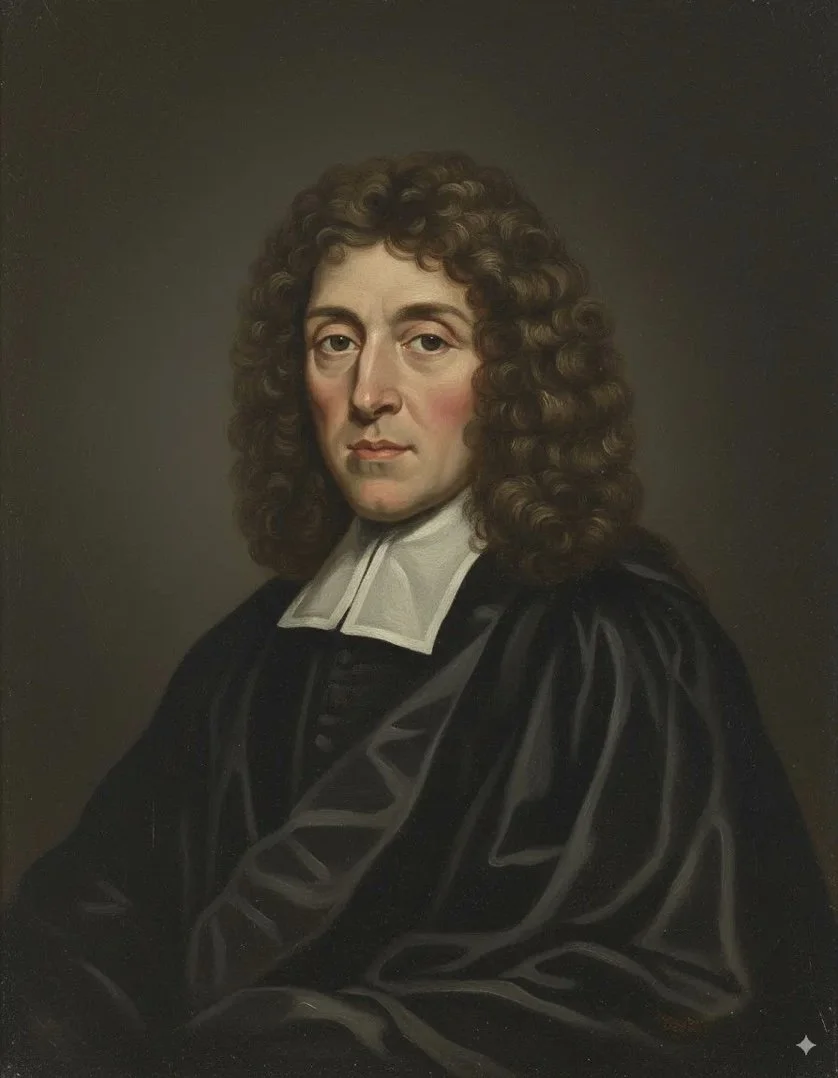
One of the clearest statements of the Reformed doctrine of justification may be found in the sixteenth topic of Volume 2 in Francis Turretin’s Institutes of Elenctic Theology (1679-85). It is structured by ten questions, which may be summarized more concisely by the following: (1) It is forensic, not moral. (2) Its meritorious cause is not our inherent righteousness. (3) Christ’s righteousness and obedience is alone that meritorious cause. (4) Justification consists in remission of sins and right to life. (5) The remission of sins is thus total. (6) Adoption is the fruit of justification bringing freedom. (7) Faith justifies instrumentally, not materially. (8) The “alone” in faith alone respects the ground of justification, not that it remains alone with respect to everything else in salvation. (9) Justification is rooted in eternity, as to decree, but affects real change in the status of one passing from death to life. (10) Justification is one, perfect, and certain.
As was the case with Luther and Calvin before him, Turretin rejected the notion that the controversy over sola fide was a mere trifle or misunderstanding over words.
This appears more clearly when we come to the thing itself and the controversy is not carried on coldly and unfeelingly in scholastic cloud and dust (as if from a distance), but in wrestling and agony—when the conscience is placed before God and terrified by a sense of sin and of the divine justice, it seeks a way to stand in the judgment and to flee from the wrath to come. It is indeed easy in the shades of the schools to prattle much concerning the worth of inherent righteousness and of works to the justification of men; but when we come into the sight of God, it is necessary to leave such trifles because there the matter is conducted seriously and no ludicrous disputes about words (logomachia) are indulged. Hither our eyes must be altogether raised if we wish to inquire profitably concerning true righteousness; in what way we may answer the heavenly Judge, when he shall have called us to account.1
The idea that this truth could be minimized as among those very logomachia that frustrate the prospects of a “mere Christianity” (contra Richard Baxter), or that it constitutes a “second order” doctrine (contra J. I. Packer), or because Paul’s meaning was misunderstood by both parties to the sixteenth century controversy (contra N. T. Wright)—such obfuscations wither away as superficial when reading Turretin’s masterful treatment.
Basic Vocabulary and Scholastic Distinctions
We must begin by understanding what is meant by the terms “proper” and “improper” in much of classical theology. When these labels were assigned to the meaning of words, theologians were not saying that one is “the correct” use of the word and the other “incorrect,” but rather that the first was the specific referent in view, given the state of some question (and thus, the correct use in this context), and the the other is more tangential, even if a perfectly legitimate use in some other context: often (very often the case in the subject of justification) in an immediately adjacent context. It is still not the same “A” in view and thus a “contradictory” referent assigned by that word would simply not be. It would not be a genuine “~A,” but rather a “B.”
This distinction looms large in Turretin’s treatment of justification. It is crucial both for the question of (A) whether it is used in its forensic, or legal, sense—that is, in the state of the question—and the question of (B) whether there are not other senses in which the word is used in Scripture. The reader is already deaf to Turretin if they are not careful to catch that A and B are distinct questions, and so will superficially buzz over, with the Romanist, to Romans 2:13 and James 2:24 as if they constitute defeaters under subquestions to A, when the matter of B is left in its question-begging status. Thus, of Question 1 on whether justification is meant in a strictly forensic sense, he specifically says in the statement of the question: “in this argument.” He is not unaware that the word itself is used in two different senses in Scripture. We know this because further down on the same page he says it is “used in two ways in the Scriptures,” namely “properly and improperly,” or else, in a “forensic” or “ministerially” or “by way of synecdoche.”2
Five arguments are set forth in favor of its proper forensic sense.
(1) the passages which treat of justification admit no other than a forensic sense (cf. Job 9:3; Ps. 143:2; Rom. 3:28; 4:1-3; Acts 13:39 and elsewhere) … (2) Justification is opposed to condemnation: ‘Who shall lay anything to the charge of God’s elect? It is God that justifieth. Who is he that condemneth?’ (Rom. 8:33, 34*) … (3) The equivalent phrases by which our justification is described are judicial: such as ‘not to come into judgment’ (Jn. 5:24), ‘not to be condemned’ (Jn. 3:18), ‘to remit sins,’ ‘to impute righteousness’ (Rom. 4), ‘to be reconciled’ (Rom. 5:10; 2 Cor. 5:19) and the like. (4) This word ought to be employed in the sense in which it was used by Paul in his disputation against the Jews. Yet it is certain that he did not speak there of an infusion of righteousness … (5) Finally, unless this word is taken in a forensic sense, it would be confounded with sanctification. But that these are distinct, both the nature of the thing and the voice of Scripture frequently prove.3
The language of proper and improper use will also be important to remember concerning the words “impute” and “material” and “moral.”
As with any other subject under scholastic theological analysis, the language of Aristotle’s causes must be understood by the reader. Recalling that justification is, first and foremost, an act of God the Judge, one must keep before the mind that all of the causes under analysis have reference to that divine Actor and His action, or His relation to and use of other acts and objects in that specific action. Failure to keep the mind trained on that specific field of reference has led many to confuse more peripheral dimensions of salvation, perhaps even immediately connected to justification, with that more essential referent of the proper sense of justification.
Thus, in its proper sense, God (or His grace alone, more narrowly considered) is the efficient cause of justification, God’s glory alone being the end cause. With the theologian’s microscope adjusted down into the action of time, one can then say that the work of Christ alone is the material cause and faith alone the instrumental cause. The formal cause will be the imputation of Christ’s righteousness to the believer. When other kinds of causes and conditions come into the picture, Turretin will then clarify that these are other angles on justification, but they are not to be confused with God’s legal action. When it comes to justification proper—that is, the divine act of declaring the believing sinner righteous in Christ, these are the only acceptable causes to be assigned.
Finally, when one has the “grammar” of theological method, one must not forget what is most easy to forget. That is, defining the thing itself. What is justification proper? For Turretin, it consists of two parts: “justification is described in the Scriptures by remission and the imputation of righteousness.”4
In working out his definition, Turretin quickly brings out what seems like an additional kind of cause: that which is “meritorious” or “impulsive.” He calls this cause that by “which he is absolved by God from sin and adjudged to life.”5 It is like saying that the meritorious cause is that by which, or on account of which God considers the thing to be righteous. This is also called the “impulsive cause of the divine judgment.”6 I said that this may seem like an additional cause. In one sense it is. It is at least more precise. But it is not substantially different from the material cause. It is the material cause more fit for this particular subject.
Think of a judge, at least for a moment, the way one would think of a scientist. Instead of a “literal” material specimen under investigation on his lab table, it is an immaterial specimen, here considered moral, there considered by way of relation, on the table at the front of a courtroom. In this whole doctrine, it is “righteousness” or “justice” (and, yes, it is acceptable to use both words in this context because the Greek uses only one for each in this context: δικαιοσύνη) is the “matter” or the “specimen” or the “substance” that God the Judge beholds and says, in effect, “Yes—that is what is sufficient to constitute perfect righteousness in my courtroom.”
The Controversy with Rome
Once all parties have a shared lexicon, a genuine study can begin. A good place to start was on a principle that both parties seemed also to share. This regards the perfection of the Judge—that is, concerning the righteousness of God—and the implications that this has for the kind of righteousness He can accept in those He saves. Turretin bangs this drum: “However, we must premise here that God, the just Judge (dikaiokritēn), cannot pronounce anyone just and give him a right to life except on the ground of some perfect righteousness which has a necessary connection with life.”7 What makes this interesting, on the surface, is that Rome had a similar presupposition. Indeed, it was this very principle that lies behind their objection that the Reformed doctrine involves God in a “legal fiction,” since by imputing Christ’s righteousness to us through faith alone, God would be calling “just” what is not in fact “just,” that is, not to the perfect standard of divine justice.
Turretin essentially premises this same truth back to Rome. In a sense, they did not know how right they were! It is precisely because of God’s perfect righteousness that ours could never do—not in a billion years of scrubbing and genuflecting in Purgatory. Nor would Turretin give an inch to what Rome thought was their own unique insight: namely, that such a righteousness must be a real righteousness. In the end, it will even inhere in us (another distinction I will return to below), yet in the state of this question, that is, justification proper, the ground of God’s declaration can never be a righteousness that is inherent to us. He gives eight reasons:
(1) No one is justified by an imperfect righteousness.
(2) Works are excluded (Rom. 3:20; Gal. 2:16).
(3) It is free, by grace (Rom. 3:24).
(4) It consists in the remission of sins.
(5) It is not by the law (Phi. 3:9).
(6) That would boast of ourselves, detracting from Christ (Rom. 3:27).
(7) Inherent righteousness cannot take away guilt.
(8) Even the papists Contarini and Bellarmine agree here.8
The reader of the Institutes will notice a prominent antagonist. Aside from a few passages from the Canons of Trent, Turretin will interact most with one Cardinal Robert Bellarmine (1542-1621), a Jesuit theologian and the most formidable apologist for Rome since the Reformation had begun. Bellarmine defended two justifications: “The first is that by which the man who is unjust is made just; the second is that by which a just man is made more just.”9 Note that this did not mean two senses of the word justification—legally satisfying and evidential—but rather more like two phases of the same operation. In spite of having to be fair, because more refined than most theologians, Bellarmine still held the typical caricature that the Reformed “allow of no inherent righteousness. (De Justificatione, 2.1. Opera 4:502).”10
The principle difference between Rome and the Reformers can be understood on two levels, regarding the nature of the work and the method of its application to us. When it comes to the nature of the work, Rome saw justification as moral, whereas the Reformers saw justification as legal. When it comes to the method of application, Rome held to an infused righteousness and the Reformers held to an imputed righteousness. The Reformers did not deny that God’s grace infuses habits in us which become what we might call inherent righteousness, but this belongs to sanctification proper and not justification proper. Hence the Reformers also did not deny a morally transformative work. Justification and sanctification are thus not divorced, yet they must be distinguished.
About imputation, recall that this was one of the terms to which Turretin applied the distinction between proper and improper use. Here is how he put it:
That is said to be imputed to anyone improperly which he himself has done or has, when on that account a reward or punishment is decreed to him … Properly is to hold him who has not done a thing, as if he had done it. In turn not to impute is to hold him who has done a thing as if he had not done it … From this twofold acceptation of the word, a twofold imputation arises (about which Paul speaks)—of grace (kata charin) and of debt (kat’ opheilēma): “Now to him that worketh is the reward not reckoned of grace, but of debt. But to him that justifieth the ungodly, his faith is counted for righteousness” (Rom. 4:4, 5), viz., of grace. For the foundation of imputation is either in the merit and dignity of the person, to whom a thing is imputed; or it is out of it in the grace and mercy alone of the one imputing. The first is the legal mode, the other is the evangelical.11
What becomes more obvious by reading the relevant passages in context is that the biblical author can say “made” or “reckoned,” or some other synonym, of that person who is considered innocent and of another who is considered guilty. It begs the question as to whether there is an equal basis on which each is so considered. As the word forensic is “not to be understood physically of an infusion of righteousness, but judicially and relatively, of gratuitous acceptance in the judgment of God,” so the word impute is the kind of declaration that fits this context, and this “appears from the force of the word logizesthai and ellogein, which is drawn from accountants).”12
The necessity of imputation follows from those premises about a real yet perfect righteousness.
God cannot show favor to, nor justify anyone without a perfect righteousness. For since the judgment of God is according to truth, he cannot pronounce anyone just who is not really just. However, since no mortal after sin has such a righteousness in himself (nay, by sin he has been made a child of wrath and become exposed to death), it must be sought out of us in another, by the intervention of which man (sinful and wicked) may be justified without personal righteousness.13
As with good works springing from faith rather than posing as an alternative to it, so with inherent righteousness in relation to that righteousness extra nos.
For although [the orthodox] do not deny that inherent righteousness was purchased for us by the merit of Christ and by his grace conferred upon us so that by it we are and can be denominated truly just and holy, still they deny that it enters into justification in any way, either as a cause or as a part, so that justification may be said to be placed in it and by and on account of it man may be justified before God. For the righteousness of Christ alone imputed to us is the foundation and meritorious cause upon which our absolutary sentence rests, so that for no other reason does God bestow the pardon of sin and the right to life than on account of the most perfect righteousness of Christ imputed to us and apprehended by faith.14
In order to put the “legal fiction” objection to rest, it is necessary to recall how the material cause grounds the instrumental cause. It is not as though God is confused as to who is the sinner and who is the righteous; and it is not as though God does not fully and finally deal with sin.
Turretin adds,
Although God justifies us on account of the imputed righteousness of Christ, his judgment does not cease to be according to truth because he does not pronounce us righteous in ourselves subjectively (which would be false), but in another imputatively and relatively (which is perfectly true). Thus God truly estimates the thing and judges it as it is; not in itself and in its own nature, but in Christ.15
He appeals especially to Romans 5:18, 19; 4:3, 5; 8:3 1 Corinthians 1:30; 2 Corinthians 5:1, as well as to the category of the “suretyship of Christ,” in the middle of his section on reasons.16
Application to the Momentary Revival of Baxterianism
Could Turretin be reconciled to Baxter’s understanding of evangelical obedience or his concept of a new law? I would say no. As with any other set of thinkers, there may at first seem to be occasional commonalities. Take the big picture of the biblical covenants for example: “For as there are two covenants which God willed to make with men—the one legal and the other of grace—so also there is a twofold righteousness—legal and evangelical. Accordingly there is also a double justification or a double method of standing before God in judgment-legal and evangelical.”17
If one were to stop reading here, or at least stop reading critically, then this may sound a lot like Baxter’s model. Not so. Turretin follows that statement with the real difference between the two covenants.
The former consists in one’s own obedience or a perfect conformity with the law, which is in him who is to be justified; the latter in another’s obedience or a perfect observance of the law, which is rendered by a surety in the place of him who is to be justified—the former in us, the latter in Christ ... Hence a twofold justification flows: one in the legal covenant by one’s own righteousness according to the clause, ‘Do this and live’; the other in the covenant of grace, by another’s righteousness (Christ’s) imputed to us and apprehended by faith according to the clause, ‘Believe and thou shalt be saved.’ Each demands a perfect righteousness. The former requires it in the man to be justified, but the latter admits the vicarious righteousness of a surety. The former could have place in a state of innocence, if Adam had remained in innocence. But because after sin it became impossible to man, we must fly to the other (i.e, the gospel), which is founded upon the righteousness of Christ.18
When Turretin speaks of an “evangelical righteousness” he uses the modifier evangelical in the same way that the Westminster divines would in the expressions “evangelical obedience” negated as a ground of justification in WCF XI.1 or “evangelical grace” about repentance unto life in XV.1. The latter is almost a redundancy, but one the Westminster Assembly thought worth making because of just these very confusions. The word “evangelical” comes from the Greek for “good news” or “gospel” (εὐαγγέλιον). In other words, the thing modified is characterized by the grace of the gospel: not the other way around. Works of obedience including repentance flow from that same grace which unconditionally elects, effectually calls and finally preserves. Just so with conditions. Turretin, with the Westminster divines, affirm conditions to the covenant of grace. But these are conditions which follow, marking the thing as genuine—not as causes in time smuggled back into the eternal decree.
Adherents to Baxter’s position will want to absolve themselves of this very smuggling. But the position must be further queried, and one must mark such a retrieval project as to whether it will make enabling connections to God’s knowledge of the world (via Amyraut or Le Blanc) or to the governmental view of the atonement (via Grotius) or at least a nearer sibling to the Reformed in the ordained sufficiency position (via Davenant). Why the singular cloth? The answer is because it is singular. The particularity and perfection of God’s saving action in Christ cuts through this cloth at each point, and at no point is it attractive to one who is repulsed at another point.
Turretin argues on the basis of Romans 5:12-21 that in order for Paul’s link between Adam and Christ to hold, “they are no less constituted righteous before God who, on account of the obedience of Christ imputed to them, are absolved from deserved punishment, than they who on account of the disobedience of Adam are constituted unrighteous.”19 In other words, the whole status of Adam’s race was counted in his sin and guilt in the mirror way that the whole status of Christ’s race was counted in His obedience and reward. The whole logic is overthrown if one introduces a second kind of justification proper—that is, a second ground by which one is declared legally in Christ.
Whereas more modern Evangelicalism has followed the Remonstrants in making our faith a more explicit efficient cause to regeneration (and by extension, justification), Baxter understood those who rejected his view and spoke of faith as instrumental to unwittingly make faith efficient (or else nothing at all). By hearing their use of instrumental cause to be focusing primarily on the believer’s action upon and with their faith,20 he ignored what Turretin called the primary focus in imputed righteousness, namely from the perspective of the divine act. Baxter took instrumentality to be a focus on the believer’s causality in believing, and so took his eye off of (if it ever occurred to him at all) God the Judge’s declarative act. Thus, in the Breviate, he drove a wedge in what he thought was a great dilemma. Either faith is something one does or it is not. If it is, then it is a work; if it is not, then it is nothing at all:
and so to be justified by faith must be to be justified by works. One says, We will grant justification by faith, if you take it aright, to be a going wholly out of ourselves and denying all our own righteousness, and going to Christ and his righteousness alone. But is their chosen metaphor (of going out and going to) an act or no act? If it is an act, then it is works, if they may be believed. If it is no act, then their meaning is, We confess that you are justified by believing, if you do not believe. You are justified by faith, if faith is nothing. You can come to Christ if you come not to him. Such is the sense of these confounders and corrupters.21
Turretin sought to show the exact way in which faith is reckoned for righteousness in imputation: “it is not controverted whether faith justifies—for Scripture so clearly asserts this that no one dares to deny it. Rather we inquire regarding the manner in which it justifies.”22 But as always, we distinguish.
[We] teach that faith is the organic and instrumental cause of our justification and that justification is ascribed to it, not properly and by itself (inasmuch as it is a work or as if it was the righteousness itself by which we are justified before God; or as if by its own worth or by the indulgence of God it deserves justification in whole or in part), but improperly and metonymically (inasmuch as Christ’s righteousness, which faith apprehends, is the foundation and meritorious cause on account of which we are justified). So that it is said to justify relatively and organically: relatively because the object of faith is our true righteousness before God; organically because faith is the instrument for receiving on our part and for applying to ourselves, that righteousness.23
Foundational to Baxter’s confusion here was the assumption that his opponents were either unaware of such passages where Paul uses that shorthand, or else that their system could not afford to account for it. It also betrays a subtle biblicism to disallow the biblical author to have this proper-versus-improper nuance himself, especially when Paul has a pattern of terse language whenever it suits him.
The only other place Turretin discusses justification in terms of stages or development is when he is dealing with the “time” of justification: in other words, in dealing with the question of whether it occurs in eternity or time. It may be viewed in light of God’s eternal decree, or in terms of application, or
in general as to the state of the believer when he is first called; or in particular as to the act when he obtains the pardon of particular sins; or as to the sense and certainty of it, arising in us from a reflex act of faith (called consolatory); or finally, as to its declaration; which should be made immediately after death (Heb. 9:27) and publicly on the last day (which is not so much justification, as a solemn declaration of the justification once made and an adjudication of the reward, in accordance with the preceding justification).24
All of this is to say that, where one speaks of that second sense of being “justified,” the sense is of that which is evidential either to men (James 2:24) or to God (Romans 2:13). But even if one wants to talk about that evidential sense in declarative terms, or even as if happening in a courtroom, still the distinction is clear enough to maintain for thoughtful people, between a material ground on which a Judge points to the reason for His ruling on the perfection of a thing, as opposed to some kind of vindication of the fittingness of the life which follows or is consistent with it.
Concluding Thoughts
Similar to what we heard two decades ago concerning Wright’s New Perspectives on Paul, such readings, we are told, cannot lead back to Rome because Wright is just as critical of them as he is of the Protestants. We are likewise informed about Baxterianism. This is to entirely miss the point about such error. Results may vary, but sometimes different rivers really do lead to the same ocean. Rome is not the final dark sea that we fear, even if she boasts of the largest and most ancient vessel. We treat doctrinal error the same way we treat everything else: like realists. A nominalist notion of such errors carefully segments words, eras, and persons by their diversity. Of course since the human mind cannot actually function in this way, we are selective in our intellectual segregation process. At some point we must ask whether there is an essence to the error.
What does the more expansive error of Rome and the more subtle error of Baxterianism have in common? Turretin tells us that sooner or later, this essence of error calls justification “a motion from sin to righteousness … And this is the fundamental error (proton pseudos) of our opponents, who convert a forensic and judicial action (which takes place before God) into a physical or moral action (which takes place in us).”25 One may qualify that a moral cause has to do with fitness, but not all things fit equally. There is a fitness that remains entirely reflective, as is the light of the moon in relation to the sun; and then there is that which wears the label yet, under the microscope, involves a gain of function.
Or again,
They so limit the benefit of the imputation of Christ’s merits to obtaining the effect of infused grace that this imputation is made for no other end than to merit for us infused grace, in virtue of which we obey the law and, being righteous in ourselves, are justified … From these it is evident that the question here is Are the righteousness and satisfaction of Christ so imputed to us by God as to be the only foundation and meritorious cause in view of which alone we are acquitted before God of our sins and obtain a right to life? Our opponents deny; we affirm.26
Turretin directed this at Rome, yet if one replaces the sacramental framework with a covenantal framework of old law and new law, the disease remains the same under different symptoms. Whether one takes their poison at the altar in Rome or in their pew at Kidderminster is immaterial. By God’s grace, the poison may be diluted in each, such that he or she may yet put their faith in Christ alone for salvation. However, that would be in spite of the teaching, and no thanks to it.
I close with the excellent summary words of Turretin.
Therefore when we say that the righteousness of Christ is imputed to us for justification and that we are just before God through imputed righteousness and not through any righteousness inherent in us, we mean nothing else than that the obedience of Christ rendered in our name to God the Father is so given to us by God that it is reckoned to be truly ours and that it is the sole and only righteousness on account of and by the merit of which we are absolved from the guilt of our sins and obtain a right to life; and that there is in us no righteousness or good works by which we can deserve such great benefits which can bear the severe examination of the divine court, if God willed to deal with us according to the rigor of his law; that we can oppose nothing to it except the merit and satisfaction of Christ, in which alone, terrified by the consciousness of sin, we can find a safe refuge against the divine wrath and peace for our souls.27
__________________________________________________
1. Francis Turretin, Institutes of Elenctic Theology, Volume Two (Phillipsburg, NJ: Presbyterian & Reformed Publishing, 1994), 639 [II.16.2.7].
2. Turretin, Institutes, II.16.1.4.
3. Turretin, Institutes, II.16.1.6, 7, 8.
4. Turretin, Institutes, II.16.2.24.
5. Turretin, Institutes, II.16.2.1.
6. Turretin, Institutes, II.16.3.12.
7. Turretin, Institutes, II.16.12.2.
8. Turretin, Institutes, II.16.2.9-18.
9. Turretin, Institutes, II.16.1.5.
10. Turretin, Institutes, II.16.2.4.
11. Turretin, Institutes, II.16.3.7.
12. Turretin, Institutes, II.16.3.7.
13. Turretin, Institutes, II.16.3.3.
14. Turretin, Institutes, II.16.2.6.
15. Turretin, Institutes, II.16.3.26.
16. Turretin, Institutes, II.16.3.15-20.
17. Turretin, Institutes, II.16.2.2.
18. Turretin, Institutes, II.16.2.2.
19. Turretin, Institutes, II.16.2.19.
20. Richard Baxter, A Breviate of the Doctrine of Justification (1690), 39.
21. Baxter, Breviate, 12.
22. Turretin, Institutes, II.16.7.2.
23. Turretin, Institutes, II.16.7.5.
24. Turretin, Institutes, II.16.9.11.
25. Turretin, Institutes, II.16.2.24.
26. Turretin, Institutes, II.16.3.13.
27. Turretin, Institutes, II.16.3.9.