
The Shepherd Who Substitutes for His Sheep
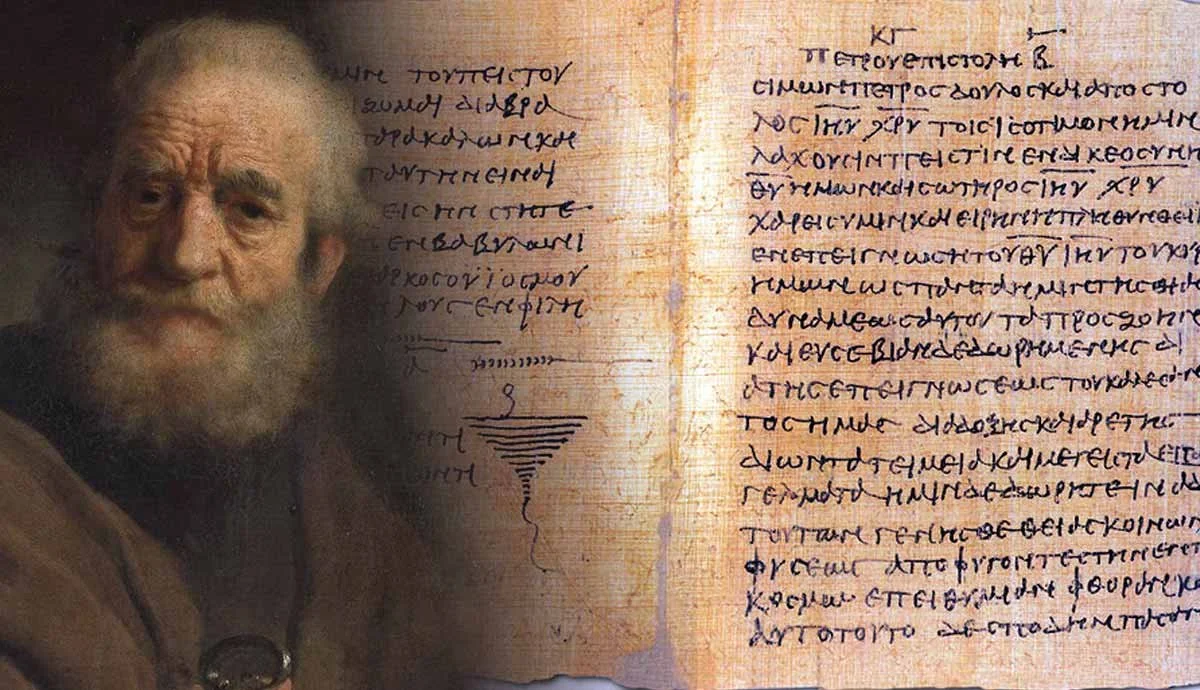
He himself bore our sins in his body on the tree, that we might die to sin and live to righteousness. By his wounds you have been healed. For you were straying like sheep, but have now returned to the Shepherd and Overseer of your souls.
1 Peter 2:24-25
One of the purposes of the biblical imagery of sheep is to humble us. We are referred to as sheep in relation to God throughout the Bible: “The LORD is my shepherd; I shall not want” (Ps. 23:1). But in our sin, we want what we think is so much more. We think we are stronger than sheep in relation to God, that we are smarter than sheep in relation to God. It is when I am listening to young men in a doctrinal controversy, that I am most reminded of how little we really believe that we are mere sheep. The idea of discovering what is true so that I may feed, like a sheep, from the true nourishment from my Shepherd, is far removed.
Doctrine. Because Jesus bore every sin of all of His sheep, the souls of the same are secured.
(i.) The Cross of Christ Pays for Our Sins
(ii.) The Cross of Christ Guarantees Our Renewal
(iii.) The Cross of Christ Draws Our Wayward Souls
The Cross of Christ Pays for Our Sins
‘He himself bore our sins in his body on the tree’ (v. 24a). Notice the statement of past accomplishment and particular application. This is the consistent teaching of Scripture. “In him we have redemption through his blood” (Eph. 1:7). WE—particular. HAVE—actual. Paul says, “I have been crucified with Christ” (Gal. 2:20); “we have died with Christ” (Rom. 6:8). So it is here. Peter uses the plural for sins (ἁμαρτίας). Not that Jesus died for an abstract idea of sin or for “sin in general,” but that God places the guilt of real sins of real, individual sinners, upon His Son. Since Peter has already quoted from Isaiah 53 and will do so again, we might look there for this same imagery:
But he was pierced for our transgressions; he was crushed for our iniquities; upon him was the chastisement that brought us peace … and the LORD has laid on him the iniquity of us all (Isa. 53:5, 6).
Peter also borrows from another Old Testament type that Paul does as well—‘the tree.’ Why not use the word for cross here? But he doesn’t; opting instead for the likeness, or even the material of wood that it is constructed from. This was not just an insignificant shorthand, but Paul supports this by saying,
Christ redeemed us from the curse of the law by becoming a curse for us—for it is written, “Cursed is everyone who is hanged on a tree” (Gal. 3:13).
There Paul was quoting from Deuteronomy 21:23, which could be grouped with other laws that were careful to remove any cursed thing from sight or contact.
The second clause is a purpose clause. It contains two truths, and the first belongs to our first point. When Peter says, ‘that we might die to sin’ (v. 24b), there is a truth here about justification before we get on to the truth about sanctification. This is Peter’s very, very concise version of Paul’s doctrine in Romans 6.
We know that our old self was crucified with him in order that the body of sin might be brought to nothing, so that we would no longer be enslaved to sin. For one who has died has been set free from sin (Rom. 6:6-7).
Before we start talking about how we are going to start dying to sin, we have to know that we have died to sin. If your sin isn’t legally buried, its not going to stay experientially buried either. In other words, you can get a few miles of religion out of “Must be good, must be good—got to make my good outweigh my bad.” But you’ll burn out. However, if I know that, in the courtroom, God considers my old man of sin dead and buried, then that has implications that bring us to our next point.
The Cross of Christ Guarantees Our Renewal
Now we are ready to live it out—if we believe it. If it is really true that we are united to Christ in His death and His new life, then it becomes a divinely-guaranteed imperative: ‘that we might die to sin and live to righteousness’ (v. 24bc). Now Paul’s words in Romans 6 turn from the fact of having died to sin to the act of dying to sin. Think of the difference in term of war. There is first a decisive strike that effectively wins the war, so decisive that the rest is a “mop-up” role where finishing off the enemy is a formality by comparison, but still necessary and triumphant.
So you also must consider yourselves dead to sin and alive to God in Christ Jesus. Let not sin therefore reign in your mortal body, to make you obey its passions (Rom. 6:11-12).
So are Peter’s words here, more concisely rooting the act in the fact. In other words, because the cross of Christ pays for all our sins, it guarantees our renewal.
What is specifically guaranteed by the work of Christ is the work of the Spirit. In that Galatians 3 passage, where Christ took our curse upon Himself on the three, Paul goes on to say that this was “so that we might receive the promised Spirit” (Gal. 3:14). God is not only making us right, but making us good; not only has the old passed away, but the new has come.1 So he adds: ‘By his wounds you have been healed’ (v. 24d). Many get caught up on the temporal sense of healing. The original prophecy was given in Isaiah 53:5 and it says at one point in the Gospel,
And he went throughout all Galilee, teaching in their synagogues and proclaiming the gospel of the kingdom and healing every disease and every affliction among the people (Mat. 4:23).
As sin led to death from the root of the soul out to the body, so bodily death and all the bodily ailments leading up to it are the fruit-level of the curse, not the root-level. As eating from the tree of the knowledge of good and evil severed Adam from God at the root, so the tree on which Jesus took our sins severed the child of wrath that was in us at the root. One day the whole of our beings will be restored. Peter speaks of it as finished because the cross really did perform that whole severing at the root.
For now the implications are that the cross begins our healing. It sets the Spirit to His renewal work on us. Not only have you been forgiven. Not only have you been declared innocent of all charges and righteous in His sight. But your person, your nature, your way that you were made to be is being made new.
The Cross of Christ Draws Our Wayward Souls
‘For you were straying like sheep’ (v. 25a). There is that unflattering truth: “Claiming to be wise, they became fools” (Rom. 1:22). These are among Paul’s descriptions of all people apart from Christ:
They are darkened in their understanding, alienated from the life of God because of the ignorance that is in them, due to their hardness of heart (Eph. 4:18).
This “straying like sheep” is also rooted in Isaiah 53, in the very next words after those about being healed by His wounds. Again the sovereignty of God is on display here. Not only did God put forward a perfect sin-bearer for you, but He arrested your flight from Him. To those crowds that were like a sheep without a shepherd,2 Jesus twice said, “No one can come to me unless the Father who sent me draws him” (Jn. 6:44; cf. 65).
Although these last words of the chapter do not specify the efficient cause of the return of the sheep, we will be helped by other biblical context and a little bit of common sense. First, to the common sense: ‘but have now returned to the Shepherd and Overseer of your souls’ (v. 25b). Do sheep typically return on their own? But Jesus sees all His own. He is not only called Shepherd here, but Overseer (ἐπίσκοπος). As He saw Nathaniel under the tree,3 presumably miles away, at least out of ordinary human sight, with even more heavenly oversight, He sees each wayward one that belongs to His fold.
Worship and honor and adoration are at stake here. Peter is going to tell us later on in this letter about good designs God has for pastors and overseers, but replacing Christ is not one of them. The two Greek words here are instructive— ποιμήν and ἐπίσκοπος. That means that above and beyond merely human shepherds and overseers is the ultimate Pastor and Overseer, namely Christ. From this union in His fold we derive the true essence of the church. Romanists love a moment of chaos among Protestant flocks. They especially love discipline gone wrong in Reformed churches. They sneer and say, “Ah—another ‘excommunication’ badly performed by an excommunicated ‘church.’!” And so their leaders like vultures, they see opportunity to pick off Christ’s sheep by having them “return,” as if such is a return to Christ. But you can hide out in the most magnificent building (the disciples thought the same about the Jerusalem temple as they arrived for the Passover); you can boast that your priesthood stretches back into antiquity (the Pharisees did the same)—but if your flock does not feed from the Word that is Christ, then you are calling people to return not to Christ, but antichrist. Christ alone is the Head and Chief Overseer of your souls, and all other souls are scattered like sheep.
Peter puts these two truths together—the truth about bearing our sins and the truth about shepherding our souls. To say that Christ’s work on the cross draws us is to say that there is power in that work to draw, as He Himself said in John 12:32 about when He is “lifted up from the earth.” Jesus also said in that early chapter: “The good shepherd lays down his life for the sheep” (Jn. 10:11, cf. 15).
My sheep hear my voice, and I know them, and they follow me. I give them eternal life, and they will never perish, and no one will snatch them out of my hand. My Father, who has given them to me, is greater than all, and no one is able to snatch them out of the Father’s hand (Jn. 10:27-29).
He dies for those sheep and He gathers every single one of those sheep. The Christian knows the meaning of those famous words in the Psalm, “He restores my soul” (Ps. 23:3).
Practical Use of the Doctrine
Use 1. Admonition. This passage is also a warning. How so? If the nature of this work of Jesus was to bear the sins of His people—that is, to answer for them or to endure their penalty—then, for those who die in their sin, for those who do not look to Christ to be their substitute before God, for them all sins must still be answered for. For them, a never-ending punishment must be endured. It is a prideful thing to attempt to bear one’s own guilt. It is a hateful thing to waste the gift of Christ having done so.
Use 2. Consolation. There is no Shepherd as loving of each one of His sheep as Jesus.
What do you think? If a man has a hundred sheep, and one of them has gone astray, does he not leave the ninety-nine on the mountains and go in search of the one that went astray? And if he finds it, truly, I say to you, he rejoices over it more than over the ninety-nine that never went astray. So it is not the will of my Father who is in heaven that one of these little ones should perish (Mat. 18:12-14).
If the Good Shepherd would go so far as to die for His sheep, don’t you think He would also go to find them? We are told that “the Son of Man came to seek and to save the lost” (Luke 19:10). If going all the way to death for His sheep is the furthest one could go, then going to seek and to carry back is the lighter thing. As Paul said, “He who did not spare his own Son but rgave him up for us all, how will he not also with him graciously give us all things?” (Rom. 8:32) Included in such gracious things is His care for those little ones we have entrusted to Him.
__________________________________________
1. 2 Corinthians 5:17
2. Matthew 9:36
3. John 1:48