
Living Stones
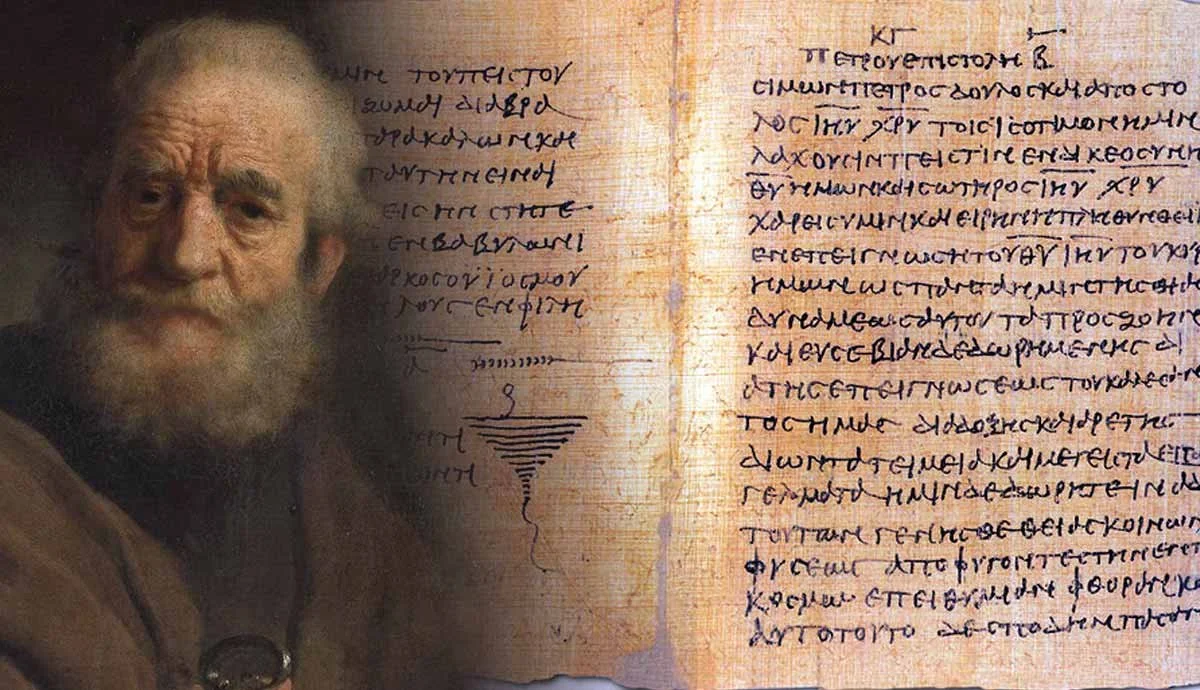
As you come to him, a living stone rejected by men but in the sight of God chosen and precious, you yourselves like living stones are being built up as a spiritual house, to be a holy priesthood, to offer spiritual sacrifices acceptable to God through Jesus Christ. For it stands in Scripture: “Behold, I am laying in Zion a stone, a cornerstone chosen and precious, and whoever believes in him will not be put to shame.”
1 Peter 2:4-6
I have found over the years that different types of people—when they come to faith in Christ—naturally take to certain metaphors that the Bible uses to describe the church. Some prefer the agricultural metaphors, where the church is compared to a field, or to a vine, or to an olive tree. Maybe they are outdoors people. Others prefer the city or kingdom metaphors, perhaps because they themselves come from cities, or because they are students of history and its many kingdoms. Others prefer the body metaphors: medical or health conscious types. While many others prefer relational metaphors—as in God’s family, or Christ’s marriage—and they may be in the majority.
The building metaphor has also been a favorite, since most people used to have to build something at some point. Not so much in our day. In fact, there can even be backlash against viewing the church as a “building project,” because that may seem to reflect human effort and even American pragmatism that sacrifices more noble things for concrete results. There are two basic problems with this negative reaction: first, Scripture itself uses this imagery in several places; second, God Himself is the Builder and its project is actually for His glory. So, let’s get something straight from this passage in Peter’s letter.
Doctrine. Christians are both the building material and the servants in God’s dwelling place on earth.
(i.) The order of living stones
(ii.) The nature of living stones
(iii.) The ends of living stones
The Order of Living Stones
Notice first that Christ and His followers are both compared in this way: ‘As you come to him, a living stone rejected by men but in the sight of God chosen and precious, you yourselves like living stones are being built up as a spiritual house’ (v. 4). Christ and the Christian are both made into living stones, but the order matters. Beginning with Jesus, He is a living stone in two senses, one flowing from His divinity, the other perfecting His humanity. Of His divinity, John tells us, “In him was life” (Jn. 1:4); and Jesus also says that,
as the Father has life in himself, so he has granted the Son also to have life in himself (Jn. 5:26)
Not only does the Son have life in His person, but as to His work, in His humanity—“We know that Christ, being raised from the dead, will never die again” (Rom. 6:9). It is in the context of the resurrection that He is called “the firstfruits ” (1 Cor. 15:20) or “firstborn from the dead” (Col. 1:18); so “the last Adam became a life-giving spirit” (1 Cor. 15:45).
Then there is a ‘you yourselves,’ so that Peter is affirming something he says later on about suffering, namely that we “follow in his steps” (2:21). Paul adds, “we shall certainly be united with him in a resurrection like his” (Rom. 6:5). A few implications lie just underneath these stones for us to uncover:
First, we are taught that you, like Christ, must be raised from the dead to be one of these stones.
Second, we are taught that, like Christ, being raised to this life goes with being rejected by men.
Third, as Christ is called a “precious stone” here, we have our first clue as to why God will make of us only the finest building material.
The important first thing to see is that this starts with Christ. Just below, He is called ‘a cornerstone chosen and precious’ (v. 6). I will have more to say about Peter’s use of the relevant Old Testament texts next time, Lord willing, but for now will limit myself to the placement of this stone in the building. Even where the prophets and apostles are called the foundation in Ephesians 2:20, there too Christ is called “the cornerstone.” If there is a key to how Christ functions in that place, it is in Paul’s next words—“in whom the whole structure, being joined together, grows into a holy temple in the Lord” (Eph. 2:21). A cornerstone is the corner of the foundation that ensures the measurements are right, and therefore that the building will be stable.
It may seem odd, but when body imagery is used Christ is the head (Col. 1:18), and so is pictured at the top; but when building imagery is used Christ is cornerstone, pictured at the base: “For no one can lay a foundation other than that which is laid, which is Jesus Christ” (1 Cor. 3:11). Any church that replaces Christ as Head with some other head is a false church. That is, any church that places the church as most foundational—they may speak of that “head” representing Christ, when in fact they are replacing Christ. That is why when we speak even of the “catholicity” of the church—when just means its oneness or universality—we are speaking of a spiritual oneness: not a physical or geographical grounding to that oneness. So the order of these living stones matters.
The Nature of Living Stones
Twice the word spiritual is used here: ‘as a spiritual house … [and] to offer spiritual sacrifices’ (v. 5). Now here the word is not logikos, as it was in Peter’s last use, but rather the broader word πνευματικὰς, which is from the same root as “breath” or “wind” or “spirit” that is used most properly of the Holy Spirit. This draws attention to more obvious facts about the spiritual. And the most obvious fact about a spiritual thing is that it is not a material thing. It is immaterial. So, like all analogies, there is likeness and not exactness between any Thing 1 and Thing 2. The key to understanding any analogy is to discover which elements Thing 1 and Thing 2 have in common.
So, with a stone, is it the hardness of the stone that we are like as Christians? Clearly not. It is rather that these are pieces put in place that constitute a larger thing. Yet they are spiritual “pieces” for a spiritual object. And if it is a spiritual building material for a spiritual building, its builder must be all the more spiritual. So Abraham had already been looking forward to a city with such foundations, “whose designer and builder is God” (Heb. 11:10). However, this does not mean that this building project is just slated for a “spiritual future” in heaven. Rather, since the spiritual aspects of us are being renewed now, that act of building gets started the moment we believe.
We can gather more by noticing other places where this imagery is used, as Paul uses it to the Corinthians. But there are two key differences with Paul. First, he speaks of humans joining in the building project, beginning with himself and the other apostles:
According to the grace of God given to me, like a skilled master builder I laid a foundation, and someone else is building upon it. Let each one take care how he builds upon it (1 Cor. 3:10).
The second difference is that the “building material” in the analogy was being subject to quality control. He talked about building “on the foundation with gold, silver, precious stones, wood, hay, straw—each one’s work will become manifest” (1 Cor. 3:12-13). In other words, Paul’s use of the “material” in the analogy was focusing more on the quality of work each servant puts in, rather than on the substance of soul being worked on.
The value of bringing these two passages together is that it makes the point that the church is fundamentally made up of renewed souls—people—and not buildings or even programs. And the fact that it is made up of those real people means that the questions we ask about church method should address the fundamental ways that God has designed those real people: how God has designed us to relate to Him first (in worship and piety) and how He has designed us to relate to each other (in fellowship and service): “So then let us pursue what makes for … mutual upbuilding” (Rom. 14:19); “And let us consider how to stir up one another to love and good works” (Heb. 10:24). That’s the response that looking into the nature of these stones should bring about.
So, having talked about the order and the nature of these living stones, Peter also directs our attention to their ends.
The Ends of Living Stones
There is a statement here with two ends—ultimate and subordinate—so that we have to follow the use of the words “to,” as in, “in order to.” That is design language, or purpose language. Why is God designing us as these spiritual pieces to a house? Two “tos”—‘to be a holy priesthood, to offer spiritual sacrifices acceptable to God through Jesus Christ’ (v. 5b). The design of our being a holy priesthood is made subordinate to the offering of spiritual sacrifices. But what do either of those mean? At the very least it means that we work or serve. In that passage in 1 Corinthians 3, Paul even mixed metaphors between agricultural and building imagery to conclude, “For we are God’s fellow workers. You are God’s field, God’s building” (1 Cor. 3:9). So every Christian is both building material and servant—both the brick that is set and the mason. But Peter here uses a more literal biblical character to round out the comparison: the priesthood.
Since a priesthood is made of priests, every Christian is a kind of priest. So the Reformed doctrine of the priesthood of all believers has biblical grounding here. And elsewhere, it says, Jesus has “made us … priests to his God and Father” (Rev. 1:6; cf. 5:10; 20:6). But how can we be priests? Was not the old covenant priesthood done away with precisely because of the weakness of human flesh? Yes. So these new priests do not establish a way into God’s presence. Christ alone did that. But as priests did lead the people in by instruction and attending to God’s holy things, so all Christians offer a helping hand, not to God, but to each other to find our way in.
The words ‘to offer spiritual sacrifices’, which are also called ‘acceptable to God,’ might seem more difficult. But the difficulty is resolved by those very next words, ‘through Jesus Christ.’ He qualifies them. Paul explains this:
Likewise, my brothers, you also have died to the law through the body of Christ, so that you may belong to another, to him who has been raised from the dead, in order that we may bear fruit for God. For while we were living in the flesh, our sinful passions, aroused by the law, were at work in our members to bear fruit for death. But now we are released from the law, having died to that which held us captive, so that we serve in the new way of the Spirit and not in the old way of the written code (Rom. 7:4-6).
Peter is explicit about those two ends of these living stones. But another is implicit and even more ultimate. Think about what he really means by this ‘spiritual house’ (v. 5). Yes, its reference is to the temple. But, ultimately, what is the temple? It is God’s dwelling place with His people. This means that the ultimate end of all our spiritual service is the presence of God.
Practical Use of the Doctrine
Use 1. Instruction. What does it really mean, concretely, that we are both building material and servants here? Let’s start by ruling two things out—consumerism and subjectivism:
First, it means that we are not just paying customers, where the church is the professionals behind the counter and the rest show up to order off the menu.
Second, while we don’t bring our gifts and visions to the church as customers expecting it to already be there for us, neither do we simply assert ourselves as blocks in any place in the wall feels right. Paul speaks of “each part … working properly” (Eph. 4:16), which was the last item in a list of things that he says that the teaching office of the church does in its equipping ministry. In other words, each gift has to fit the church universal and the church local. Now, that is a vast study, but it is implied by this text.
What then does it positively mean? Three implications:
First, God enlivens each stone with spiritual gifts, “To each is given the manifestation of the Spirit for the common good” (1 Cor. 12:7).
Second, God sets each stone in exactly the right place: “God arranged the members in the body, each one of them, as he chose” (1 Cor. 12:18).
Third, (following from everything said), it means that each local church can rise no higher than each of its stones gets in the game.
Use 2. Exhortation. I know that Peter has given us occasion twice already, at least, to talk about the affections, but the very idea of “living” stones at least suggests great activity. These stones are not silent or dispassionate or inactive. Think of that place in the Gospels, on the occasion of Jesus entering His rightful house in Jerusalem.
“And some of the Pharisees in the crowd said to him, ‘Teacher, rebuke your disciples.’ He answered, ‘I tell you, if these were silent, the very stones would cry out’” (Luke 19:39-40)
Not only are living stones not inactive: they are not silent. We are not merely the building material, in the passive sense of a lifeless brick; but the stones are more alive than merely natural life. The idea of passivity is ruled out by such imagery.
Use 3. Consolation. Note that first detail about Christ—‘rejected by men but in the sight of God chosen and precious’ (v. 4). God does not regard us as the world has regarded us. For those of us who have experienced rejection, Christ was “despised and rejected by men” (Isa. 53:3). When Satan accused the high priest, Joshua, and the Lord rebuked the devil, he then says of the one who would be rejected by this world, “Is not this a brand plucked from the fire?” (Zech. 3:2)
God’s house should be a place where those who have experienced rejection now experience being welcomed—chosen and precious are living words: words that speak of personal approach and value.
If God has placed you here, He has set a value on you greater than everything in this passing age. He said to Israel, “you are precious in my eyes” (Isa. 43:4). In the next few passages, we will get a greater sense of how this applies individually to all of we who are believers in Jesus.
Use 4. Admonition. One last word about the first words Peter uses here: ‘As you come to him’ (v. 4). No one comes to Christ simply because they come to church; but one does truly become one of these living stones by coming to Christ. Jesus says, “I am the way, and the truth, and the life. No one comes to the Father except through me” (Jn. 14:6). You cannot expect to dwell in God’s house if you will not recognize His Son for who He is. It is He alone who brings you home, and do you think you will have a place in a home, while disowning the One whose glory it is built for?
_______________________________________