
The Stone Who Divides Elect and Reprobate
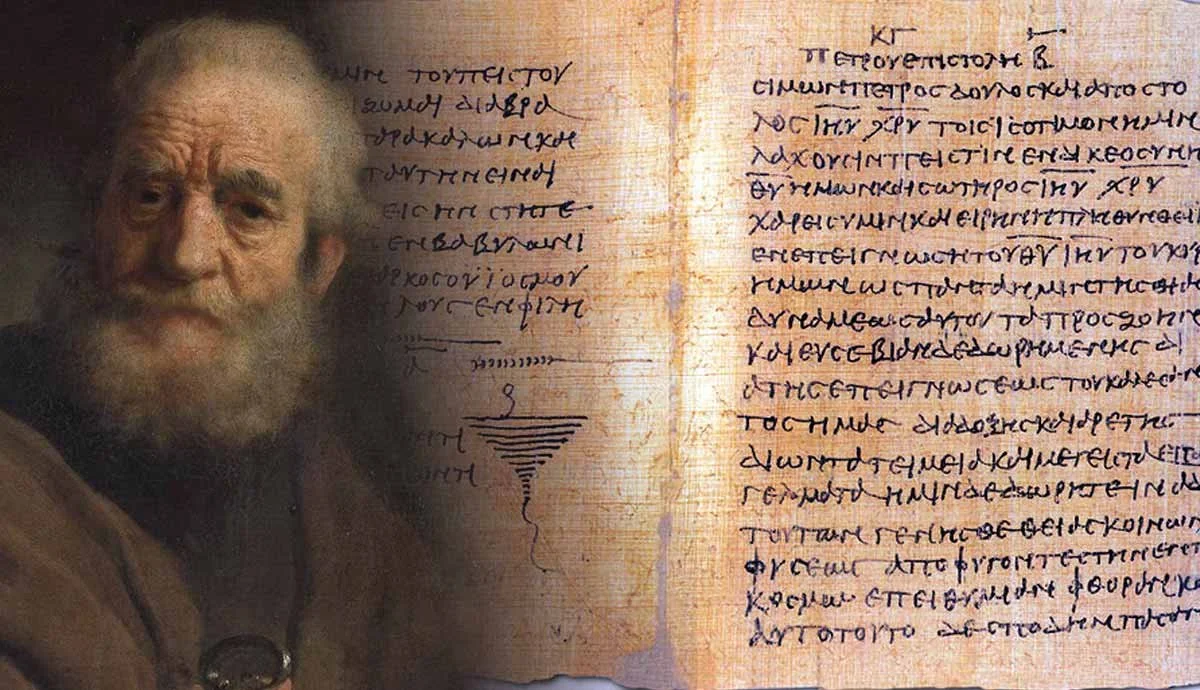
For it stands in Scripture: “Behold, I am laying in Zion a stone, a cornerstone chosen and precious, and whoever believes in him will not be put to shame.” So the honor is for you who believe, but for those who do not believe, “The stone that the builders rejected has become the cornerstone,” and “A stone of stumbling, and a rock of offense.” They stumble because they disobey the word, as they were destined to do.
1 Peter 2:6-8
There are three Old Testament passages packed in to these three verses here, all of which liken the Messiah to come to a stone:
therefore thus says the Lord GOD, “Behold, I am the one who has laid as a foundation in Zion, a stone, a tested stone, a precious cornerstone, of a sure foundation: ‘Whoever believes will not be in haste’ (Isa. 28:16).
The stone that the builders rejected has become the cornerstone. This is the LORD’s doing; it is marvelous in our eyes (Ps. 118:22-23).
And he will become a sanctuary and a stone of offense and a rock of stumbling to both houses of Israel, a trap and a snare to the inhabitants of Jerusalem (Isa. 8:14).
It will also help us to know that Jesus Himself quoted from one of these (Psalm 118:22-23) as the punchline to the Parable of the Tenants in Matthew 21.1
Doctrine. God put forth Christ as a Stone to build the elect up through belief, and cause the reprobate to stumble in offended unbelief.
And the question about causation here is specifically: What is the cause of the division that results? Peter speaks of four kinds here; although the last is added almost parenthetically at the end of the passage.
(i.) Christ—the Efficient Cause of the Ultimate Division
(ii.) Belief versus Disbelief—the Material Cause of the Ultimate Division
(iii.) Honor versus Offense—the Formal Cause of the Ultimate Division
(iv.) Predestination—the First Cause of the Ultimate Division
Christ—the Efficient Cause of the Ultimate Division
The Speaker in the words ‘I am laying in Zion a stone’ (v. 6a) is God Himself. So just as in the incarnation, God “sent forth his Son” (Gal. 4:4) or on the cross “God put forward [Christ] as a propitiation (Rom. 3:24), so all the way to the end of Jesus’ mission, God says, “I have set my King on Zion, my holy hill” (Ps. 2:6). To say that God puts forth or sets forth Christ is to say that He sets Him in motion to be the immediate efficient cause of the destiny of souls in this world. How each person reacts to the Son is ultimately caused by the Son. He is that “axe” that John the Baptist said is “even now … laid to the root of the trees” (Mat. 3:10).
To be set ‘in Zion’ (v. 6a) is complete in the ascension of Christ to the throne. Zion is the other main name given to Jerusalem, but it calls special attention to the spiritual city of God. So when the Psalmist says,
The LORD sends forth from Zion your mighty scepter. Rule in the midst of your enemies! (Ps. 110:2)
It is consistent with Paul’s language that “he must reign until he has put all his enemies under his feet” (1 Cor. 15:25). So this reign of Christ begins above when the enemies of Zion are still shaking their fists and arranging their armies below.
It isn’t too hard to combine the reality with the analogy—i.e., kingship with a stumbling stone—because anytime a new King involves a radical regime change, then the setting of that King on the throne is like a stone coming in, like a wrecking ball to the old fortress. The life and death and resurrection of Christ are all offensive enough to man’s unbelief; but the idea that He is seated in glory above, running the world, moving all of the pieces to their appointed end, and is set to return to judge all souls—this is too much to bear for His enemies.
Belief versus Disbelief—the Material Cause of the Ultimate Division
The division here is this verse is straightforward: ‘for you who believe, but for those who do not believe’ (v. 7a). In other words, the most important thing that begins to separate one humanity from the other—one world from the other—is belief versus disbelief. Christ’s sword comes in for its division (Mat. 10:34), but what peels from either side of that blade is belief on one side and disbelief on the other. In the classic example of causal analysis—the sculpture being produced by a sculptor—the efficient cause is the sculptor, the instrumental cause being his hammer and chisel, but the material cause is that marble. At first, when each strike of the chisel makes its indent into the marble, both sides are made of the same marble block. To use Paul’s language in Romans 9, it is all one and the same lump of clay that the potter uses.
But now let Peter help you zoom in to that indent that the blade makes into that marble. One important difference between the earthly sculptor with his tools, and the Rock that is Christ, is that with the latter, the Holy Spirit makes the marble on the one side of each strike a living stone, whereas He passes over the marble on the other side of each strike. And the fundamental, first element that peels off from each strike on the one side is belief (attention, wonder, trust), and what peels off each strike on the other is disbelief (inattention, irritation, suspicion). This is the case not only among the singular clay of humanity, but also the singular body called the visible church. About the house of Israel into which Jesus walked and talked, we are told, “So there was a division among the people over him” (Jn. 7:43). This is to say that among His own people—some were made to believe and others to disbelieve.
The King James Version renders this, ‘but unto them which be disobedient’ (v. 7a). The Hebrew root underneath the participle, in the verse cited by Peter, has more to do with belief and disbelief, but there is not much distance between the ideas. In the first place, the New Testament speaks in a few places of “the obedience of faith” (Rom. 1:5) or those who “do not obey the gospel” (2 Thess. 1:8), so that disobedience is equated to disbelief when the command from God is to believe. Obviously if the command in question is to believe, then to disbelieve is to disobey. So, context alone resolves this. Beyond that, in one commentary we read, “Unbelief is their root error. Just as true faith manifests itself in obedience, so heart unbelief inevitably finds expression in deliberate disobedience.”2 But so far, Christ the Rock is the efficient cause of the division; belief and unbelief the material causes. Now Peter gives another aspect of those two different reactions.
Honor versus Offense—the Formal Cause of the Ultimate Division
First he says, ‘the honor is for you who believe’ (v. 7a). Remember what was said about Christ being set on the throne of Mount Zion. So the author of Hebrews says to us in the present: “But you have come to Mount Zion and to the city of the living God, the heavenly Jerusalem” (Heb. 12:22). It is the highest of honors to be taken in to God’s family and His kingdom. That honor is yours now if you believe.
The Old Testament prophecy gave a flip side: ‘A stone of stumbling, and a rock of offense’ (v. 8). The opposite of honor is normally dishonor; but no one starts out to be dishonored, or even to dishonor others. Dishonor is a byproduct. When we dishonor someone, it is because we have judged that person unworthy of our respect or admiration or trust. But why do we make such a judgement? We have to go behind even that. We are presented with someone and we are disappointed, or perhaps even offended. The Bible makes this very clear in the Gospels. Those who encountered Jesus and either attacked immediately (like the religious leaders), or left immediately (like the crowds), or left eventually (like Judas)—all of these stumbled because of something they believed the Messiah should be like and they judged Jesus to be opposed to that. Some people are like the seed that finds no root in that Parable, and eventually blows away; and they may delude themselves into thinking they are tracking with Jesus for a season. But why does Jesus say, “And blessed is the one who is not offended by me” (Mat. 11:6)?
The reprobate are not literally “disinterested” in Jesus. They find something about Him offensive. They may fool themselves about that in some cases because they have suppressed it for a long time. There is a principle that applies universally—not just to that generation that rejected Jesus “in the flesh,” so to speak. The principle is this: You cannot be neutral about Jesus because Jesus is not a neutrality-inducing kind of figure. With Him, it is all or nothing. He says, “Whoever is not with me is against me” (Mat. 12:30). So disbelief is NEVER without the stumbling of offense.
Predestination—the First Cause of the Ultimate Division
Here we have one of the other clear passages, along with Romans 9, that teach double predestination. I cannot tell you the number of times I have heard someone say, “Of course I believe in predestination—I just don’t believe in double predestination.” But what other kind of predestination is there? As we read in Romans 9:21-23,
Has the potter no right over the clay, to make out of the same lump one vessel for honorable use and another for dishonorable use? What if God, desiring to show his wrath and to make known his power, has endured with much patience vessels of wrath prepared for destruction, in order to make known the riches of his glory for vessels of mercy, which he has prepared beforehand for glory (Rom. 9:21-23).
There is no coincidence there in Romans 9 that Paul uses the example of Pharaoh, whose heart God had hardened. That is, He gave him over. He turned the lights out. He withdrew any sustaining power without which all sinners would become worse and worse. So that double predestination is not God taking two different people out of a neutral state, creating a new heart in one and a bad heart in the other. No! We all start with a bad heart—“I was brought forth in iniquity” (Ps. 51:5)—so that in the unfolding of the decree of reprobation, God passes over and does not give a new heart.
Peter does not resolve obscure debates about the “when” and “to what respect” of God’s decree. He includes both causes: the ultimate first cause of God’s decree, but also the important secondary cause of the reprobate’s disbelief. If someone were to ask Peter: So which caused their stumbling? Was it God’s decree or their disbelief? Peter would not answer in any other way than he has here: ‘They stumble because they disobey the word, as they were destined to do’ (v. 8). In other words, both—but in their proper order. God’s decree sets forth all secondary causes, and those secondary causes are perfectly real and crucially important. If it is the case, with the elect, as Paul says, “God chose you … to be saved, through … belief in the truth” (2 Thess. 2:13), then it is also the case about the other side. First there is the decree of reprobation, so that real disbelief follows.
Practical Use of the Doctrine
Use 1. Instruction. Peter was there when Jesus taught from that same Psalm 118—and what He taught was how exactly He (Jesus) fulfilled that prophecy. Specifically, from that Parable of the Tenants, Peter was taught that it was this offense of Christ, at that moment, that represented the kingdom being transferred from Israel of old to the church in the new. Remember that when he turns in verse 9 to use the language once revealed on Sinai to Israel, now applied by Peter to the church. Peter is using those words in verse 9 right after these words. That is not coincidental. Remember the context of this reference when we get to verse 9 next week. Peter is signaling the transfer of the city of God from physical Jerusalem to heavenly Jerusalem over the whole world.
Use 2. Admonition. Peter gives us all a warning to take care how we hear. Is there any lingering offense at Jesus or stumbling block in His word for you—and I say “lingering” here, because I do not mean that anything that ever confounds us, much less confuses us, in the Scriptures is somehow representative of these extremities of disobedience in reprobation. But if we do sinfully disbelieve—if we do not resolve it and acquiesce in humility to our Lord, then that pebble of a problem can reveal itself in time to be a rock of reprobation.
Jesus told us, “Be careful how you hear” (Luke 8:18). Honor the Lord Jesus even in how you hear: especially in how you hear. As we have this guarantee from the Old Testament Scriptures, “for those who honor me I will honor, and those who despise me shall be lightly esteemed” (1 Sam. 2:30).
___________________________________________________
1. cf. Acts 4:11; Romans 9:32-33.
2. Stibbs and Walls, 1 Peter, 103.