
Neither Antinomian nor Neonomian
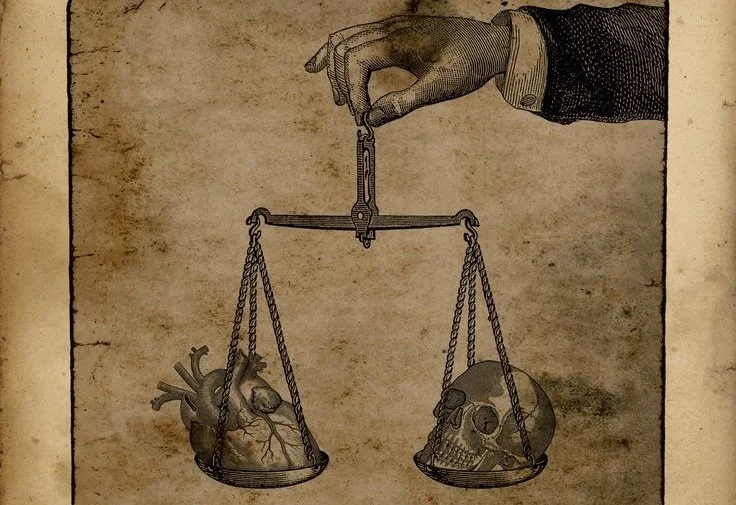
The root word for “nomianism” is the Greek word for law (νόμος), so that the two opposites, antinomianism and neonomianism represent the doctrine that either rejects or minimizes the law on the one hand, or else inflates the law, using it for something that it is not, or reduces the gospel to the law, on the other hand. Paul tells us, “Now we know that the law is good, if one uses it lawfully” (1 Tim. 1:8). The two sides to the Apostle’s statement here hint at our correction to either extreme. One side suspects that the law is not good at all, or is, at any rate, no longer good now that we have Christ; while the other side, usually in reaction to licentiousness or moral laziness, so presses the law into roles that it was never intended to fill.
How does the subject of the new covenant especially exacerbate this tension? In a nutshell, it is concluded that the new covenant has either done away with the law (antinomianism) or else has become a new law (neonomianism).
If we return to the Jeremiah 31 passage, we note that the important change with respect to the law is not that it will go away, or be translated into a new law, but that the law would be written on the heart of those who are parties to the covenant: “I will put my law within them, and I will write it on their hearts” (v. 33). The object here acted upon by God is simply called “my law.” There is no reason given or even hinted at to consider this a fundamentally different law, much less no law at all. Our first and unifying argument, then, against both antinomian and neonomian views toward the new covenant is the straightforward language of the promise-text.
The New Covenant is Not the Cessation of Law — Against Antinomianism
New Covenant Theology (NCT hereafter) is a rejection of the unity of any covenant of grace and of the moral law. To come right to it, the argument is a species of biblicism. Words and phrases such as moral law and general equity are “nowhere in Scripture,” and so these are the invention of later theologians. To be fair, NCT does not say that the Christian is now “lawless,” is in much of pop-evangelicalism, but rather that what is new is “the law of Christ.” The matter of this law is anything Jesus commanded—and, by extension, the Apostles—and the form of this law will emphasize the leading of the Spirit. Of course, advocates of NCT would not use words like “matter” and “form” as those are Aristotle’s words and not the Bible’s, but I repeat myself.
NCT will also insist on the sharp division between Israel and the church, but not for the same reasons as in dispensationalism. Here, all of the covenants are fulfilled in Christ for the church. What matters for the law given to Israel is precisely that they do not matter: not any more.
Roberts wrote,
That God’s moral law is the law of Christ … Forasmuch then as it is Christ, who by the Spirit writes God’s moral laws in his people’s hearts, these moral laws may justly be denominated {the laws of Christ}. Christ is the Author, and effectual writer of them in their hearts by his Spirit: therefore they are his. If the moral law is called the law of Moses because Moses was the instrument by whom God gave and revealed it; then how much more may it be called {the law of God} because God gave it, published it on Mount Sinai, and wrote it with his own finger on tables of stone, and {the law of Christ and of his Spirit} because by them it is written upon the fleshly tables of the mind and heart. So that Jesus Christ, and the moral law are not (as some weakly imagine) inconsistent, incompatible, and irreconcilable: but most consistent, suitable, and sweetly agreeable one to another.1
In his fifth volume on the covenants, Roberts divides the subject of God writing this law on the heart into six classes, which I will paraphrase: (1) On what — mind, heart, or both? (2) What laws? (3) How written? (4) Just now, in the new? (5) Why now? (6) How do we know this is true of us?2
The significance to the first point is that both קֶרֶב and לֵב take multiple shades of meaning in Scripture. The first can mean “inner man” but may also be rendered specifically as “mind.” The KJV says “inward parts,” and NASB, ESV, and NLT opt for “within them,” whereas the NKJV and NIV say “their minds.” Either rendering makes the antinomian view more difficult, since the people of the new covenant will become more familiar with the law rather than less. For Jeremiah to follow with the “heart” only adds to this sense.3
Why must this be the moral law? One reason I have already given—and Roberts gives the same—namely,
Because this promise here … does not import any new, strange, unknown, unheard of, or obscure law of God; but some ancient, familiar, well-known, noted and famous law of God … For God does not here say {I will give another law}, but {I will write my law} — namely: the same which was anciently delivered to the fathers … [and] cannot have reference either to God’s ceremonial or judicial laws, but to his moral laws … not to be according to that Old, but to succeed, supersede and vacate that Old Covenant.4
In other words, while no new law is included, what is excluded follows the point about the identity of the covenant being done away with. If it is accidents of the covenant of grace in the Mosaic (namely, the typological dimensions) that are done away with, then it follows by resistless logic that the ceremonial and judicial of old Israel are done away with—since they are the codified legal expression of those accidents.
I will pass over Roberts’ third point on the manner of God writing it on our hearts, except to remind you that God directly wrote upon the tablets His ten commandments (cf. Ex. 31:18)—that is the moral law—whereas He had Moses inscribe the rest. Perhaps it is no coincidence that, if, by the Holy Spirit, God Himself would write the law on the hearts of those born again in the new, that there is this double-stamp of divine authority on the moral law in both the old and new covenants.
The fourth question is really the most difficult to answer. If we take the promise in Jeremiah 31 to negate any sense of the law in the heart of the Israelite, then we deny all real continuity between the old and new, which we had previously affirmed. On the other hand, we cannot ignore the language of the promise in the name of preserving a unity of the covenant of grace. But we observe a medium. Roberts uses the simple language of parts and kinds. There was “some kind and manner of God’s writing his laws in the hearts of his people.” Since “the law is spiritual” (Rom. 7:14) in essence, and since something of this law is already on the heart of even the unregenerate pagan (Rom. 2:14-15), then the question of logical possibility is always resolved. The law is never perceived by grey matter, but always by the immaterial mind and relates to the equally immaterial conscience in all. The old covenant people would have at least had that much, and of course more, being entrusted with “the oracles of God,” as Paul says in Romans 3. What then is different?
Roberts highlights the manner, the efficacy, and the extent of the new covenant being greater than in former covenant administrations.
[The] manner of God’s New Covenant administration is more spiritual and internal, mostly consisting of inward spiritual blessings … And proportionally, God’s manner of writing his laws is spiritual and inward: not in tables of stone, but in the soft fleshy tables of the mind and heart (Jeremiah 31:33, Hebrews 8:10; 2 Corinthians 3:3).5
Then of the efficacy difference he says,
Under those, the Holy Spirit was but as it were sparingly sprinkled upon them. Their knowledge and love of God was dark, feeble, childlike; their hearts were very stony, hard, and inflexible, as God intimated to them in writing his laws upon stones, etc. But under this, the Holy Spirit is plentifully poured forth as in streams and rivers upon them. Their knowledge and love of God is clear, strong, ripe, man-like; their hearts very fleshy and flexible to God and his will, etc.6
Finally, one might ask, what is the point of even mentioning this in the promise, or of calling such laws “new,” as Jesus even refers to a “new commandment” regarding love (Jn. 13:34)? Although one clue is that in John’s letter, he returns to the theme by saying, “I am writing you no new commandment, but an old commandment that you had from the beginning … At the same time, it is a new commandment that I am writing to you” (1 Jn. 2:7, 8).
Roberts summarized the reasoning in this way:
But in that God undertakes to write his laws again, and to write them more durably and indelibly than they were written before, not in the long-standing tables of stone, but in the everlasting tables of mind and heart; hereby he eminently confirms and establishes the moral law, as that which shall never be reversed or repealed until the end of this world — yea, the substance and soul thereof in love to God and man shall continue forever in the world to come.7
Think of part of the rationale for the necessity of Scripture: specifically the preservation of the revelation. It is the same here, but by a greater degree. To codify in writing is a great leap when what went before was general and ethereal. To codify from a book to a heart is an even greater leap—not away from, or apart from, the form of writing, but to make such alive to the soul. So it is more than preservation, but also dominion over us.
The New Covenant is Not a New Law: Against Neonomianism
There have been many forms of “nomianism” or “nomism,” in some labelings, but here we must specifically address that form that makes a specific claim to the new covenant as a new law. Hence the prefix neo in neonomianism. This “New Law” had also gone by the name “Evangelical Obedience” throughout the seventeenth century. In the seventeenth century English-speaking world, this is often tied to Richard Baxter and the view as Baxterianism. The upshot was that faith and repentance were the new law. The perfect obedience required in the old law has been set aside with the coming of Christ. He not only obeyed the perfect law of innocence which Adam forfeited, but He also obeyed the subsequent laws of Moses and a law of redemption applying only to Himself in order to establish the terms of the new law.8 The implications of this for justification, perseverance, and Christ’s atoning work become clearer the more one thinks their way through the system.
Some have placed the Federal Vision in this same category. In his own critique nearly two decades ago, Guy Waters used the expression “covenant nomism” to classify this system of though that has also gone by the name Auburn Avenue Theology because of its origins in a group of churches, most notably in the CREC (or Communion of Reformed Evangelical Churches).9 However, it is anachronistic to compare this teaching with that of Baxter for a few reasons. The Federal Vision does not make the new covenant a new law. Their ambiguities in classical Reformed soteriology have more to do with what they emphasize as “the objectivity of the covenant” against modern individualism, and a hesitation to apply the invisible-visible church distinction (and the soteriology corresponding to it) in such a way that faithfulness to the covenant plays a role in one’s righteous state and prospects for perseverance.
I will mention only one important common thread between the two views.
In both there is a replacement of the one-to-one, vertical dealing between God and sinners, such that the law, the atonement, justification, and perseverance are connected in an eternal, invisible, and unified way, and that, consequently, there is a law under which the member of the covenant community may fail to perform and so fail to obtain the inheritance. Both groups resist such a characterization, but so it is.
Baxter argued on the principle lex addita negotio quae donec praestetur eventum suspendit—that is, the “event” is suspended until the condition (that is, the law) is performed.10 But this can mean a few things, and it resisted scrutiny partly by deploying straw men against the orthodox position. The “suspending” of the event by the performance of the condition can mean: (1) If one believes at all, one will have Christ, and vice-versa; (2) If one believes to the end, one will have Christ, and vice-versa; (3) If one believes to such a degree and extent at each and every point, one will have Christ, and vice-versa; or (4) If one believes such that other works are produced in the different senses of 1, 2, and 3, one will have Christ, and vice-versa.
Baxter thought he had all opponents on the horns of some real dilemma when it came to the condition of faith. He dialogues:
In what other respect do they (exclusively) feign it necessary?
Obj. As an antecedent?
Ans. That just speaks to the order, but what kind of antecedent is it?
Obj. As a sign?
Ans. Of what? And why is it as a sign of election? Holiness, the love of God and man, &c. are signs of election, but not prerequisite to baptism and pardon. And how is it that this sign of election is prerequisite, but that God’s precept made it a duty and the promise made it a condition? Grant that it is as a sign, the question still is of the reason for this sign’s necessity to justification.11
The question is not whether there are conditions or duties to the new covenant, but rather whether such conditions or duties can function as efficient causes of grace, or as alternatives to the instrumental cause of faith, or the material cause of Christ’s righteousness, in justification. Roberts enumerates duties of the new covenant as “(1) knowledge, (2) faith, (3) repentance, (4) conformity to God’s law in heart and life, and (5) entire, self-denying, self-resignation unto God.”12 Conditions can be fitting without being foundational. Any conditions that were foundational, Christ already performed in our place.
Did Baxter clearly point to our own faith as any part of the object our faith is to trust in? In Controversy 35 of the Breviate, his immediate answer is most clear in showing that suspicion of his view is just. It asks: “Must a believer ever trust at all to his faith, repentance, or holiness, or plead it in any way to his justification?”
It must not be trusted or pleaded instead of anything that is Christ’s part, nor for anything but its own part. But a part it has, as is confessed, and for that part it must be trusted and pleaded, and no man must trust to be saved without faith, repentance, and obedience.13
It strains the meaning of all such words for Baxter to use words such as those and then deny that he makes faith either an efficient or material cause of our righteousness. Baxterians will insist that his views were perfectly consistent with the Westminster Standards; yet the Confession says that God justifies the elect,
by accounting and accepting their persons as righteous: not for anything wrought in them, or done by them, but for Christ’s sake alone; nor by imputing faith itself, the act of believing, or any other evangelical obedience to them, as their righteousness; but by imputing the obedience and satisfaction of Christ unto them, they receiving and resting on him and his righteousness by faith; which faith they have not of themselves, it is the gift of God.14
When Baxter takes issue with the language of instrumental cause,15 the Confession again claps back: “Faith, thus receiving and resting on Christ and his righteousness, is the alone instrument of justification.”16 When he insists that that righteousness imputed cannot be taken for them as if what He did counts for us,17 the Confession adamantly disagrees: “his obedience and satisfaction accepted in their stead.”18 And just for good measure, “they can never fall from the state of justification.”19
Coming back around to Paul’s phrase, “the law of faith,” we may recall that the context includes the question: “Do we then overthrow the law by this faith? By no means! On the contrary, we uphold the law” (Rom. 3:31). This is a direct refutation of antinomianism, but how does it indirectly deal a blow to neonomianism? The perpetuity of the moral law makes incoherent the notion of a reduced or more lenient law. Roberts says, “The moral law is so perfect, that in regard to moral duties of holiness and righteousness, as nothing ought, so nothing could be added thereto; no more excellent way could be prescribed.”20 In other words, no supposed relaxed law of faith (even if one wants to add repentance and love and so forth) can be allowed. What did Jesus say about such by way of warning?
Therefore whoever relaxes one of the least of these commandments and teaches others to do the same will be called least in the kingdom of heaven (Mat. 5:19).
The immutable law of God is exactly what forms that barrier between holiness and sin, between righteousness and covenant lawbreaking. Psalm 15 speaks of one’s holiness in terms of aspects of the moral law, and this in order to be able to dwell on God’s holy hill. If such does not change and this immutable quality is held out as a condition to dwell with God, does this really belong to the things that God can change, from old to new, without violating His own character? It was in that same Sermon on the Mount—which Baxter appealed much to—that gave the new covenant version of that rationale in Leviticus 11:44, only the concept of holiness shifting to that of perfection, but the point remains: “You therefore must be perfect, your heavenly Father is perfect” (Mat. 5:48). This rationale for the law is above all that which cannot change from old to new.
Consequently, one also cannot appeal to a positive law element when it comes to God relaxing the whole law. This would imply that the defining properties of the law, as a reflection of the character of God, could change. There is special pleading involved as well. One cannot speak of reducing it to “faith and obedience” in that lenient way, but then complain that God somehow cannot accept a perfect righteousness in Christ’s person on our behalf, whereas before the law required a perfect righteousness from our own person.21 Why is this special pleading? It is because such relaxing of the law involves the divine will altering some aspect of an “older” law on account of something that Christ does when the new comes. But whatever else Christ does when he came into the world, surely He did not make the reason for the law something less than God’s perfect righteousness. Also unchanging is our role as image bearers. Again, grace perfects nature. In all that we do, we are restored images. The idea that the conditions for this covenant could be anything less than a whole-life conformity to Christ is a departure from the main storyline of Scripture. Thus Paul says, “So, whether you eat or drink, or whatever you do, do all to the glory of God” (1 Cor. 10:31).
The relation of the time of duty’s performance to the security of the righteousness required is also crucial in the debate. Roberts takes the classic Reformed view,
For [God] first expressly promises ability, and then implicitly requires answerable duty. First he enables us to do what he will require, then requires us to do what we are able. We must know him, but first he will teach us: we must believe and repent, and be conformed to his laws in heart and life, but first he will write his law in our minds and hearts; we must be his people, but first he will make us his people.22
Baxter denied that he made our faith an efficient cause to justification. The material cause is not discussed, and that God’s righteousness is imputed to is is not denied. But, he says, “I do not find the words of imputing Christ’s righteousness to us in God’s Word, and therefore do not think they are necessary to the church’s peace or safety.”23 It would always be wise to also ask in what way a doctrine affects the soul of true believers. Does it tend toward their assurance and does it do so on true scriptural grounds? If our answer is No, it may be one more clue that those Westminster divines may have been not only better logicians than we give them credit for, but also much better shepherds of souls.
One final note about Baxter, as our generation of seminarians is really in the early stages of retrieving his works on this subject. While the critic of such a retrieved view must observe the ninth commandment in all things, he does not bear the burden of proof to believe the proposed view on the ground that he does not yet understand it, or has not “done the reading.” He may be out of his element in addressing it, but his current position has not been overthrown by the mere coexistence with another, even if the other can make a case for being equally allowable under a shared definition of orthodoxy. It is the retrievalist who bears the burden of proof to show that the present received orthodoxy is exegetically unsound, logically incoherent, and so forth.
__________________________________________________
1. Roberts, God’s Covenants, V:103.
2. Roberts, God’s Covenants, V:64.
3. Roberts offers an interesting rationale, given the interpretation of “mind … heart,” and that is that these represent “two spiritual tables” as a realization of the two stone tables at Sinai. God’s Covenants, V:73.
4. Roberts, God’s Covenants, V:69.
5. Roberts, God’s Covenants, V:92.
6. Roberts, God’s Covenants, V:92-93.
7. Roberts, God’s Covenants, V:104
8. Baxter, Breviate, 16.
9. Guy Prentiss Waters, The Federal Vision and Covenant Theology: A Comparative Analysis (Phillipsburg, NJ: Presbyterian & Reformed Publishing, 2006)
10. Baxter, Breviate, 22, 23.
11. Baxter, Breviate, 24.
12. Roberts, God’s Covenants, V:387.
13. Baxter, Breviate, 47.
14. Westminster Confession of Faith, XI.1
15. Baxter, Breviate, 39.
16. Westminster Confession of Faith, XI.2
17. Baxter, Breviate, 29.
18. Westminster Confession of Faith, XI.3
19. Westminster Confession of Faith, XI.5
20. Roberts, God’s Covenants, III:137.
22. I take this contrasting phraseology from Roberts, God’s Covenants, III:141.
22. Roberts, God’s Covenants, III:398-99.
23. Baxter, Breviate, 28.