
The Life-Giving Gospel Word
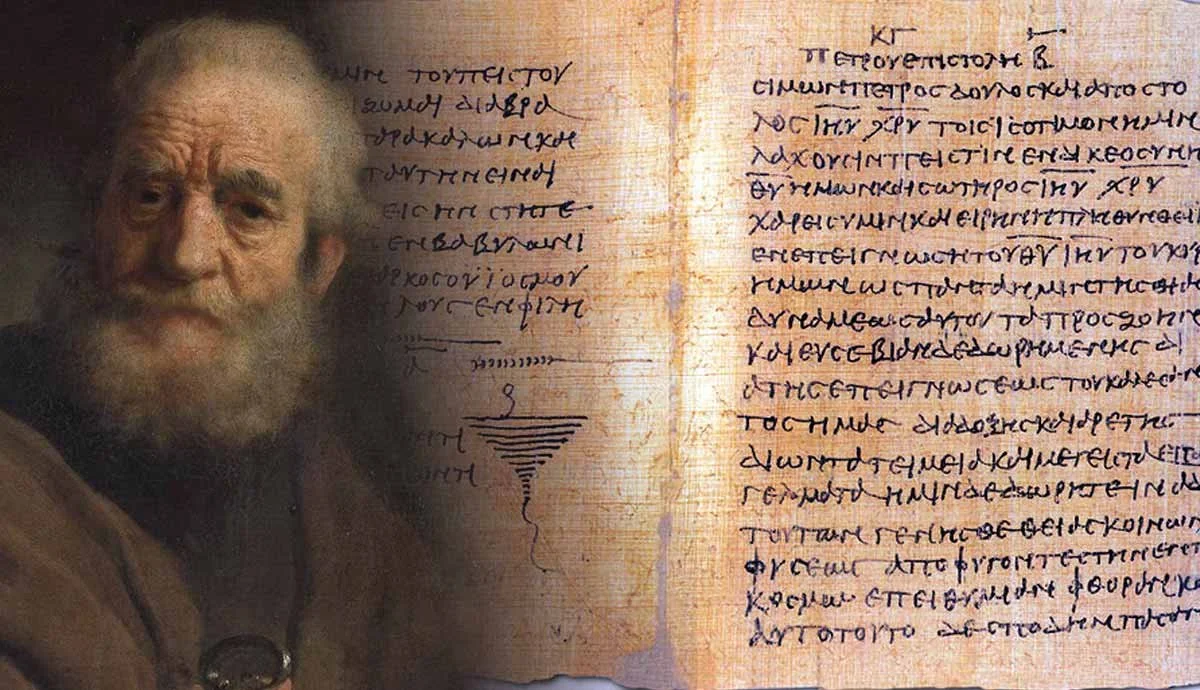
since you have been born again, not of perishable seed but of imperishable, through the living and abiding word of God; for “All flesh is like grass and all its glory like the flower of grass. The grass withers, and the flower falls, but the word of the Lord remains forever.” And this word is the good news that was preached to you.
1 Peter 1:23-25
There is a false quest for immortality today. Its promises have included advances in genetics, artificial intelligence, nano-technology, and of course the more modest attempts to delay the aging process. More pathetically perhaps is a kind of collective feeling of immortality where many people spend their youth simply acting like the latest currents in pop-culture, partying, or pursuing wealth will last long enough. The Apostle Peter sets before us the time-tested method of living forever. Having already hinted at the everlasting nature of the Christian life in terms of our inheritance, he has been introducing the subject of the word of God in ways that too infrequently appear in our doctrine of Scripture.
Doctrine. Only the gospel word creates spiritual life and lasts forever.
(i.) This word is the gospel word.
(ii.) This word makes alive to begin with.
(iii.) This word makes alive forever.
This word is the gospel word.
Here is another passage where we must begin at the end because it is the heart of this spiritual DNA that he is calling the word. Yes, it is ‘through the living and abiding word of God’ (v. 23b), but Peter wants to take his reader one level deeper unto the microscope to see the specific structure of this information pattern. So he adds that, ‘this word is the good news that was preached to you’ (v. 25). This teaches us that the word of God is not a democracy of ink-patterns. There is a hierarchy of truths, or order an of importance. So Paul speaks of the cross and the resurrection as being “of first importance” (1 Cor. 15:3).
There is a reaction today against the very word “gospel,” but the reaction is against those who have used it as a buzz-phrase: e.g., “gospel-centered,” “gospel-driven,” or “Gospel Coalition”—the younger generation realizing now that what much of it amounted to is a silencing of God’s law and Christian action in the rest of life. And so, like every other generation, we throw the baby out with the bathwater and blame any talk of the gospel conditioning or modifying other truths.
The gospel is called “the power of God for salvation to everyone who believes” (Rom. 1:16). In Peter’s framework here, what that means is that the reason that the word gives life through this spiritual seed is because the specific content of the gospel is believed. The “news” in the good news is read and grasped and personally owned, and it is truly seen as good news.
This word makes alive to begin with.
Trace back again to the beginning of the verse: ‘since you have been born again’ (v. 23) in this way. Yes, Jesus teaches that the Holy Spirit is the only efficient cause of regeneration in John 3:3-8, but then James shows us the principle means He uses: “Of his own will he brought us forth by the word of truth” (Jas. 1:18). So if the Spirit is the efficient cause of regeneration, what kind of cause is the word of God? Look no further than Peter’s words right here. He seems to call it a seed. One of the editors of Calvin’s commentary made a point to take issue with this view (which Calvin himself took!), that the grammar doesn’t work and so forth. No matter. The point is not so much that the word is literally a seed in the physical sense anyway, but the analogy to the physical seed and its growth into a life form has to at least imply a common ground in the seed being a principle that goes into the soil and becomes that very life-form.
If the Holy Spirit gives us this “seed” that makes us born from above, then the word is at least the spiritual DNA. As I have already suggested, the gospel is the shape, or pattern, that this takes. But it is an intelligible word. It works by operating on the mind. There is no cheating that. Yes, there has to be a hearing first.
“So faith comes from hearing, and hearing through the word of Christ” (Rom. 10:17).
Its efficient power is that God makes it effective. It never returns to Him void, as Isaiah 55 says. It is the same power that spoke the universe into existence that we have pressing in on us when we read or hear the words of Scripture; but more to the imagery in this text, it is the same power that raised Lazarus from the dead. When Jesus called into that tomb with the words, “Lazarus, come out” (Jn. 11:43), that was both a command and a creation. Lazarus was duty-bound to answer to his Lord, but he could not, and so God created what He commanded. So it is with us. We must, but we can’t. So the Holy Spirit enlivens the word that we hear to something that is grasped by a new principle in us. Think of those words of Jesus again,
Truly, truly, I say to you, whoever hears my word and believes him who sent me has eternal life. He does not come into judgment, but has passed from death to life” (Jn. 5:24)
It is not simply that the word does this, but that the word is this. There is a principle of biology—that life cannot come from non-life. So it is in the spiritual realm. We are told that, “the word of God is living and active” (Heb. 4:12). Jesus says, “The words that I have spoken to you are spirit and life” (Jn. 6:63). He said that at the exact moment that, to the eyes of the flesh, He was losing the crowds. And He was giving the real reason why some follow to the end and why others don’t. God draws by His Spirit and Word those who do, and those who do not, He has not drawn. To the latter He says, “because I tell the truth, you do not believe me” (Jn. 8:45). If we ever ask why the word is not “working” on this or that person, we are asking the wrong question. And that is not to say that the human speaker does not have to consider this or that improvement in his delivery. But it is never the word that fails to give life; and it is the only thing that gives this life.
This word makes alive forever.
He had already described the inheritance as “imperishable” (1:4). Now he says of the seed that it is ‘imperishable’ (v. 23). You want to live forever? Believe this word! John says of the person who is born again that, “God’s seed abides in him” (1 Jn. 3:9). The parable of the sower is another place to show the connection between the word and enduring to the end. In the cases of those seeds that did not abide, it was always this or that—whether the devil or the cares of the world, or being scattered by the way—but in each case, what was missing was the word germinating into that soil: that integration of the information in the word and the heart that the soil represented. Peter is not arguing that this is “magic seed” whose power is in the material substance. That would be superstition. We’ve seen that it is an intelligible word. God operates on the mind. Well, the mind must remain active, being transformed (Rom. 12:2), storing up His word in our hearts (Ps. 119:11). That is an active and constant discipline.
The whole point of quoting the Isaiah 40:6 passage for Peter is that this word has a glory that other life-forms only seem to have.1
“All flesh is like grass and all its glory like the flower of grass. The grass withers, and the flower falls, but the word of the Lord remains forever” (vv. 24-25a).
Calvin says of this,
Many think that this refers only to the outward man; but they are mistaken; for we must consider the comparison between God’s word and man. For if he meant only the body and what belongs to the present life, he ought to have said, in the second place, that the soul was far more excellent. But what he sets in opposition to the grass and its flower, is the word of God. It then follows, that in man nothing but vanity is found. Therefore, when Isaiah spoke of flesh and its glory, he meant the whole man, such as he is in himself; for what he ascribed as peculiar to God’s word, he denied to man.2
The Scripture elsewhere compares impressive people in the same way: “the rich .. like a flower of the grass he will pass away.” (Jas. 1:10). The implications of this is that this gospel word is in a war against other seemingly living things. Peter wants his reader to get into the habit of seeing these gimmicks—these supposedly powerful alternatives—as grass. It will be mowed down and put out with the rest of the trash by next week. That brings us to a few practical applications.
Practical Use of the Doctrine
Use 1. Instruction. The implications for church methodology here are clear, not only for evangelism and church growth, but for discipleship and church health. If it is fundamentally the word of God—heard and believed and in a gospel hierarchy—that creates souls and builds up the body of Christ, then a few principles follow. I’ll only mention three that always have to be said at the beginning of any church’s life.
1. Always begin a church with the ministry of word, and therefore a man called and freed up to preach it to the whole congregation. In Paul’s dying words to Timothy, he wrote above all, “preach the word; be ready in season and out of season; reprove, rebuke, and exhort, with complete patience and teaching” (2 Tim. 4:2).
2. Immediately—as soon as God sends such men in whom He has stirred the desire—as Paul also tells Timothy, “what you have heard from me in the presence of many witnesses entrust to faithful men, who will be able to teach others also” (2 Tim. 2:2). As surely as there is a gospel hierarchy in God’s word, so there is a shepherding hierarchy in God’s house. The word has to train people at different stages in development, for several reasons. But one of those reasons is so that an army of leaders would emerge; and that doesn’t happen by osmosis or mere time. It happens by the word being specified for their particular training.
3. All the passages we looked at (in this text and the supporting texts) all point one way about this seed. It is an intelligible word. It works by its information. Resist the cultural winds that fight against this. God calls you to think hard—about hard things, but also things that are wonderful, but which would be more wonderful still to the degree that we meditate of them, or to the degree that we consider how one truth relates to another, and so on. So Paul also says to Timothy, “Think over what I say, for the Lord will give you understanding in everything” (2 Tim. 2:7). God gives understanding through thinking over the information that forms in that seed.
Use 2. Exhortation. It is a new year and one of the ways that Christians have attempted to gain spiritual focus as a New Year’s resolution is by making use of Bible reading plans. I think that is a great idea and there are good ones available. Let me also encourage you to study the word with Peter’s words here in mind. Not just the word, but the gospel word. Not just “left to right,” or checking each box (though there is nothing wrong with that), but with the substance of the gospel expanding and solidifying in mind. Let me offer a few questions to ask yourself to take inventory of that gospel shape to your Bible reading.
(1) What is the gospel?
(2) Is the gospel coming more into picture by this reading?
(3) How does this passage relate to the gospel?
(4) What is this passage telling me about the character of God and the work of Christ?
(5) How do I explain the truth of this passage to those under my care? Specifically, could I tell the gospel to someone else by means of this passage?
Use 3. Consolation. I mentioned verse 4 in passing, of how Peter had already brought up this concept of an imperishable dimension of the good news. Really there is a Trinitarian pattern here, and it is very good news. What the Father gives to us in election is an imperishable inheritance (v. 4), and what the Son gives to us in His precious blood is contrasted to perishable commodities (implying that His is imperishable), and then now in our passage today, it is the Holy Spirit who makes this gospel word so effective that it is impermissible. And it is not simply that the Spirit makes the seed of the word grow like this in us. God Himself—through the agency of the Holy Spirit—dwells in us. We are impermissible because the God who alone has immortality in Himself, lives in us, walks with us, grows His graces in us. How could it be anything other than imperishable?
____________________________
1. Calvin says, “For as the Prophet there speaks of the restoration of the Church, to prepare the way for it, he reduces men to nothing lest they should flatter themselves” (Commentaries, XXII.2.57-58).
2. Calvin, Commentaries, XXII.2. ?